
TL;DR:
- Coffee campaigns can effectively raise funds and promote open conversations about men's mental health.
- Successful campaigns require clear goals, trusted charity partners, transparent processes, and community engagement.
- Authenticity and ongoing support are more impactful than celebrity endorsements or short-term fundraising.
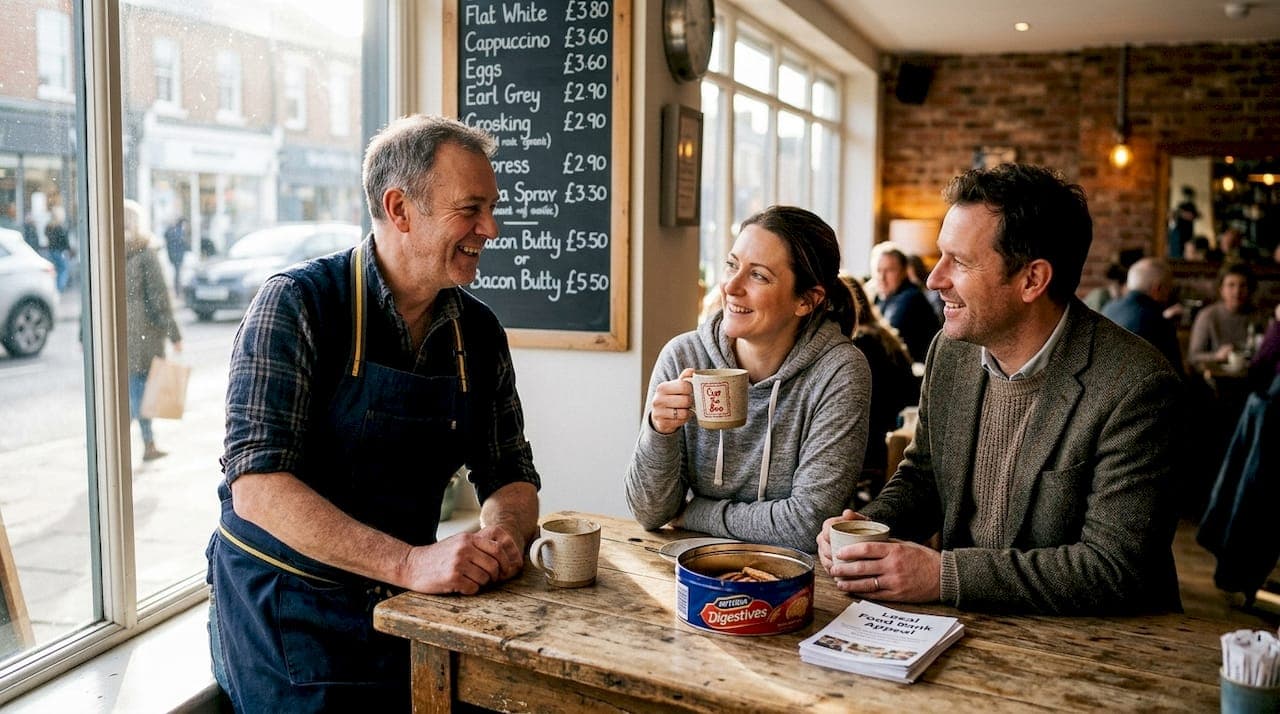
A single cup of coffee raised 25p for men's mental health charities when Starbucks partnered with Harry Kane on a limited-edition beverage, sparking a nationwide conversation about what ethical purchasing can actually achieve. That campaign proved something important: when coffee and cause align, the impact goes far beyond the donation. It opens doors, breaks silences, and builds community. Whether you run an independent café or simply want to support men's wellbeing through your buying choices, this guide walks you through every stage of running a meaningful mental health coffee campaign, from the first planning conversation to measuring lasting results.
Table of Contents
- What you need to start a mental health coffee campaign
- Step-by-step: Launching your coffee campaign
- Common mistakes and troubleshooting
- How to measure impact and verify results
- What most guides get wrong about coffee campaigns for men's mental health
- Continue your journey: Ethical coffee and community impact
- Frequently asked questions
Key Takeaways
| Point | Details |
|---|---|
| Community matters | Grass-roots campaigns and informal coffee catch-ups often create lasting peer support for men's mental health. |
| Transparency drives trust | Clear allocation of funds and honest communications are vital for successful mental health coffee campaigns. |
| Impact is measurable | Tracking donations and conversations ensures campaigns deliver meaningful outcomes and accountability. |
| Collaborations amplify results | Partnering with credible charities and involving local stakeholders boosts reach and effectiveness. |
| Authenticity over publicity | Celebrities and big brands help, but genuine peer support and normalised conversations are the true foundation. |
What you need to start a mental health coffee campaign
Before you brew a single pot, you need the right foundations in place. A successful campaign is not just about good intentions. It requires clear structures, trusted partners, and a fundraising mechanism that donors and customers can trust from day one.
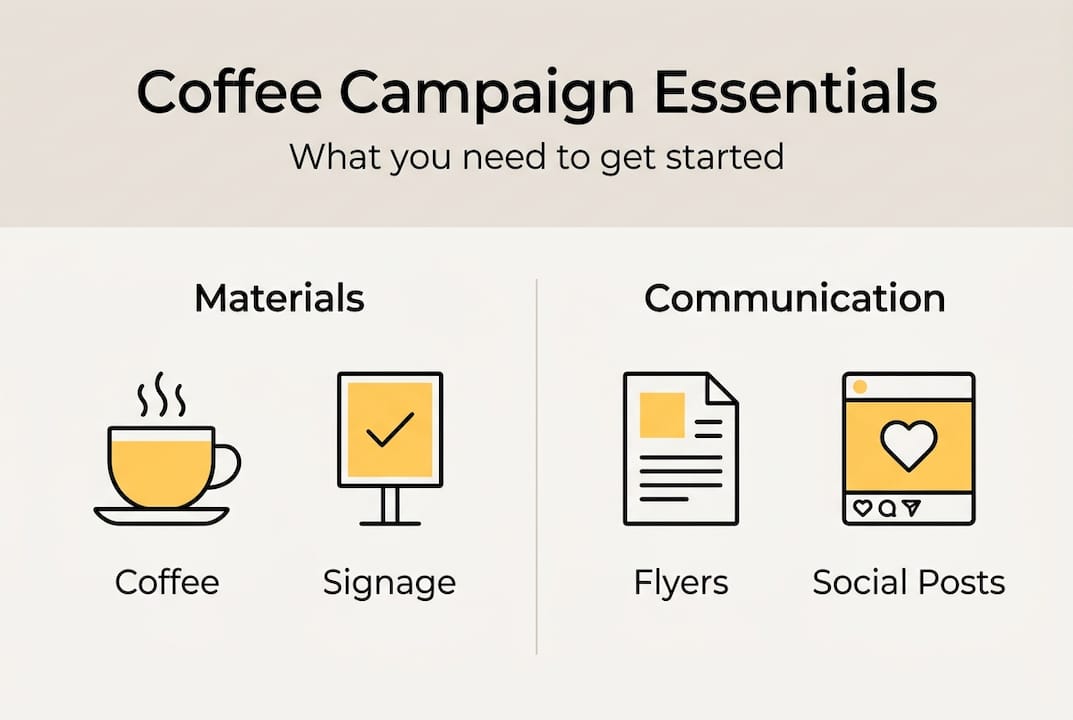
The essentials fall into three categories. Materials and logistics cover your coffee supply, branded packaging or signage, point-of-sale materials, and a simple way to collect and track donations. Partners are arguably more important. Aligning with established men's mental health organisations such as Andy's Man Club, Mental Health Innovations, or Menfulness gives your campaign credibility and reach. Funding mechanisms need to be transparent, whether that means a fixed donation per bag sold, a percentage of sales, or a matched-giving arrangement with a local business.
For anyone starting a charity coffee campaign, it helps to understand the three main formats:
| Format | Scale | Strengths | Challenges |
|---|---|---|---|
| Corporate | National or regional | Logistics, media reach | Risk of feeling impersonal |
| Community-led | Local | Authenticity, peer trust | Limited resources |
| Hybrid | Mixed | Balances both strengths | Requires strong coordination |
The Menfulness story is one of the most instructive examples in the UK. What began as informal coffee catch-ups for new dads struggling with their mental health evolved into a registered charity with regional reach. That trajectory shows exactly why community trust matters as much as corporate backing.
Key prerequisites before launch:
- A named charity partner with a signed agreement on donation allocation
- Ethically sourced coffee with clear provenance (this matters to your customers)
- A simple donation tracking system, even a spreadsheet works at first
- Basic communications materials: social posts, in-store signage, and a short campaign description
- A point of contact at your charity partner for ongoing liaison
Exploring different charity coffee sales methods early on will help you choose the right model for your audience and capacity.
Pro Tip: Always state the exact percentage or fixed amount going to charity on every piece of campaign material. Vague language like "proceeds support mental health" erodes trust quickly.
Step-by-step: Launching your coffee campaign
With your foundations in place, the launch itself becomes far more manageable. Think of it as a sequence rather than a single event.
- Define your concept. What is the story behind your campaign? A clear narrative, such as "every bag funds a counselling session for a man in your community", is far more compelling than a generic fundraising drive.
- Select your charity partner. Choose an organisation whose values align with yours. Smaller charities often offer more flexibility and visibility for local campaigns.
- Set your donation mechanism. Decide whether you will donate per cup, per bag, or as a percentage of monthly sales. Make it simple to communicate and easy to verify.
- Build your communications plan. This should cover social media, local press, in-store materials, and any community events. Timing matters. Launch around key dates such as Mental Health Awareness Week for maximum visibility.
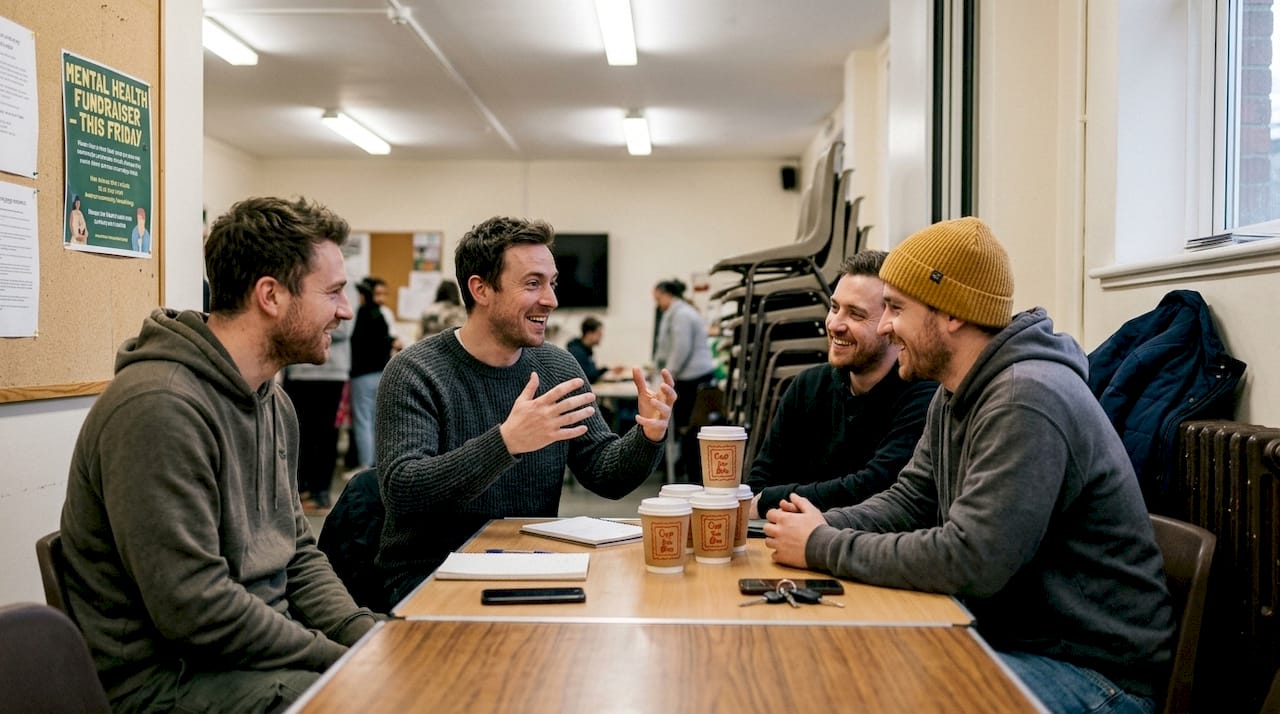
- Host a launch event. Even a small in-store morning works. Coffee with a cause events create genuine moments for conversation, which is the whole point.
- Engage local voices. Community figures, local athletes, or business owners who have personal connections to men's mental health can amplify your message far more authentically than paid advertising.
- Monitor and adjust. Track what is working week by week and be willing to change your approach.
The Starbucks x Harry Kane campaign demonstrated how celebrity involvement can dramatically boost visibility. But not every campaign needs a famous face.
| Campaign type | Visibility | Community feel | Cost |
|---|---|---|---|
| Branded (celebrity-led) | Very high | Lower | Higher |
| Community-led | Moderate | Very high | Lower |
For independent cafés, local café fundraising methods that centre on peer support and regular meet-ups often outperform one-off branded moments in terms of lasting engagement.
A word of caution: Over-commercialising a mental health campaign can undermine the very conversations you are trying to start. If the branding drowns out the message, people feel sold to rather than supported.
Pro Tip: The Menfulness peer support model succeeded because it prioritised authentic conversation over polished marketing. Borrow that ethos regardless of your campaign's scale.
Common mistakes and troubleshooting
Even well-intentioned campaigns stumble. Knowing where things typically go wrong saves you time, money, and reputational damage.
The most common errors include:
- Unclear fundraising goals. If you cannot tell a customer exactly how much has been raised and where it has gone, trust breaks down fast.
- Weak charity communication. Failing to maintain regular contact with your charity partner leads to misaligned expectations and missed opportunities for joint storytelling.
- Lack of transparency. Customers and café owners alike need to see the numbers. A monthly update, even a simple social post showing total donations, keeps people invested.
- Neglecting the conversation. Some campaigns focus so heavily on the transactional element that they forget the social mission. Coffee is the vehicle, not the destination.
- Ignoring feedback. If customers or community members raise concerns about how funds are used, address them openly and promptly.
Disagreements between partners are more common than people admit. When they arise, return to the original signed agreement and involve your charity partner's leadership early. Most disputes stem from unclear expectations rather than bad faith.
Driving café donations effectively requires ongoing effort, not just a strong launch. The campaigns that sustain momentum are those where baristas supporting wellbeing are genuinely trained and empowered to have real conversations with customers.
Celebrity tie-ins boost visibility, corporate scale leverages logistics, but as the Starbucks x Harry Kane campaign showed, community-led efforts emphasise peer support and authenticity in ways that larger campaigns often cannot replicate.
Remember: The goal is not just to raise funds. It is to normalise the idea that men can talk about how they are feeling over a cup of coffee. That cultural shift is the real measure of success.
Pro Tip: Borrow from the Menfulness community approach and build in regular informal meet-ups alongside your fundraising activity. The social element is what keeps men coming back.
How to measure impact and verify results
Fundraising without accountability is just noise. Measuring your campaign's impact is what transforms a good idea into a credible, repeatable initiative.
Start with the basics. Track total funds raised, the number of customers who engaged with the campaign, and how many people attended any associated events. Then go deeper. How many men had a meaningful conversation as a result? Did your charity partner report increased referrals or service uptake during the campaign period?
The Menfulness model is instructive here. What started as casual meets grew into regional expansion backed by local health boards, precisely because the founders tracked outcomes and used that data to build credibility with funders and partners.
A simple metrics framework:
| Metric | What to track | How often |
|---|---|---|
| Funds raised | Total donations by week or month | Weekly |
| Customer reach | Number of purchases linked to campaign | Weekly |
| Event attendance | Headcount at meet-ups or launch events | Per event |
| Follow-up engagement | Return visits, social shares, sign-ups | Monthly |
| Charity outcomes | Referrals, sessions funded, beneficiaries | Quarterly |
For verification, use these tools and approaches:
- A dedicated campaign bank account or sub-account for clean financial records
- Regular written updates from your charity partner confirming fund receipt and use
- A simple survey for event attendees to capture qualitative feedback
- Social listening tools to monitor campaign mentions and sentiment
- An annual impact report, even a one-page summary, shared publicly
Reviewing your mental health checklist periodically ensures your café environment supports the campaign's wider goals. For a broader view of what coffee campaigns are achieving across the UK, exploring the impact of coffee campaigns in 2026 provides useful benchmarks.
The Starbucks donation outcomes from the Harry Kane collaboration showed how transparent reporting amplifies public trust and encourages repeat engagement. Apply that same principle at whatever scale you are operating.
What most guides get wrong about coffee campaigns for men's mental health
Most guides treat coffee campaigns as fundraising exercises with a mental health label attached. That misses the point entirely. The most impactful initiatives we have seen are not defined by how much money they raise. They are defined by how many men felt safe enough to say "I'm not doing great" for the first time.
The Menfulness story did not go viral because of polished branding. It grew because real men showed up, week after week, and found that a cup of coffee with no agenda was enough to start a conversation that changed things. That is the nuance most corporate guides skip over.
For UK cafés and consumers who want sustainable change, the lesson is this: the transaction is secondary. Build the space first. The donations follow naturally when people trust what you stand for. Cafés supporting wellbeing do not need celebrity endorsements or national press. They need consistency, warmth, and a genuine commitment to the men in their community.
Continue your journey: Ethical coffee and community impact
If this guide has sparked something, the next step is straightforward. Every bag of coffee you buy or sell is a choice. It can fund a conversation that changes a man's life, or it can simply fill a cup.
At Cup for Bro, we work in partnership with some of the UK's leading mental health foundations to ensure that every purchase directly funds vital support programmes. Whether you are a café owner looking to align your business with a cause that matters, or a consumer who wants their morning ritual to mean something more, you can shop ethical coffee that gives back with every bag. Explore our community vision and find out how your next cup can be part of something bigger.
Frequently asked questions
How do coffee campaigns help men's mental health?
Coffee campaigns create safe, informal spaces where men can open up, while also fundraising for trusted charities. The social role of coffee enables organic conversations that formal settings rarely achieve.
Which UK charities benefit from these campaigns?
Charities such as Bounce Forward, Mental Health Innovations, Andy's Man Club, and Menfulness regularly benefit. The Harry Kane campaign specifically supported Bounce Forward and Mental Health Innovations.
How can small independent cafés participate?
Local cafés can partner with regional charities, organise regular coffee catch-ups, and donate a fixed percentage of sales. Menfulness grew from exactly this kind of grassroots, café-based model.
What makes a campaign successful?
Authenticity, transparent fundraising, and a genuine focus on normalising mental health conversations are the defining factors. Campaigns that promote peer support alongside fundraising consistently deliver greater long-term impact.