

TL;DR:
- Charity coffee campaigns combine social impact with fundraising, focusing on men's mental health awareness.
- Successful initiatives require clear partnerships, proper tracking, strong branding, and transparent reporting.
- Authenticity and community engagement are key to creating lasting change beyond just raising funds.
When Harry Kane partnered with Starbucks to create a signature coffee, 25p from each cup went directly to men's mental health charities across England. Simple. Powerful. Replicable. That initiative showed what's possible when businesses treat coffee not just as a product, but as a vehicle for genuine change. Men's mental health remains critically underfunded, and charity coffee sales offer a practical, community-driven way to close that gap. This guide walks you through every stage of running a successful charity coffee campaign, from choosing the right partner to tracking your results and avoiding the mistakes that derail well-intentioned efforts.
Table of Contents
- Understanding charity coffee sales and their purpose
- Key requirements and planning essentials
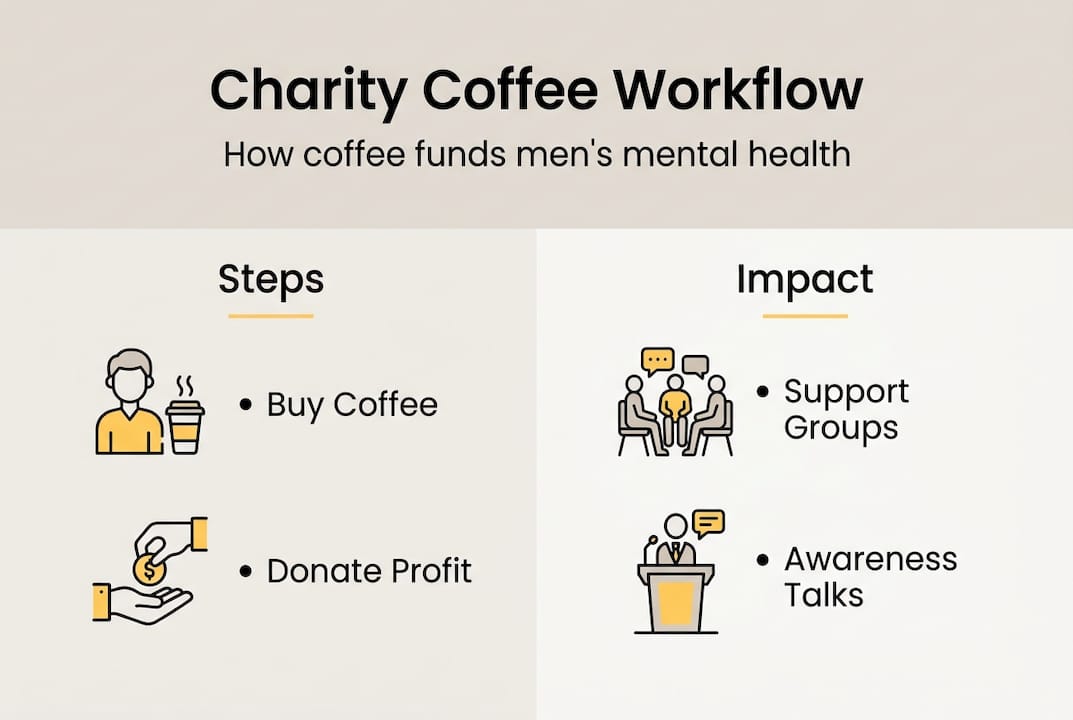
- Step-by-step workflow for successful charity coffee sales
- Monitoring results and avoiding common pitfalls
- Our take: What most guides miss about charity coffee workflows
- Start your charity coffee initiative with Cup For Bro
- Frequently asked questions
Key Takeaways
| Point | Details |
|---|---|
| Clear workflow matters | A defined process ensures charity donations reach the right mental health initiatives. |
| Partnerships boost reach | Partnering with charities and branding coffee products can amplify social and fundraising impact. |
| Track and report results | Transparent tracking and story sharing drive engagement and future support. |
| Community drives change | Coffee sales open conversations that support men's wellbeing beyond the money raised. |
Understanding charity coffee sales and their purpose
Charity coffee sales are exactly what they sound like: coffee is sold, and a portion of the proceeds goes to a nominated cause. But the mechanics vary considerably, and choosing the right model matters enormously for both impact and sustainability.
The three most common approaches are:
- Direct product sales: A branded coffee product is sold, with a fixed donation per unit or a percentage of profits allocated to charity.
- Event-led fundraising: Coffee mornings, pop-ups, or workplace events where proceeds go directly to a cause.
- Ongoing branded partnerships: A business permanently stocks or sells a charity-aligned coffee, embedding giving into everyday trade.
Men's mental health deserves particular attention here. Suicide remains the leading cause of death for men under 50 in the UK, yet conversations about mental wellbeing are still far less common among men than women. Coffee culture offers something uniquely useful: a low-stakes, social setting where conversations can start naturally. A cup of coffee is rarely threatening. It's familiar. And that familiarity is precisely why it works as a gateway to dialogue.
Combat2Coffee demonstrates this brilliantly. Their model invests profits directly into mental health outreach for the armed forces community, combining product sales with a mission that resonates deeply with their audience. They're not just selling coffee; they're funding conversations that might otherwise never happen.
Understanding coffee's mental health impact helps frame why this medium works so well. The ritual of making and sharing coffee is inherently social, and that social dimension is where real mental health support begins.
The impact of charity coffee sales extends well beyond the funds raised. Every branded cup, every event, every conversation sparked over a coffee is an opportunity to reduce stigma. That's the part most fundraising guides overlook entirely.
Pro Tip: When briefing staff or volunteers for a charity coffee event, give them two or three simple conversation starters about men's mental health. The coffee is the hook; the dialogue is the real product.
Key requirements and planning essentials
Understanding the basics sets the stage for practical planning and getting set up. Before you pour a single cup, there's groundwork to lay.
Here's a quick checklist of what you'll need:
- A confirmed charitable partner with a clear mission aligned to men's mental health
- A defined donation method (fixed amount per cup, percentage of profits, or product donation)
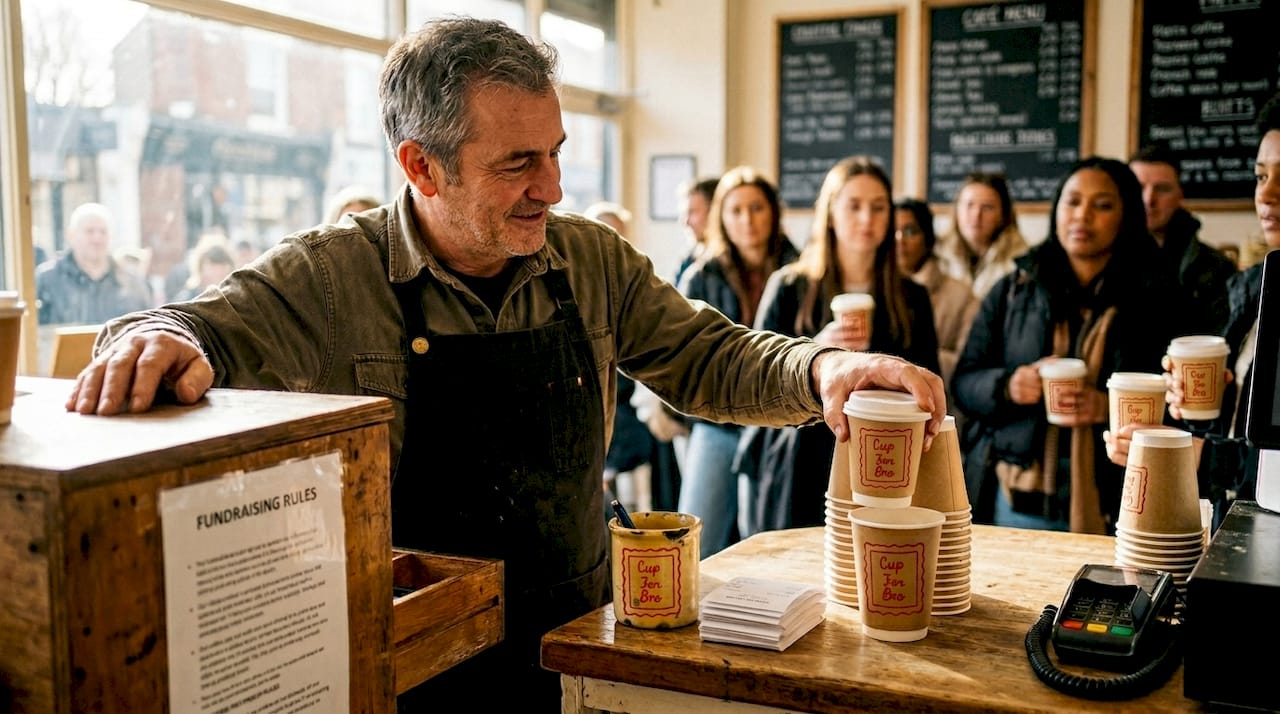
- Branded cups, signage, or packaging that communicates the cause clearly
- A point-of-sale system capable of tracking charity-linked transactions separately
- Food safety compliance, particularly if you're preparing drinks on-site
- Written agreement with your charity partner covering how funds are collected and remitted
Legal compliance is non-negotiable. UK charity fundraising law requires that businesses clearly state how much money goes to charity and ensure funds are transferred promptly and accurately. The Sepsis Trust's guidance on coffee mornings outlines a practical workflow: sign up, host, and remit funds with proper documentation. That framework applies equally to men's mental health campaigns.
When it comes to approach, the choice between event-led and ongoing product-based models has real implications:
| Approach | Best for | Key advantage | Main challenge |
|---|---|---|---|
| Event-led | One-off campaigns, awareness days | High visibility, community energy | Requires significant planning |
| Ongoing product sales | Regular giving, brand integration | Consistent revenue for charity | Needs strong marketing to sustain |
| Hybrid | Established businesses | Combines reach and regularity | More complex to manage |
For businesses starting a charity coffee campaign for the first time, the event-led model is often the easier entry point. It's time-bound, manageable, and creates a natural moment to generate publicity.
Understanding how charity coffee supports impact at a structural level also helps you set realistic targets before you begin.
Pro Tip: Invest in branded cups and table signage. Customers who can see the cause clearly are significantly more likely to engage, share on social media, and return.
Step-by-step workflow for successful charity coffee sales
With plans and resources in place, here's how to execute your charity coffee sales from start to finish.
- Reach out to your charity partner: Confirm the partnership in writing, agree on donation structure, and clarify reporting expectations.
- Define your sales approach: Decide whether you're running an event, selling a branded product, or both. Set a clear fundraising target.
- Prepare your materials: Order coffee, branded packaging, signage, and any collection tins or digital payment tools.
- Train your team: Brief staff on the cause, the campaign mechanics, and how to talk about men's mental health with customers.
- Launch with visibility: Use social media, in-store signage, and local press to announce the campaign. Tag your charity partner.
- Track every sale: Record charity-linked transactions daily. Use a simple spreadsheet if your POS system doesn't automate this.
- Collect and consolidate funds: Gather all proceeds at the end of the campaign or at agreed intervals.
- Remit and report: Transfer funds to your charity partner promptly. Share a summary of what was raised and how.
As Retail Times reported, successful campaigns involve businesses creating products, allocating profits per sale, and distributing through outlets or events. That structure is scalable whether you're a single café or a national chain.
| Stage | Recommended timeframe |
|---|---|
| Planning and partner outreach | 4 to 6 weeks before launch |
| Materials and staff training | 1 to 2 weeks before launch |
| Campaign live period | 2 to 4 weeks |
| Fund collection and remittance | Within 2 weeks of close |
| Results reporting and publicity | Within 1 month of close |
Looking at London cafes charity partnerships and local café fundraising examples gives you a clear picture of what realistic timelines and outcomes look like in practice.
Transparency is not optional. Donors, customers, and charity partners all need to trust that funds are being handled correctly. Accurate records protect your reputation and strengthen every future campaign.
Monitoring results and avoiding common pitfalls
Effective monitoring ensures your efforts deliver real and lasting results. Without it, even a well-run campaign can fall short of its potential.
Track these core metrics throughout and after your campaign:
- Total cups sold or units moved
- Total funds raised and remitted
- Social media reach and engagement tied to the campaign
- Customer feedback and anecdotal conversations sparked
- Staff and volunteer wellbeing observations
Success isn't only financial. A campaign that raises £800 but generates twenty genuine conversations about men's mental health has delivered something that's hard to put a price on. Photograph your events, collect customer quotes, and document the human stories. These become the evidence base for your next campaign and the social proof that attracts new supporters.
Common mistakes to watch for:
- Vague partnership terms: Always have a written agreement. Ambiguity about who handles funds causes problems.
- Weak marketing: A campaign no one knows about raises nothing. Plan your communications before launch, not after.
- Poor tracking: Mixing charity funds with general revenue creates compliance headaches. Keep records separate from day one.
- Ignoring the conversation: Focusing entirely on sales volume and forgetting the awareness mission wastes the campaign's real potential.
Combat2Coffee's approach of investing profits into outreach rather than administration shows how product donation models can reduce logistics costs while maximising community impact.
Pro Tip: Publish your results publicly. A simple post showing how much was raised and where it went builds enormous trust and encourages customers to participate again next time.
Long-term impact comes from consistent transparency. Campaigns that share their outcomes openly attract more support, better partners, and stronger community loyalty over time.
For further inspiration on driving café donations for men's mental health, real-world examples show how consistency and communication compound over time.
Our take: What most guides miss about charity coffee workflows
Most workflow guides focus almost entirely on logistics: the paperwork, the payment processing, the event checklist. Those things matter, but they're not what makes a charity coffee campaign genuinely transformative.
What actually moves the needle is the authenticity of the partnership. When a business chooses a charity partner because they genuinely believe in the mission, rather than because it looks good on a press release, customers feel the difference. That authenticity shows up in how staff talk about the cause, how the brand is presented, and how the campaign is followed up.
We've also seen campaigns that hit their fundraising targets but missed their real purpose entirely. Men's mental health isn't just a financial problem. It's a cultural one. Coffee campaigns that treat awareness and conversation as equally important to the money raised tend to create lasting change. The ones that treat it as a sales exercise rarely do.
Our vision for impact has always been rooted in the idea that giving and community-building are inseparable. The most effective campaigns we've seen don't just raise funds; they shift the way people in a workplace or community think and talk about men's mental health. That's the outcome worth designing for.
Start your charity coffee initiative with Cup For Bro
Ready to turn your morning coffee into something that genuinely matters for men's mental health?
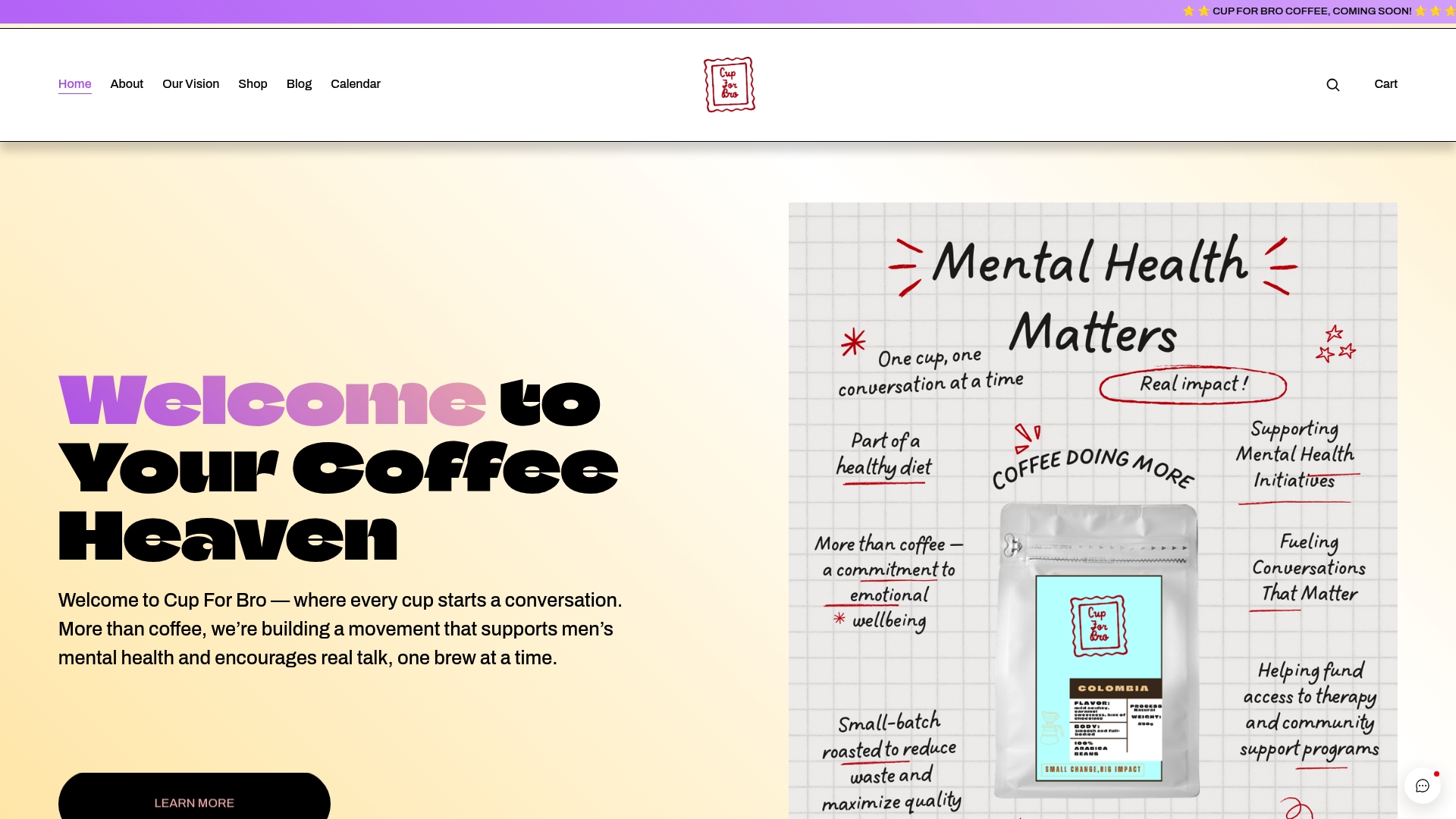
At Cup For Bro, we partner with some of the UK's leading mental health foundations to sell premium coffee that funds vital support programmes and services. Whether you're a café, a workplace, or an organisation looking to run a branded charity coffee campaign, we make it straightforward to get involved. Every bag sold, every cup poured contributes directly to men's mental health initiatives. Shop charity coffee to explore our range, or learn our vision to understand how your support creates real, measurable change for men across the UK.
Frequently asked questions
What percentage of coffee sales should go to charity?
Most successful campaigns allocate a fixed sum per cup or between 10 and 25% of net profits to charity. For example, Starbucks donates 25p per cup from the Harry Kane signature coffee to men's mental health causes across England.
What legal steps do I need to sell coffee for charity in the UK?
You must comply with UK charity fundraising regulations, secure written approval from your charity partner, and follow food safety rules for any on-site preparation. The Sepsis Trust's event framework covers registration and fund remittance as a useful reference point.
How can I maximise the impact of a charity coffee sale?
Authentic partnerships, strong visible branding, and sharing your results openly are the most reliable drivers of engagement and repeat support. Combat2Coffee's outreach model shows how investing in community connection, not just fundraising, creates lasting impact.