
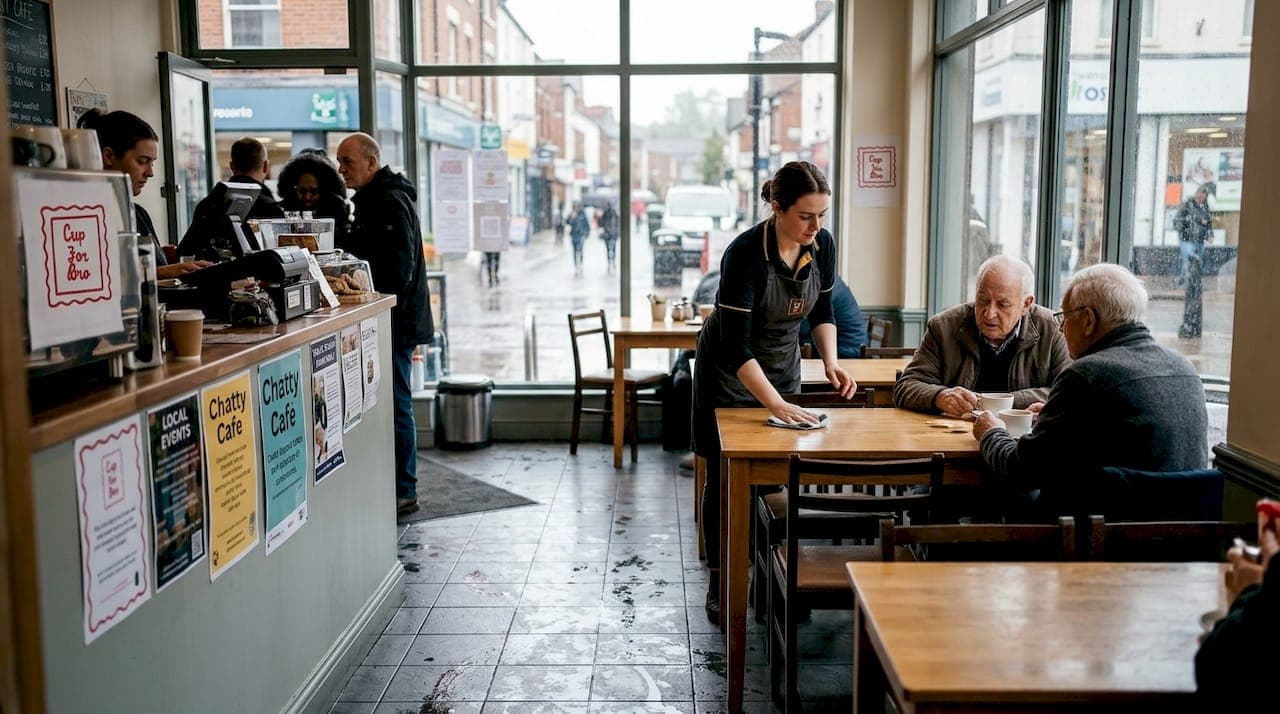
The UK has a loneliness problem that most people would rather not talk about. Emotional distress rates place Britain among the worst affected nations in the world, and the social bonds that once held communities together are quietly fraying. Yet tucked between the flat whites and the pastry displays, something genuinely powerful is happening. Cafes across the country are stepping up as unexpected anchors of community wellbeing, offering far more than a caffeine fix. This article explores how they do it, why it matters especially for men's mental health, and what you can do to be part of it.
Table of Contents
- Why cafes matter: The UK's loneliness challenge
- The Chatty Cafe Scheme and the 'third place' effect
- Men's mental health: Cafes as safe, stigma-free spaces
- Crisis and community cafes: Real-world impact
- How to get involved: From customer to community champion
- Connect further: Support community cafes and men's wellbeing
- Frequently asked questions
Key Takeaways
| Point | Details |
|---|---|
| Cafes foster connection | Cafes act as welcoming ‘third places’ to reduce isolation and strengthen UK community social bonds. |
| Support for men’s mental health | Peer-led meetups and breakfast clubs in cafes normalise support and reduce stigma around seeking help. |
| Easy access through schemes | Initiatives like Chatty Cafe Scheme offer low-barrier entry to conversation, requiring no commitment. |
| Real impact on wellbeing | Community and crisis cafes lower emergency department use and help diverse groups from men to new mums. |
| You can make a difference | Supporting your local cafe’s community programmes through volunteering or attendance helps tackle loneliness and mental health issues. |
Why cafes matter: The UK's loneliness challenge
Britain's emotional distress ranking sits near the top globally, and the consequences are serious. Loneliness is now linked to higher rates of depression, anxiety, and even physical illness. Social bonds that communities once relied upon have eroded steadily, leaving many people without a reliable place to simply belong.
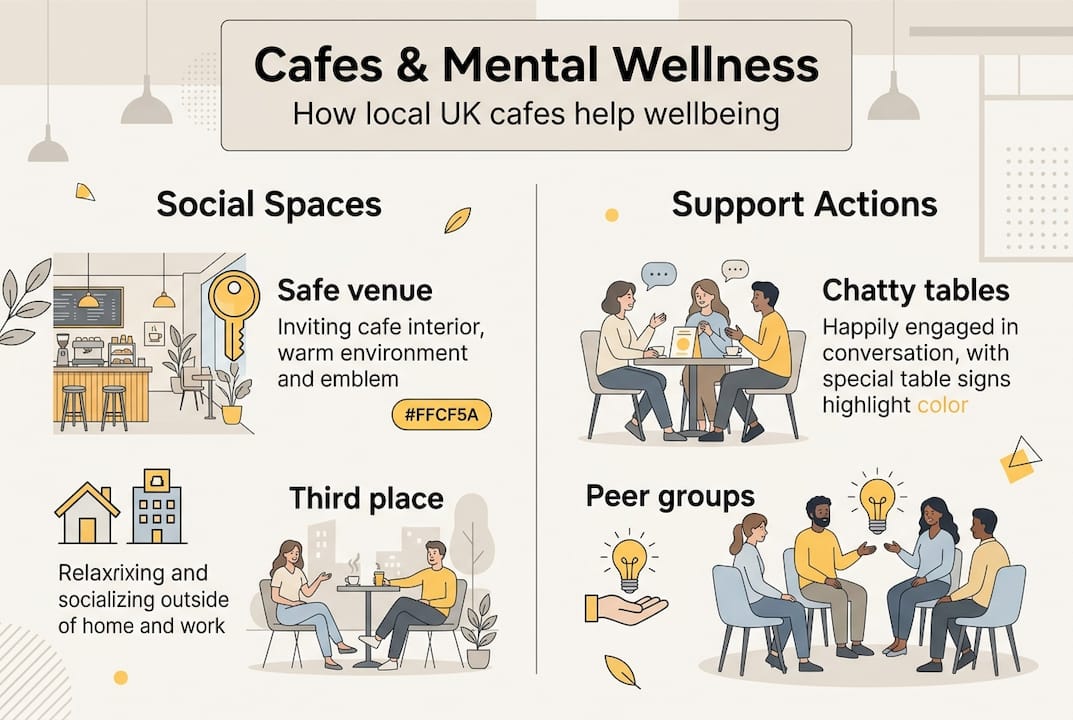
This is where cafes come in. Sociologists call them 'third places', spaces that are neither home nor work but somewhere in between. They are informal, accessible, and carry none of the pressure of a clinical appointment or a formal support group. You can walk in, order a drink, and simply exist alongside other people.
The role that baristas support community wellbeing plays in this is often underestimated. A familiar face behind the counter, a warm greeting, a moment of genuine conversation. These small interactions add up. Across the UK, London cafes mental health charities are already formalising this role, partnering with organisations to make support more visible and accessible.
"Cafes can offer more than just coffee. They build bonds that clinical services simply cannot replicate in the same informal, human way."
The key advantages cafes hold over traditional support settings include:
- No appointment needed
- No clinical language or stigma attached
- Familiar, comfortable surroundings
- Low cost of entry
- Natural opportunities for spontaneous conversation
The Chatty Cafe Scheme and the 'third place' effect
The Chatty Cafe Scheme is one of the most tangible examples of cafes being used deliberately for community connection. With over 900 venues across the UK, including more than 440 Costa Coffee locations, the scheme has reached an estimated 30,000 isolated people. That is not a small number. That is a movement.
The mechanics are refreshingly simple. Participating cafes designate a 'Chatter & Natter' table where anyone can sit and be open to conversation. Volunteer facilitators are sometimes present to help break the ice. There is no commitment, no sign-up form, and no expectation. You drop in when ready and leave when you like.
Here is how different types of cafes compare in their community function:
| Feature | Conventional cafe | Chatty Cafe | Crisis cafe |
|---|---|---|---|
| Primary purpose | Food and drink | Social connection | Mental health support |
| Drop-in format | Yes | Yes | Yes |
| Volunteer facilitators | No | Sometimes | Yes |
| Structured support | No | No | Yes |
| Clinical referrals | No | No | Sometimes |
| Cost to attend | Drink purchase | Drink purchase | Usually free |
The steps that make these schemes work are worth understanding:
- A cafe signs up and receives training and signage materials
- A designated table is set aside during specific hours
- Signage invites customers to sit and chat
- Volunteers or trained staff facilitate where needed
- Attendees return at their own pace, building familiarity over time
For cafe owners thinking about engaging cafe customers in meaningful ways, this model offers a practical starting point. And for those interested in driving cafe donations towards mental health causes, the Chatty Cafe framework creates a natural bridge between commerce and community.
Pro Tip: Next time you visit a local cafe, look for 'Chatter & Natter' signage or simply ask staff whether they run any community meetups. You might be surprised what is already happening right on your doorstep.
Men's mental health: Cafes as safe, stigma-free spaces
Men in the UK are statistically less likely to seek help for mental health struggles. The reasons are well documented: stigma, cultural expectations, a reluctance to appear vulnerable. What cafes offer is a way around all of that. There is no waiting room. No clipboard. No label.
Organisations like Menfulness in York have built their entire model around this insight. Their coffee meetups support hundreds of men through peer conversation, shared activities, and access to counselling, all within the relaxed setting of a local cafe. The informality is not incidental. It is the point.
Similarly, men's breakfast clubs at venues like WiSE Owl Cafe in Wetherby are tackling male loneliness head-on. A shared meal, a familiar space, and a group of men who show up week after week. No agenda beyond connection. That consistency matters enormously.
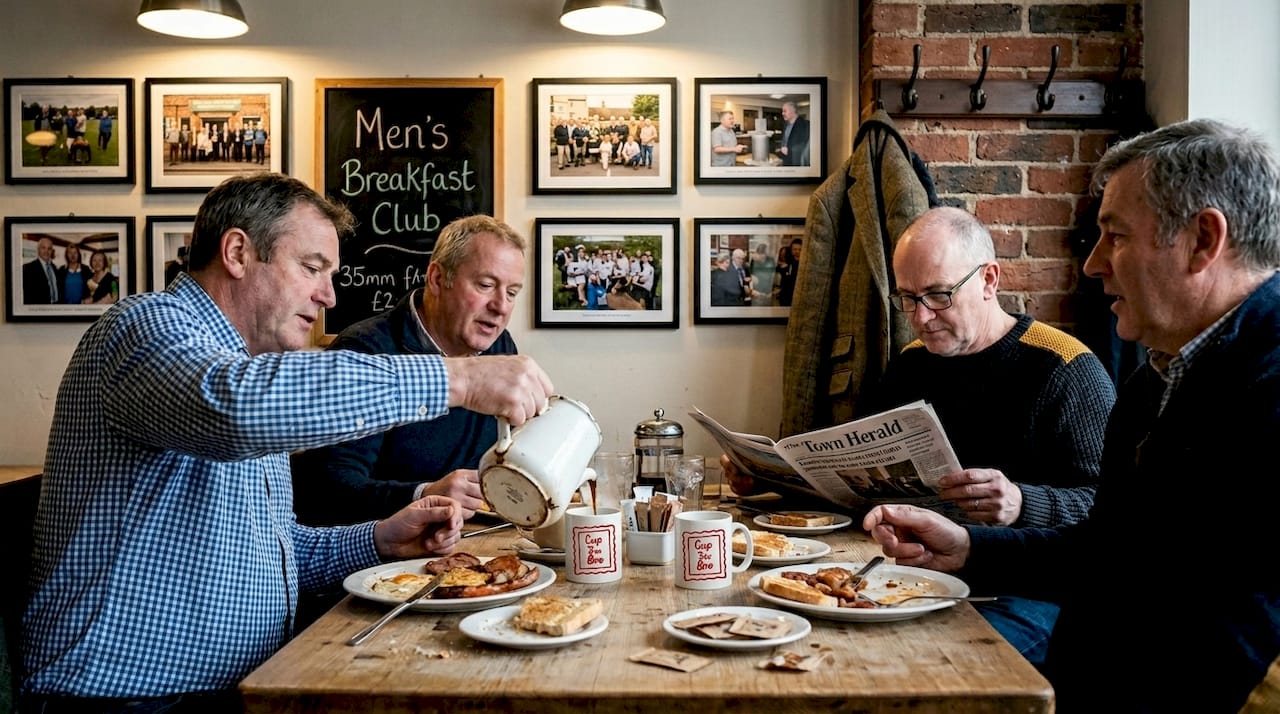
The neutral, informal setting of a cafe removes the psychological barrier that stops many men from engaging with formal services. When support feels like a social occasion rather than a clinical intervention, men are far more likely to turn up and keep turning up.
Key benefits these cafe-based groups offer men specifically:
- Peer-led conversation that normalises emotional openness
- Access to counsellors in a non-clinical environment
- Regular, predictable meetups that build routine and accountability
- A sense of belonging without pressure to perform or disclose
For anyone wanting to explore this further, resources on local cafes mental health fundraising and a practical mental health checklist for men are worth bookmarking. There is also broader guidance on men's mental health support UK for those looking for a wider picture.
Pro Tip: If you are a man who has been feeling isolated, you do not need to walk into a therapy room to get support. Find a local breakfast club or coffee meetup and simply show up. That first step is the hardest and the most important.
Crisis and community cafes: Real-world impact
Beyond the social connection model, crisis cafes represent a more structured form of community support. The evidence for their impact is compelling. Research shows that crisis cafes reduce emergency department use and police callouts, while also alleviating social isolation across diverse groups.
These are not niche services. Crisis cafes serve new mothers, elderly residents, young professionals, and men under 50, groups that often fall through the gaps of traditional mental health provision. The drop-in format means no referral is needed, and the non-clinical atmosphere means people actually use them.
"Crisis cafes are a bridge between home and hospital, offering support at the moment it is needed most, before things escalate."
The steps community cafes typically take to deliver this kind of impact include:
- Partnering with local mental health organisations for training and referral pathways
- Training volunteers in active listening and safeguarding
- Offering a consistent weekly or daily drop-in schedule
- Creating a welcoming physical environment that feels nothing like a waiting room
- Gathering feedback to improve and adapt the service
Challenges do exist. Funding is inconsistent, volunteer retention is difficult, and linking informal support with formal NHS services requires ongoing effort. But the outcomes justify the investment. For a deeper look at the relationship between coffee and men's mental health, or to understand how London men's mental health support is evolving, there is a growing body of evidence and community experience to draw from.
How to get involved: From customer to community champion
Knowing all of this is useful. Acting on it is better. The good news is that getting involved does not require a professional qualification or a large time commitment. It starts with showing up.
The NHS Confederation's research into neighbourhood mental health pilots highlights a clear need for funding, volunteer training, and stronger links between community spaces and formal services. That gap is one that individuals, cafe owners, and organisations like Cup For Bro can help to fill.
Here are five practical ways to make a difference:
- Volunteer at a local community or crisis cafe, even a few hours a month counts
- Fundraise by supporting initiatives that channel money directly into cafe-based mental health programmes
- Promote community cafes on social media or by word of mouth to people who might benefit
- Attend a Chatty Cafe session or men's breakfast club, your presence alone helps normalise it
- Give feedback to cafe staff and organisers so they can improve and grow their community offer
Every one of these actions reinforces the same thing: that community wellbeing is a shared responsibility, and cafes are one of the most human places to start building it.
Pro Tip: Ask your local cafe staff directly whether they run any community events or support groups. Many do, but they rely on word of mouth. You might also discover something that changes your week.
Connect further: Support community cafes and men's wellbeing
At Cup For Bro, we believe that every cup of coffee can carry a bigger purpose. Our mission is built around men's mental health, and we work alongside some of the UK's leading mental health foundations to fund the kind of support programmes and community initiatives this article has explored. When you buy from us, you are not just getting exceptional coffee. You are helping keep the lights on for services that genuinely save lives.
If this article has resonated with you, we would love for you to take the next step. Browse our shop coffee cups and discover blends that fund real community impact. Learn more about our community impact vision and the organisations we support. Or simply join Cup For Bro and become part of a community that takes men's wellbeing seriously, one cup at a time.
Frequently asked questions
How do cafes reduce loneliness in UK communities?
Cafes act as third places for connection, offering designated tables and volunteer facilitators that make it easy for people to talk without any pressure or prior commitment.
What makes cafes effective for men's mental health?
The informal, non-clinical setting removes the stigma that often stops men from seeking help. Peer-led cafe groups normalise emotional conversation in a way that formal services rarely manage.
What is the difference between a conventional cafe, a Chatty Cafe, and a crisis cafe?
A conventional cafe serves food and drink. A Chatty Cafe uses designated tables and schemes to encourage social connection. A crisis cafe provides structured, non-clinical mental health support for people in distress.
How can I find a community-focused cafe near me?
Look for Chatty Cafe signage in your local area, or simply ask cafe staff whether they host community events, support groups, or drop-in sessions.
Are there challenges to running community or crisis cafes?
Yes. Funding and volunteer training remain the biggest hurdles, along with building effective links to formal NHS services, though the positive impact consistently outweighs these difficulties.