
TL;DR:
- Partnerships between community groups and organizations help reach men hesitant to seek formal help.
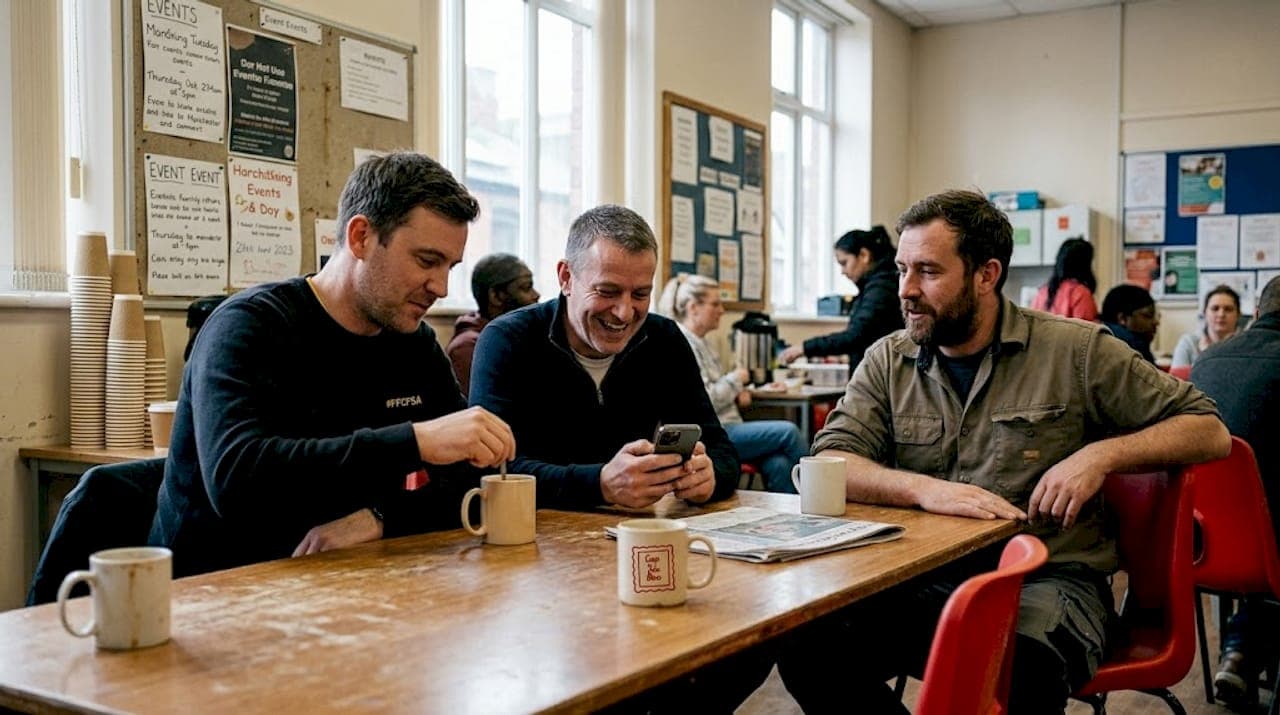
- Informal spaces like coffee shops and Men's Sheds foster natural emotional openness and social connection.
- Moderate coffee consumption and community support networks are linked to improved men's mental wellbeing.
Most men are told that mental wellbeing is something they must sort out on their own. Push through. Stay stoic. Handle it privately. But this narrative is both outdated and genuinely harmful. One in four UK adults experiences loneliness, yet most never seek formal support. What's quietly changing this picture is not a new NHS programme or a government campaign. It's partnerships. Collaborations between charities, coffee shops, community groups, and businesses like Cup For Bro are reshaping how men access support, often in spaces they already trust and visit every day.
Table of Contents
- Why partnerships matter for men's mental wellbeing
- How local partnerships create real change
- Men's Sheds, coffee shops and the power of informal spaces
- Coffee culture: Social rituals and scientific links to better mental health
- Challenges, gaps, and what works best in partnerships
- Why real connection beats clinical solutions: An editorial perspective
- Take your next step: Connect, share, and thrive with Cup For Bro
- Frequently asked questions
Key Takeaways
| Point | Details |
|---|---|
| Partnerships improve access | Collaborations between local authorities, charities, and businesses help men access mental health support where they live. |
| Informal settings lower barriers | Community venues like coffee shops provide safe, approachable spaces for men to connect and find help. |
| Peer support is powerful | Groups led by men for men foster trust and openness often missing from clinical environments. |
| Moderation matters | Enjoying coffee in moderation supports mental wellbeing, but excess intake may not be beneficial. |
| Successful models are flexible | Partnerships work best when designed with men's needs and allow for local variation. |
Why partnerships matter for men's mental wellbeing
When we talk about partnerships in men's mental wellbeing, we mean structured collaborations between government bodies, third-sector charities, community organisations, and local businesses. These aren't just funding arrangements. They're relationships built to reach men who would never walk into a GP surgery or ring a helpline.
The need is significant. Men are statistically less likely to seek help for mental health difficulties, and suicide remains the leading cause of death for men under 50 in the UK. The traditional clinical model simply doesn't reach everyone. That's where partnerships step in.
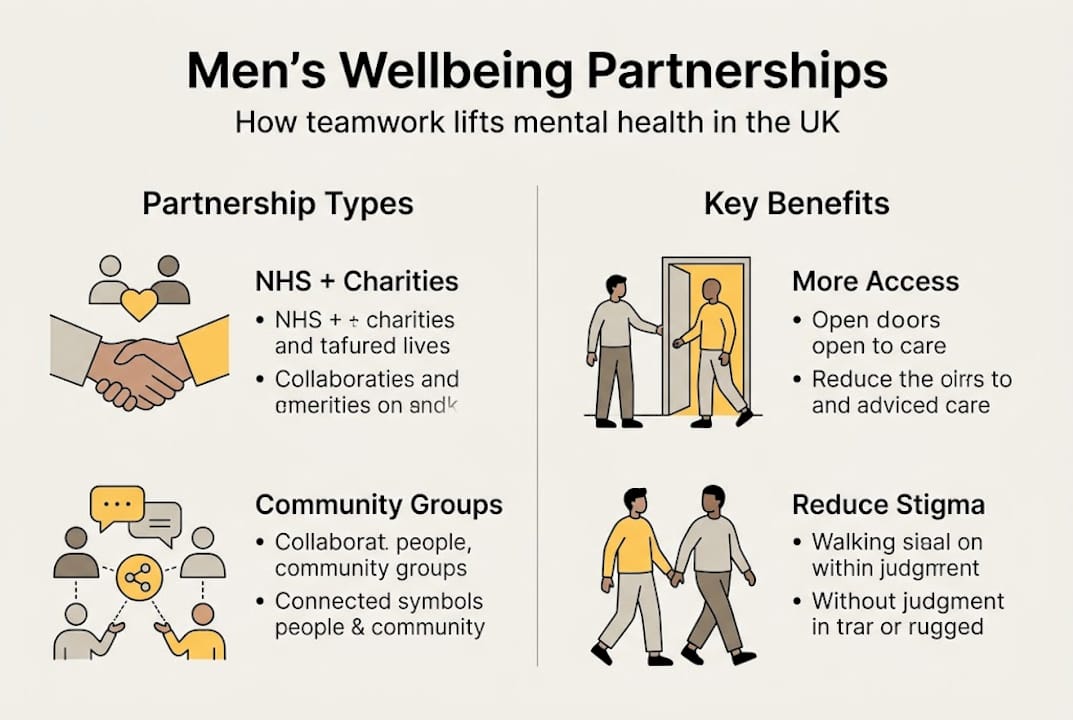
A strong example is the Men's Health Community Fund, which has invested £6.3 million to support men aged 16 and over across England. Projects funded through this initiative focus on peer support, social connection, and activity-based engagement rather than clinical intervention alone.
Why partnerships work where other approaches don't:
- They meet men where they already are, in pubs, sheds, gyms, and cafés
- Flexible funding allows tailored local solutions rather than a one-size approach
- Community organisations often have trust that statutory services take years to build
- Peer-led activities reduce stigma and encourage open conversation
- Smaller groups allow for genuine relationship-building over time
| Approach | Reach | Trust level | Tailored to men |
|---|---|---|---|
| NHS clinical services | High | Moderate | Sometimes |
| National charities | High | Moderate | Often |
| Local community partnerships | Targeted | High | Usually |
| Informal peer groups | Wide | Very high | Yes |
For men seeking men's mental health support in London or elsewhere in the UK, the partnership model offers something vital: access without the barrier of formal referral or a waiting list. Connection comes first. Support follows naturally.
How local partnerships create real change
Understanding why partnerships matter is one thing. Seeing how they function in practice is another entirely.
One model drawing attention is the Community Protect approach. Here, local councils direct funding toward third-sector organisations, who then deploy mental health ambassadors and community activities. These ambassadors are often men who have lived experience of mental health difficulties. They attend local events, run groups, and serve as a bridge between men in crisis and formal services.
What makes this model effective is trust. Men are more likely to open up to a peer in a familiar environment than to a professional in a clinical setting. The ambassador model removes the hierarchy. It's one bloke talking to another, which carries enormous weight.
Another compelling example is Menfulness, a group that began as an informal coffee morning and grew into a registered men's charity. What started with a handful of men sharing a brew became a structured programme of wellbeing activities, counselling signposting, and peer support networks. That's the power of starting small and letting community lead.
Pro Tip: When looking for support, seek out groups with established community partnerships rather than standalone initiatives. Organisations with links to local councils or charities tend to have more consistent resources and clearer pathways to additional help.
Knowing how fundraising supports local mental health through everyday activities gives this model even more momentum. When communities invest in their own, outcomes improve.
| Model | Strengths | Potential gaps |
|---|---|---|
| Council-funded ambassador scheme | Structured, accountable, linked to services | Can feel institutional |
| Charity-led peer groups | Flexible, trust-based, community-shaped | Funding can be inconsistent |
| Grassroots informal groups | Highly relatable, low barrier | Variable quality and continuity |
Men's Sheds, coffee shops and the power of informal spaces
Not every man will join a therapy group. But most will accept a cup of coffee with someone they trust.
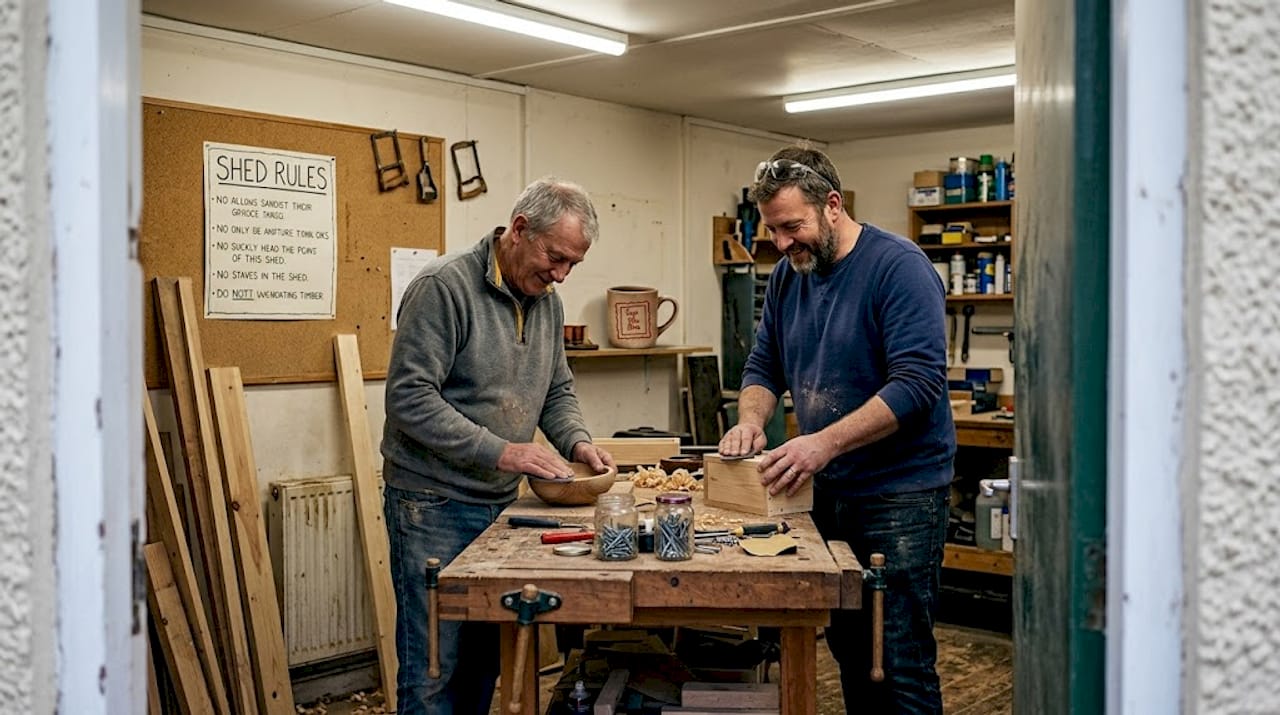
Informal spaces like Men's Sheds have become some of the most effective mental wellbeing environments in the UK. The shed setting strips away the expectation of emotional disclosure. Men come to make things, fix things, and stay busy. Conversation emerges naturally. Emotional openness follows without being forced. Men's Sheds attendance has grown steadily, with 80% of groups actively supporting emotional openness among members.
Coffee shops serve a similar function. They're what sociologists call 'third places', spaces that are neither home nor work, where social norms are relaxed and connection feels natural. Coffee shops as third places reduce loneliness for a significant proportion of UK adults who might otherwise go days without meaningful conversation.
Using a coffee shop mental health checklist can help you identify venues that actively support wellbeing. Some cafés train staff to spot signs of distress, signpost men to local resources, and host regular community gatherings. These aren't accidents. They're partnerships in action.
Benefits of engaging in community venues:
- No appointments, referrals, or waiting lists
- Familiar, low-pressure environments
- Regular attendees become familiar faces over time
- Activities provide structure without demanding vulnerability
- Peer trust develops organically through shared experience
"The appeal of informal settings is that men don't have to label what they're experiencing. They just show up, and the rest follows."
There are caveats. Volunteer-led settings can vary in quality, and not every community space has trained staff. But the peer trust that develops in these environments often compensates. Understanding how cafes support mental wellness and the role of baristas and mental wellbeing reveals a growing movement that should not be underestimated.
Pro Tip: If formal therapy feels like too big a step, try an informal meetup first. Attending a Men's Shed or a community café morning requires no commitment and no disclosure. Just show up.
Coffee culture: Social rituals and scientific links to better mental health
Coffee is woven into British social life. But beyond routine, there's a surprisingly direct link between coffee culture and improved mental wellbeing for men.
The 'third place' concept matters here. When you have a regular coffee shop you visit, you build a rhythm. You recognise faces. You exchange words. That low-level, consistent social contact is exactly the kind of connection that combats loneliness over time. It's not dramatic, but it's effective.
There's also a biological dimension worth noting. A UK Biobank study found that drinking 2 to 3 cups of coffee daily was linked to the lowest risk of depression and anxiety. Moderate intake appears to support mood regulation without the drawbacks associated with excess consumption.
How to use coffee culture positively for your mental wellbeing:
- Find a local independent café with a regular crowd and make it your weekly routine
- Look for community-led coffee mornings or group events advertised in your area
- Follow brands and initiatives on social media that use coffee as a gateway to men's mental health conversation
- Support businesses that reinvest in mental health causes through their sales
- Use a coffee catch-up as a low-pressure way to check in with a mate
Over 80% of UK men drink coffee regularly, and most are already within the range associated with mental health benefits. The ritual is already there. It's about being intentional with it. To dig deeper into coffee's mental health impact, there's growing evidence that the social element amplifies the biological benefit.
One caveat: excess consumption can increase anxiety. Sticking to 2 to 3 cups daily is sensible, and paying attention to how caffeine affects your mood is always worthwhile.
Challenges, gaps, and what works best in partnerships
Partnerships in men's mental wellbeing are not without their difficulties. Understanding what goes wrong is just as important as celebrating what goes right.
The most common issues are patchy funding, lack of regulatory oversight, and inconsistent quality across volunteer-led programmes. A group that works brilliantly in one town may be non-existent in the next. This postcode lottery frustrates men who are already hesitant to seek help.
Volunteer-led models thrive on peer trust, but this trust is built over time and can be disrupted by changes in leadership or funding. Continuity matters enormously in mental health support.
Three common challenges and three proven solutions:
- Challenge: Inconsistent funding. Solution: Advocate for multi-year funding agreements rather than annual grants, which allow programmes to plan and grow sustainably
- Challenge: Lack of professional oversight. Solution: Pair community groups with NHS or charity professionals who offer training and clinical governance without taking over
- Challenge: Difficulty reaching isolated men. Solution: Use trusted community figures and spaces, including local coffee shops, barbers, and sports clubs, to make the first point of contact feel natural
Experts note that community initiatives can genuinely fill NHS gaps, but outcomes improve significantly when groups share data with statutory services and co-design activities with the men they serve. Combining formal and informal support, rather than treating them as alternatives, is the most effective approach.
For practical considerations for UK men navigating this landscape, understanding both the strengths and limitations of the systems available allows for smarter choices about where to seek help.
Why real connection beats clinical solutions: An editorial perspective
Clinical services are valuable. Nobody at Cup For Bro would argue otherwise. But clinical services were not built for every man, and not every man was built for clinical services. The waiting room, the referral letter, the assessment form. For many men, these barriers are simply too high.
What we've seen, through the partnerships we support and the community conversations we're part of, is that connection precedes everything. Men open up when they feel safe, not when they're told to. The third place model, whether it's a coffee morning, a shed, or a community event, creates that safety without demanding anything in return.
The momentum building in men's mental health right now is not coming from the top down. It's coming from grassroots organisations, local charities, and businesses that decided to make connection part of their purpose. That's the shift worth paying attention to.
Pro Tip: You don't need to have a crisis to start a conversation. Reach out at your own pace, in your setting of choice. Real change often starts with a cup of coffee and a single honest chat.
Take your next step: Connect, share, and thrive with Cup For Bro
Every cup of coffee sold by Cup For Bro funds vital mental health support programmes across the UK. We work in partnership with leading mental health foundations to make that happen, because giving is simply how we do business.
If this article has resonated with you, the most natural next step is straightforward. Browse our coffee and choose something that does more than taste good. Learn more about our vision for men's support and how every purchase contributes to real, community-based change. Join a growing movement of men who've decided that looking after each other is strength, not weakness. Start small. Start with a brew.
Frequently asked questions
What is the main benefit of partnerships in men's mental wellbeing?
Community initiatives fill gaps left by traditional services and help reduce stigma. Partnerships reach men who might avoid formal settings by offering tailored group support in accessible community spaces.
How do coffee shops support men's mental health?
Coffee shops as safe spaces allow men to join peer groups or be signposted to help by trained staff. They act as social third places where connection happens without pressure or formality.
Are community-based groups effective for men in the UK?
Yes. Attendance rates are rising and the majority of groups actively promote emotional openness, helping men reduce loneliness and build meaningful peer connections.
Is moderate coffee consumption good for mental health?
UK Biobank research shows that drinking 2 to 3 cups of coffee daily is linked to lower risk of depression and anxiety. Moderation is the key factor.
What are the risks of informal peer support groups?
Volunteer-led groups can vary in quality and consistency. However, the peer trust and community connection they generate often outweigh these limitations for men who find formal services inaccessible.
Recommended
- Mental health support for men in London: 94% satisfied
- Top ways cafés can give back and support men's mental health
- How cafes in UK communities support mental wellness
- Coffee's impact on men's mental health in the UK 2026
- Couples Therapy Through the Lens of CBT: Strengthening Relationships - MindWell