
TL;DR:
- Hosting peer support groups in cafés boosts men's mental fitness with low barriers.
- Partnerships with charities enhance community visibility and sustainable fundraising efforts.
- Creating community cafés and activity clubs offers lasting support through routine, belonging, and trust.
Many café owners genuinely want to support men's mental health, but when it comes to choosing the right initiative, the options can feel overwhelming. Peer support groups, charity partnerships, community café models, activity clubs — each promises impact, but how do you know which one is worth your time and energy? This article cuts through the noise. We have pulled together four proven, practical approaches used by real UK cafés, backed by measurable results and grounded in what actually works for men. Whether you run a small independent or a growing chain, you will find a clear path forward here.
Table of Contents
- Host men's peer support groups in your café
- Partner with mental health charities
- Create or back community cafés as safe spaces
- Support community-led initiatives and clubs
- What most cafés miss about men's mental health impact
- Connect your café's impact with Cup For Bro
- Frequently asked questions
Key Takeaways
| Point | Details |
|---|---|
| Peer groups in cafés | Hosting peer support sessions in a familiar café setting helps men open up and improves wellbeing scores. |
| Charity partnerships | Collaborating with mental health charities and donating from sales raises funds and awareness among customers. |
| Community cafés as safe spaces | Operating or supporting inclusive cafés provides affordable meals and vital connection for men at risk of isolation. |
| Activity-based clubs | Launching or linking with pie clubs or walking groups builds trust and community, especially in deprived areas. |
| Routine over one-off efforts | Consistent, low-barrier initiatives drive sustained impact and complement formal mental health care. |
Host men's peer support groups in your café
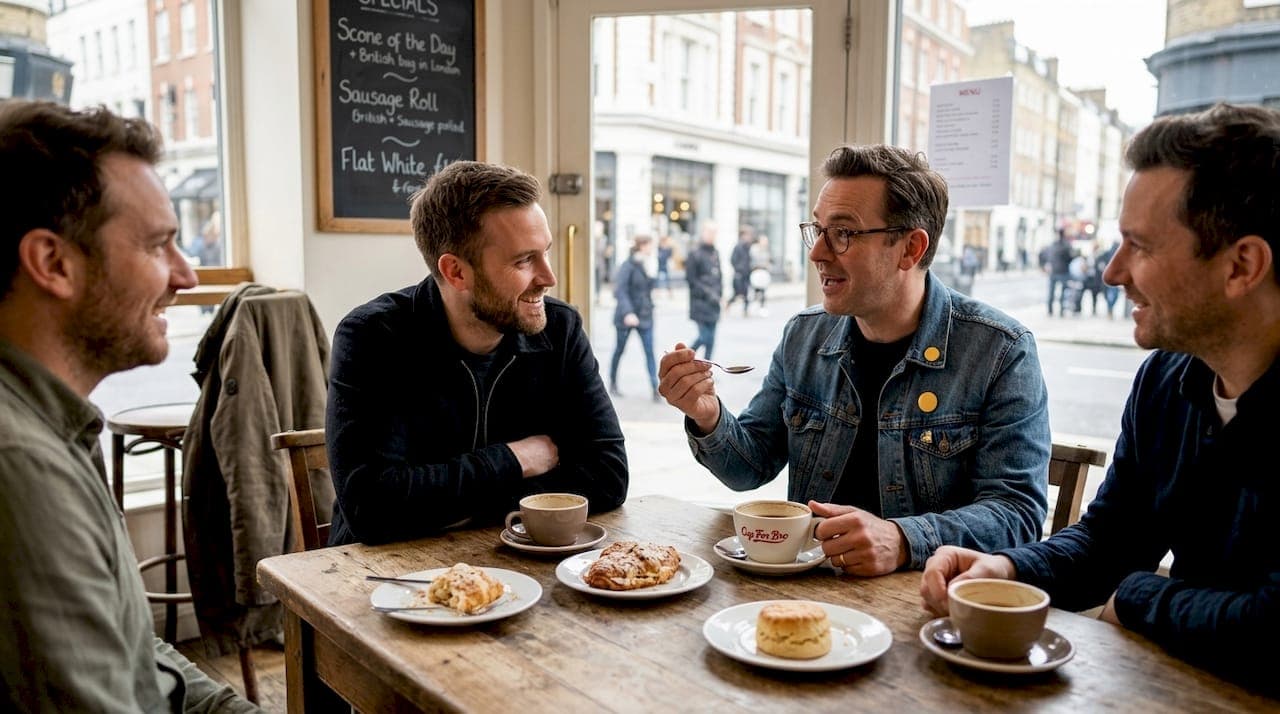
Cafés are uniquely placed to host peer support groups for men. Unlike clinical settings or formal community centres, a café feels familiar, low-pressure, and easy to walk into without feeling like you are admitting to a problem. That psychological ease is not a small thing. For many men, the biggest barrier to seeking support is the first step, and a coffee shop removes most of it.
The mechanics are straightforward. You do not need a trained therapist on site or a formal programme. Many successful groups run on a simple check-in model: participants rate how they are feeling out of ten, then talk about why. Talk Club, one of the UK's fastest-growing men's mental health charities, uses exactly this format in pubs and cafés across the country. Their sessions raise mental fitness by ~15%, and Menfulness, a similar initiative, supports hundreds of men annually through informal group settings.
A Brighton men's mental fitness group became the first of its kind in the city, drawing consistent attendance by keeping the format light and the venue welcoming. The lesson: structure matters less than atmosphere.
Here is what you need to get started:
- A regular time slot. Weekly or fortnightly works best. Routine builds trust.
- A small, private-ish area. A corner booth or back room reduces self-consciousness.
- A simple format. The 'How are you out of 10?' check-in is proven and easy to facilitate.
- A host or connector. Someone who greets newcomers and keeps the energy open.
You can support café community engagement further by training your team to recognise when a regular might need a nudge toward the group. Your barista's role in wellbeing is more significant than most café owners realise.
Pro Tip: Design a themed drink for group nights, something like a 'Clear Head' flat white, and use conversation starter cards on the table. It signals to other customers that something meaningful is happening, and it gives newcomers a talking point before the session even begins.
Partner with mental health charities
Beyond running peer support groups, partnering with charities brings both fundraising power and community visibility. The good news is that you do not need a big budget or a complex agreement. Some of the most effective charity collaborations in UK cafés have been beautifully simple.
Jericho Café donated 10% of sales from a special blend to a mental health cause. Clear Head coffee gave 5% of proceeds to Talk Club. Thirteen Brighton cafés joined a coordinated fundraising campaign, proving that collective action amplifies individual effort. These are not grand gestures. They are smart, sustainable models that keep giving without burning out your team or your margins.
Charities worth approaching include Talk Club, Oxfordshire Mind, and the Molly Rose Foundation, each of which actively seeks café and retail partners. You can start a charity coffee campaign with as little as a limited-edition blend and a shelf card explaining the cause.
Here is a comparison of common donation approaches:
| Method | Effort level | Customer engagement | Ongoing impact |
|---|---|---|---|
| % of sales from a blend | Low | Medium | High |
| Donation day or event | Medium | High | One-off |
| Pop-up charity stall | Medium | High | Medium |
| Conversation cards/cup sleeves | Very low | Medium | Ongoing |
| Resource display board | Very low | Low | Ongoing |
Customer engagement tools are often underestimated. A well-placed conversation card or a cup sleeve with a helpline number costs almost nothing, yet it reaches every customer who picks up a drink. These small touchpoints drive café donations and awareness simultaneously. For ideas on scaling this locally, explore how local café fundraising works across different UK regions.
Create or back community cafés as safe spaces
Direct charity partnerships aside, cafés can go further by operating as genuine community safe spaces, or by actively supporting models that do. This is where the impact shifts from transactional to transformational.
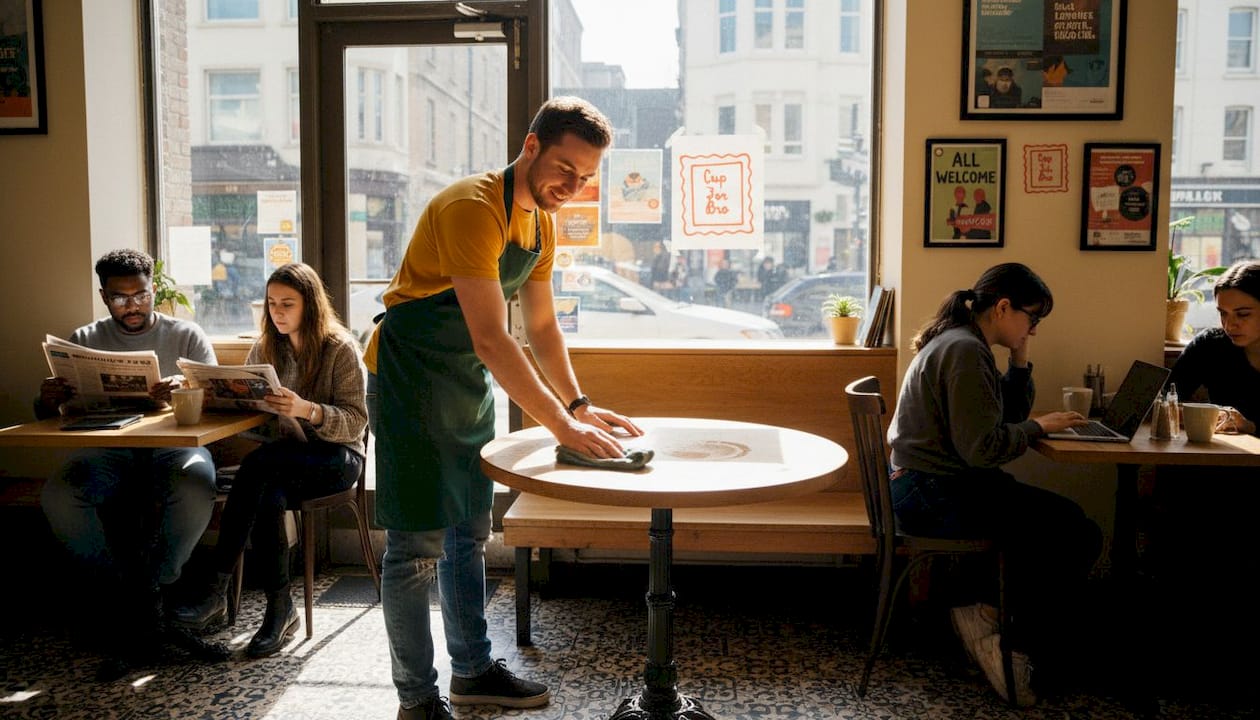
Community cafés offer something that a donation never can: a physical place where men can show up, be seen, and belong. The Wellbeing Café in Okehampton is one example, offering affordable meals, peer support drop-ins, and free access to local services under one roof. The WiSE Owl Café men's breakfast club in Wetherby records over 10,000 visits a year, with profits used to subsidise free meals for those who cannot afford them.
These numbers matter. They show that when you build a consistent, welcoming space, men come back. Repeatedly.
Here is what a community café safe space model can include:
- Affordable or subsidised meals, reducing financial barriers to attendance
- Drop-in peer support, no appointment or referral needed
- Signposting to local services, such as housing, debt advice, or NHS mental health referrals
- A regular anchor event, like a weekly breakfast club or monthly social
A BBC feature on a coffee van initiative showed how even mobile café formats can build strong mental health communities when they show up consistently in the same place at the same time. Routine is the foundation.
Pro Tip: Introduce a loyalty card specifically for your breakfast club or community morning. It encourages repeat visits, and repeat visits build the relationships that actually reduce isolation over time. Explore how community wellness cafés structure this kind of engagement, and consider how customer engagement with community can be built into your day-to-day operations.
Support community-led initiatives and clubs
Past safe spaces, wider community-led clubs have a proven power to reach men who are completely missed by formal services. Activity-first approaches, things like pie clubs, walking groups, or craft mornings, work because they give men a reason to show up that is not labelled as mental health support. The support happens as a by-product of connection.
This is not a soft observation. A UCL study on men's mental health in deprived UK areas found that community clubs prevent isolation, are accessible without referral, and build the kind of trust and routine that clinical settings rarely achieve. The research points clearly toward social infrastructure as a complement to, not a replacement for, formal care.
"The most effective interventions for men's mental health are often the ones that don't look like mental health interventions at all. Activity, routine, and belonging do the work that referrals cannot."
As the Bennett School of Public Policy notes, community-led models, from pie clubs to walking groups, consistently outperform top-down programmes in reaching isolated men, particularly in rural and deprived areas.
Here is how your café can launch or link with a local club:
- Identify a local gap. Is there a walking group, craft club, or sports team that lacks a regular meeting point?
- Offer your space. Before or after opening hours, your café can host without significant cost.
- Partner, do not lead. Let the community own the club. Your role is convener, not organiser.
- Remove every barrier. No referral, no sign-up form, no fee. Just show up.
- Promote it quietly. A small notice, a word from your team, a card on the counter.
For cafés in urban areas, resources on mental health support for men in London and how London cafés support mental health charities offer region-specific guidance worth exploring.
What most cafés miss about men's mental health impact
Here is the uncomfortable truth: most cafés focus almost entirely on donations, and donations, while valuable, are the lowest-impact thing you can do for men's mental health over the long term. A one-off fundraiser raises money. A weekly breakfast club saves lives.
The research is clear on this. Preventive community work — the kind that builds routine, belonging, and trust over months and years — delivers outcomes that no single donation day can replicate. The men who benefit most are not the ones who attend a charity event once. They are the ones who show up every Tuesday because it is the one place they feel like themselves.
There is also a risk that café owners rarely discuss: funding fragility. Community initiatives that rely on grants or charity partnerships can collapse when funding ends. The most resilient models are the ones woven into your café's everyday rhythm, not bolted on as a campaign.
Our honest advice? Use the coffee shop mental health checklist to audit what you are already doing, then start small and build a routine. Champion local voices. Let the men in your community shape what support looks like. That is what creates lasting impact, not the size of the cheque.
Connect your café's impact with Cup For Bro
If you are ready to turn good intentions into real action, Cup For Bro is built for exactly this moment. We partner with some of the UK's leading mental health foundations, and every bag of coffee sold funds vital support programmes and services for men.
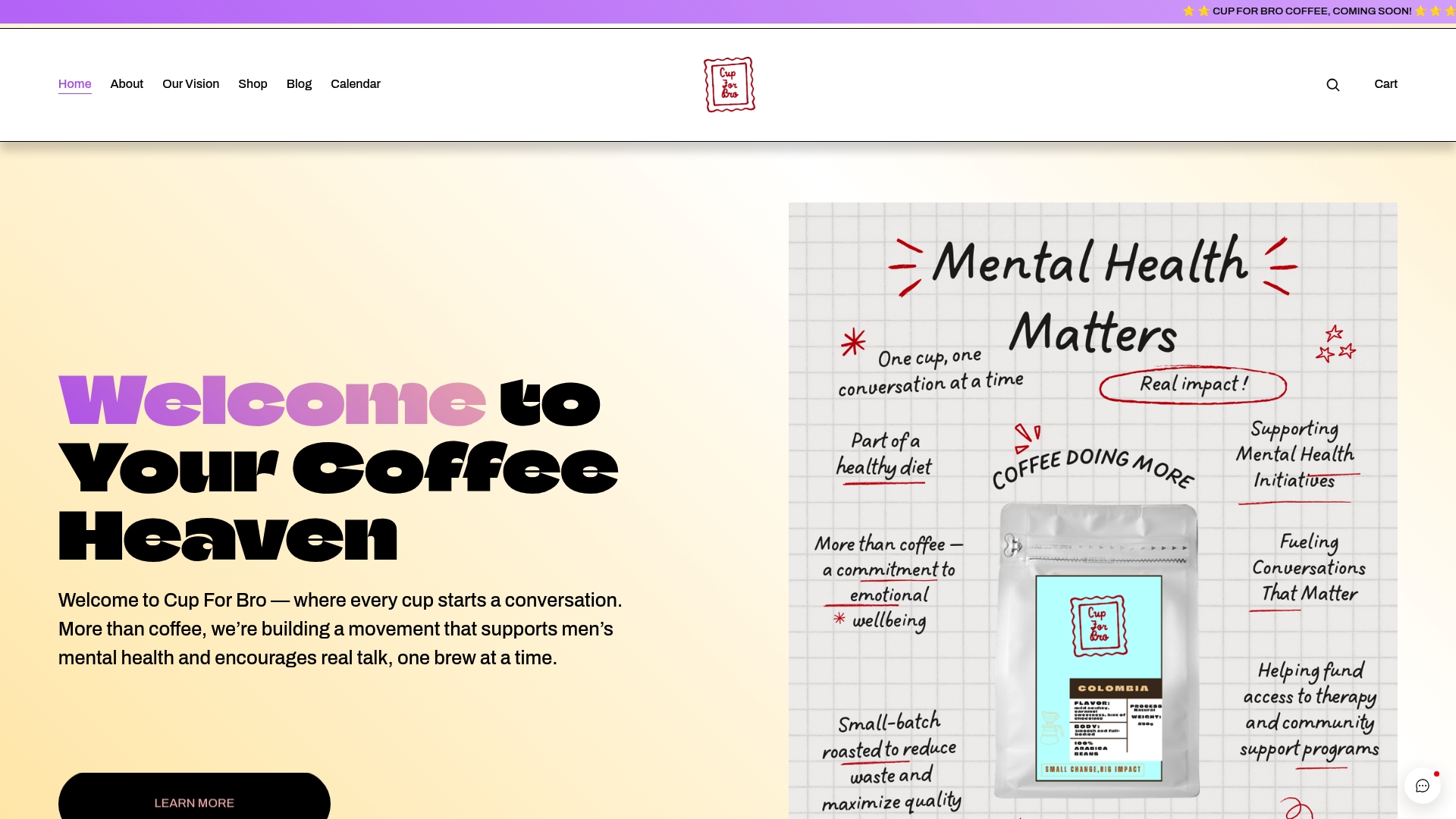
Stocking ethical coffee from Cup For Bro means every cup you serve contributes directly to men's mental health, without adding complexity to your operations. It is a giving model that works alongside peer groups, charity campaigns, and community spaces. Explore the full range of Cup For Bro resources to find partnership options, engagement tools, and community guides designed specifically for café owners who want to make a measurable difference.
Frequently asked questions
Which café-based initiative shows the highest measurable impact for men's mental health?
Hosting structured peer support groups like Talk Club is among the most effective options, with sessions raising mental fitness by ~15% and supporting hundreds of men each year through consistent, low-barrier engagement.
Can small independent cafés make a difference or is impact limited to larger chains?
Small cafés can absolutely make a significant difference. Thirteen Brighton cafés joined a single fundraising campaign, and community café models like WiSE Owl record over 10,000 visits a year, proving that scale is not a prerequisite for impact.
What are practical ways to engage reluctant male customers?
Activity-first clubs, themed drinks, and conversation cards work well because they remove the mental health label from the experience. Low-barrier, activity-first approaches consistently reach men who would never attend something formally branded as support.
Do café-led initiatives replace NHS or clinical mental health care?
No. Cafés provide preventive social infrastructure and trust-building that complements clinical care rather than replacing it. The goal is to keep men connected and supported before a crisis point is reached.