

Men across the UK consume millions of cups of coffee daily, yet few understand its genuine effects on mental wellbeing. Research from UK Biobank studies in 2025 reveals that moderate coffee intake reduces depression risk by up to 20%, whilst excessive consumption can trigger anxiety and sleep disruption. This guide examines evidence-based insights specifically tailored for men seeking to enhance their mental health through mindful coffee consumption, exploring optimal intake levels, biological mechanisms, and practical strategies that support both personal wellbeing and community mental health initiatives.
Table of Contents
- How coffee affects mental health and wellbeing
- Optimal coffee consumption for mental wellbeing
- Special considerations for men in the UK
- Applying coffee consumption for enhanced wellbeing and community impact
- Discover quality coffee and support wellbeing initiatives
Key takeaways
| Point | Details |
|---|---|
| Optimal intake range | Consuming 2-4 cups daily (200-400mg caffeine) offers maximum mental health benefits with minimal risks |
| Neuroprotective effects | Coffee's caffeine and antioxidants work together to reduce inflammation and support brain health |
| Male-specific benefits | Coffee drinkers experience less depression linked to chronic pain compared to non-drinkers |
| Overconsumption risks | Exceeding 400mg caffeine daily may increase anxiety symptoms and disrupt sleep quality |
| Mindful consumption | Supporting purpose-driven coffee initiatives enhances personal wellbeing whilst funding mental health programmes |
How coffee affects mental health and wellbeing
Coffee's influence on mental health operates through multiple biological pathways that directly affect brain function and mood regulation. Caffeine antagonises adenosine receptors, which normally promote drowsiness and fatigue, creating immediate improvements in alertness and cognitive performance. This receptor blockade triggers a cascade of neurochemical changes that enhance dopamine signalling and improve mental clarity throughout the day.
Beyond caffeine alone, coffee contains chlorogenic acids and other polyphenolic compounds that activate powerful antioxidant pathways within brain tissue. These compounds reduce oxidative stress and inflammation, two critical factors linked to depression and cognitive decline. Research demonstrates that moderate caffeine intake (50-400mg) provides neuroprotective benefits that may lower risks of Parkinson's disease and Alzheimer's dementia over time.
The mental health benefits extend to mood regulation through several mechanisms:
- Enhanced neurotransmitter activity, particularly dopamine and serotonin pathways
- Reduced systemic inflammation that contributes to depressive symptoms
- Improved mitochondrial function supporting brain energy metabolism
- Activation of brain-derived neurotrophic factor (BDNF) promoting neural plasticity
These effects apply broadly across populations without significant sex differences in basic mechanisms. However, individual responses vary based on genetic factors affecting caffeine metabolism, existing anxiety sensitivity, and overall health status. Men metabolise caffeine at similar rates to women, though body composition and medication use can influence actual blood levels achieved.
"Coffee's neuroprotective properties stem from the synergistic action of caffeine and antioxidants, creating benefits beyond simple stimulation."
Understanding these mechanisms helps men make informed decisions about incorporating coffee and mental health research into their daily wellness routines. The key lies in recognising that benefits depend on both the compounds present and the dosage consumed.
Optimal coffee consumption for mental wellbeing
Finding the right balance in coffee consumption maximises mental health benefits whilst avoiding potential drawbacks. UK Biobank research shows that 2-3 cups daily correlates with the lowest risk of depression and anxiety symptoms, creating a J-shaped relationship where moderate intake offers protection but excessive consumption increases risk. This pattern holds particularly strong for men seeking to support their mental wellbeing through dietary choices.
The following table summarises evidence-based intake recommendations:
| Daily intake | Caffeine amount | Mental health effects | Key considerations | | --- | --- | --- | | 1-2 cups | 100-200mg | Mild alertness boost, minimal risk | Safe starting point for sensitive individuals | | 2-4 cups | 200-400mg | Optimal depression/anxiety protection | Recommended range for most men | | 4-6 cups | 400-600mg | Increased anxiety risk, sleep disruption | Exceeds safe limits for many people | | 6+ cups | 600mg+ | High anxiety, jitteriness, dependence | Avoid this level of consumption |
Research confirms that high-dose caffeine exceeding 400-500mg daily significantly increases risks of anxiety symptoms, sleep disturbances, and cardiovascular stress. Men who are genetically slow metabolisers of caffeine or those with existing anxiety conditions should aim for the lower end of the recommended range. Individual tolerance varies considerably, with some men experiencing jitteriness at 200mg whilst others tolerate 400mg comfortably.

Timing matters as much as quantity. Consuming coffee after 2pm can interfere with sleep architecture, reducing deep sleep phases crucial for mental health recovery. Men working night shifts or irregular schedules need to adjust their intake patterns accordingly, maintaining the 6-8 hour buffer before intended sleep time.
Pro Tip: Drink your coffee black or with minimal additions to preserve beneficial polyphenols and avoid excess calories from sugar and cream that can negatively impact mood stability.
Monitoring your response helps optimise intake. Track how different amounts affect your energy levels, mood, sleep quality, and anxiety symptoms over two weeks. This personalised approach ensures you're maximising benefits whilst respecting your unique physiology. Men following balanced coffee habits report better sustained energy and improved mental clarity throughout their day.
Special considerations for men in the UK
Men face unique mental health challenges where coffee consumption intersects with specific wellbeing concerns. UK Biobank data reveals that coffee drinkers experience significantly less depression associated with chronic pain compared to non-drinkers, suggesting a protective effect particularly relevant for men managing musculoskeletal conditions or long-term pain syndromes. This relationship appears strongest in regular consumers maintaining 2-4 cups daily.
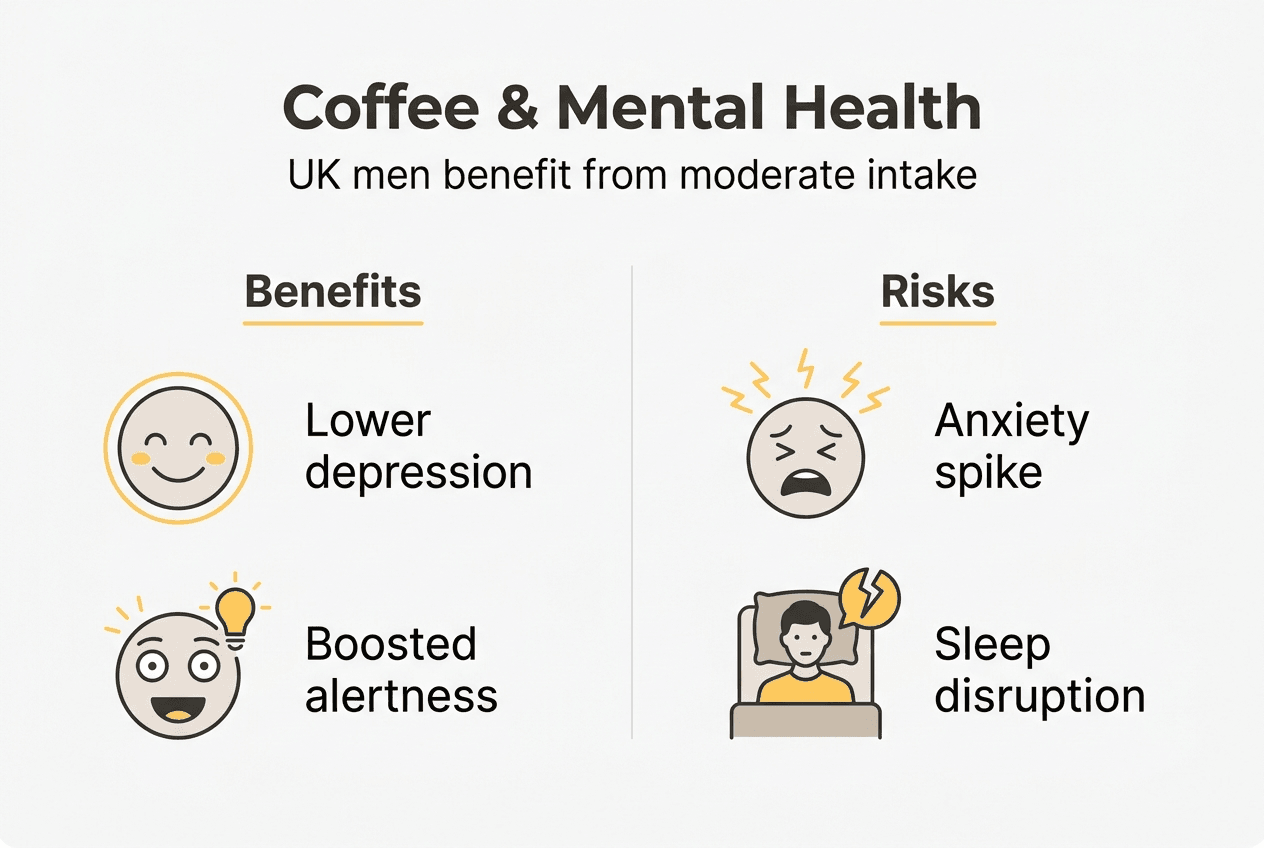
Chronic pain affects approximately 28% of UK adults, with men often underreporting symptoms due to cultural expectations around masculinity and stoicism. Coffee's anti-inflammatory properties may reduce pain-related depression through multiple pathways, offering a practical adjunct to conventional pain management strategies. Men dealing with back pain, arthritis, or sports injuries might find moderate coffee consumption supports both physical comfort and mental resilience.
However, men must balance mental health benefits against potential physical health considerations. Observational studies link high caffeine intake with increased risk of benign prostatic hyperplasia (BPH), a common condition affecting older men. Whilst this association doesn't prove causation, men experiencing urinary symptoms or those with existing prostate concerns should discuss their coffee consumption with healthcare providers.
Practical guidance for men includes:
- Start with 2 cups daily and assess mental health improvements over 2-3 weeks
- Monitor for anxiety symptoms, sleep disruption, or urinary changes
- Reduce intake if experiencing jitteriness, racing thoughts, or difficulty sleeping
- Consult your GP if you have prostate symptoms before increasing consumption
- Consider genetic testing for caffeine metabolism if you're unusually sensitive
- Combine coffee with other mental health strategies like exercise and social connection
Key statistic: Men who drink 2-3 cups of coffee daily show 20% lower depression risk compared to non-drinkers, with even stronger protection against pain-related mental health decline.
The intersection of coffee consumption with male mental health extends beyond individual biochemistry to social and cultural factors. Men in the UK often use coffee breaks as acceptable opportunities for social connection and informal peer support, creating mental health benefits beyond the beverage itself. Recognising coffee effects on men's mental health helps you leverage both the biological and social dimensions of consumption.
Younger men (18-35) typically metabolise caffeine faster than older men, potentially tolerating higher intakes without sleep disruption. However, this doesn't eliminate risks of dependence or anxiety at excessive doses. Men over 50 should pay particular attention to timing, avoiding afternoon coffee to protect sleep quality that naturally declines with age.
Applying coffee consumption for enhanced wellbeing and community impact
Transforming coffee from a simple habit into a wellbeing tool requires intentional strategies that honour both personal health and broader community values. Follow these evidence-based steps to optimise your coffee consumption for mental health benefits:
- Establish your baseline tolerance by starting with 1-2 cups daily for one week, noting effects on energy, mood, and sleep quality before adjusting upward.
- Time your intake strategically by consuming coffee between 9am-2pm when cortisol levels naturally dip, maximising alertness benefits without disrupting evening wind-down.
- Choose quality over quantity by selecting freshly roasted beans rich in polyphenols rather than instant coffee with degraded antioxidant content.
- Monitor your mental state by keeping a simple log tracking daily cups consumed alongside mood ratings, anxiety levels, and sleep quality scores.
- Adjust based on lifestyle factors including stress levels, exercise intensity, medication use, and existing mental health conditions that influence caffeine sensitivity.
- Integrate social connection by using coffee breaks as opportunities for meaningful conversations with mates, colleagues, or family members.
Pro Tip: Support men's mental health initiatives by choosing coffee from purpose-driven brands that fund counselling services, suicide prevention programmes, and community wellbeing projects.
The following comparison illustrates how consumption patterns affect overall wellbeing:
| Aspect | Moderate consumption (2-4 cups) | Excessive consumption (5+ cups) |
|---|---|---|
| Mental clarity | Enhanced focus and sustained energy | Jitteriness and scattered attention |
| Mood stability | Reduced depression risk, balanced affect | Increased anxiety and irritability |
| Sleep quality | Minimal impact if consumed before 2pm | Disrupted sleep architecture and insomnia |
| Physical health | Antioxidant benefits, reduced inflammation | Potential digestive issues, elevated heart rate |
| Social benefits | Facilitates connection and conversation | May increase social anxiety symptoms |
| Community impact | Supports mental health funding when mindful | Missed opportunity for purpose-driven choices |
Applying these principles means recognising that mental health coffee best practices extend beyond personal consumption to encompass how your choices support broader wellbeing initiatives. Men who engage with purpose-driven coffee initiatives report greater satisfaction knowing their daily ritual contributes to mental health services that help other men facing challenges.
Practical implementation looks different for each man based on work schedules, family responsibilities, and existing health conditions. A construction worker starting at 6am might benefit from a cup upon waking and another at mid-morning, whilst an office worker could optimise with consumption at 9am and 1pm. Night shift workers need to completely restructure timing, treating their wake time as morning regardless of clock time.
Preparation method matters for preserving beneficial compounds. Filtered coffee retains more chlorogenic acids than espresso, whilst cold brew offers lower acidity for men with sensitive stomachs. Avoid adding excessive sugar or artificial sweeteners that create blood glucose spikes and crashes undermining coffee's mood-stabilising effects. Black coffee or minimal additions of milk preserve the full spectrum of mental health benefits whilst supporting mindful coffee consumption guidance.
Discover quality coffee and support wellbeing initiatives
Your daily coffee ritual can serve dual purposes: enhancing your personal mental wellbeing whilst supporting vital programmes that help men across the UK facing mental health challenges. Cup For Bro partners with leading mental health foundations to provide premium coffee beans that fund counselling services, crisis support, and community wellbeing initiatives. Every bag purchased directly contributes to expanding access to mental health resources for men who need them most.
Explore our exclusive coffee selection featuring carefully sourced beans optimised for both flavour and beneficial compound content. Learn how your consumption directly supports mental health impact initiatives creating real change in communities throughout the country. Visit Cup For Bro to discover how mindful coffee choices enhance your wellbeing whilst funding support programmes that save lives. Because giving is the Cup For Bro way of business.
FAQ
What are the mental health benefits of drinking coffee?
Coffee improves alertness, reduces depression risk by up to 20%, and provides neuroprotective effects when consumed in moderation. These benefits result from caffeine's adenosine receptor antagonism combined with antioxidant compounds that reduce brain inflammation and support cognitive function. Most men experience optimal effects at 2-4 cups daily.
How much coffee is safe to consume daily for mental wellbeing?
Most research recommends 2-4 cups per day, providing approximately 200-400mg of caffeine, as safe and beneficial for mental health in most men. This range offers maximum depression protection whilst minimising anxiety and sleep disruption risks. Men who are sensitive to caffeine or have existing anxiety conditions should start at the lower end and adjust based on individual response.
Can coffee consumption support men with chronic pain and depression?
UK Biobank evidence shows that coffee drinkers experience significantly less depression associated with chronic pain compared to non-drinkers. Coffee's anti-inflammatory properties may reduce pain-related mental health decline, offering support as part of a comprehensive wellbeing strategy. Men managing long-term pain conditions might find moderate coffee consumption particularly beneficial for maintaining positive mental health.
Should men concerned about prostate health limit their caffeine intake?
Observational studies associate high caffeine intake with increased risk of benign prostatic hyperplasia, though causation isn't established. Men experiencing urinary symptoms or those with existing prostate concerns should consult their GP about appropriate consumption levels. Moderate intake (2-3 cups daily) appears safe for most men, but individual circumstances vary requiring personalised medical guidance.