

Running a successful cafe in the UK demands more than excellent coffee and pastries. Customer engagement remains one of the toughest challenges cafe owners face, with retention rates often hovering below industry benchmarks. Community-focused strategies and mental health initiatives offer powerful solutions that transform casual visitors into loyal regulars. This guide explores practical approaches to boost retention through meaningful connection, from hosting conversation-friendly events to partnering with mental health organisations. You'll discover actionable tactics that create lasting emotional bonds with your customers whilst supporting vital causes.
Table of Contents
- Understanding the value of community engagement in cafes
- Prerequisites for engaging customers: planning events and partnerships
- Executing community engagement and mental health initiatives
- Monitoring success and common challenges to avoid
- Support your cafe's community with Cup For Bro
Key takeaways
| Point | Details |
|---|---|
| Community events build belonging | Regular themed gatherings and local partnerships increase customer retention by fostering emotional connection. |
| Chatty Cafe Scheme reduces loneliness | Designated conversation tables featured in over 900 UK venues create welcoming spaces for dialogue. |
| Mental health cafes deliver measurable impact | Peer support initiatives reduce crisis admissions by 33% whilst strengthening social bonds. |
| Emotional engagement outperforms discounts | Loyalty programmes focused on belonging drive repeat visits more effectively than price reductions. |
Understanding the value of community engagement in cafes
Customer retention directly impacts your cafe's profitability and long-term viability. Coffee shop retention rates hover around 20-30%, with top independents reaching 35-40% through exceptional emotional engagement. These figures matter because acquiring new customers costs five times more than retaining existing ones. When regulars feel genuine connection to your space, they visit more frequently, spend more per visit, and become vocal advocates who bring friends.
Emotional and cognitive engagement drives loyalty far more effectively than transactional relationships built on discounts. Customers who feel recognised, valued, and part of something meaningful develop strong attachments to your cafe. Service quality forms the foundation, but personal touches like remembering regular orders or names create the emotional resonance that keeps people coming back. Your cafe becomes their third place, a sanctuary between home and work where they feel truly comfortable.
Community creates belonging, the single most powerful driver of repeat visits. When customers perceive your cafe as a hub where they can connect with neighbours, participate in shared interests, or support causes they care about, you transcend the commodity coffee market. They choose you not because you're convenient or cheap, but because you've become part of their identity and social fabric. This emotional investment makes them remarkably resistant to competitor offers.
Consider how different engagement types influence behaviour:
- Transactional engagement attracts price-sensitive customers who leave when competitors offer better deals
- Emotional engagement builds loyalty through personal recognition and consistent positive experiences
- Cognitive engagement creates intellectual investment through events, conversations, and shared learning
- Community engagement fosters belonging by connecting customers to each other and meaningful causes
The most successful cafes layer these engagement types strategically. They maintain excellent service quality whilst creating opportunities for customers to form relationships with staff, fellow patrons, and the broader community. Mental health initiatives and conversation-focused programmes exemplify this approach, transforming cafes into spaces that genuinely improve lives whilst building unshakeable customer loyalty.
Prerequisites for engaging customers: planning events and partnerships
Successful community engagement requires thoughtful planning and resource allocation before execution. Allocate 3-5% of gross revenue to community activities for meaningful impact without straining operations. This budget covers event supplies, partner contributions, promotional materials, and staff time dedicated to community initiatives. Start conservatively if resources are tight, then scale as you measure returns.
Choose event types that align with your space, customer base, and values. Small cafes excel with intimate gatherings like book clubs, acoustic music sessions, or art exhibitions featuring local creators. Larger venues can host workshops, panel discussions, or fundraising events for mental health charities. Consider your customers' interests through informal conversations or brief surveys. Events that reflect genuine community needs attract consistent participation rather than one-off curiosity.
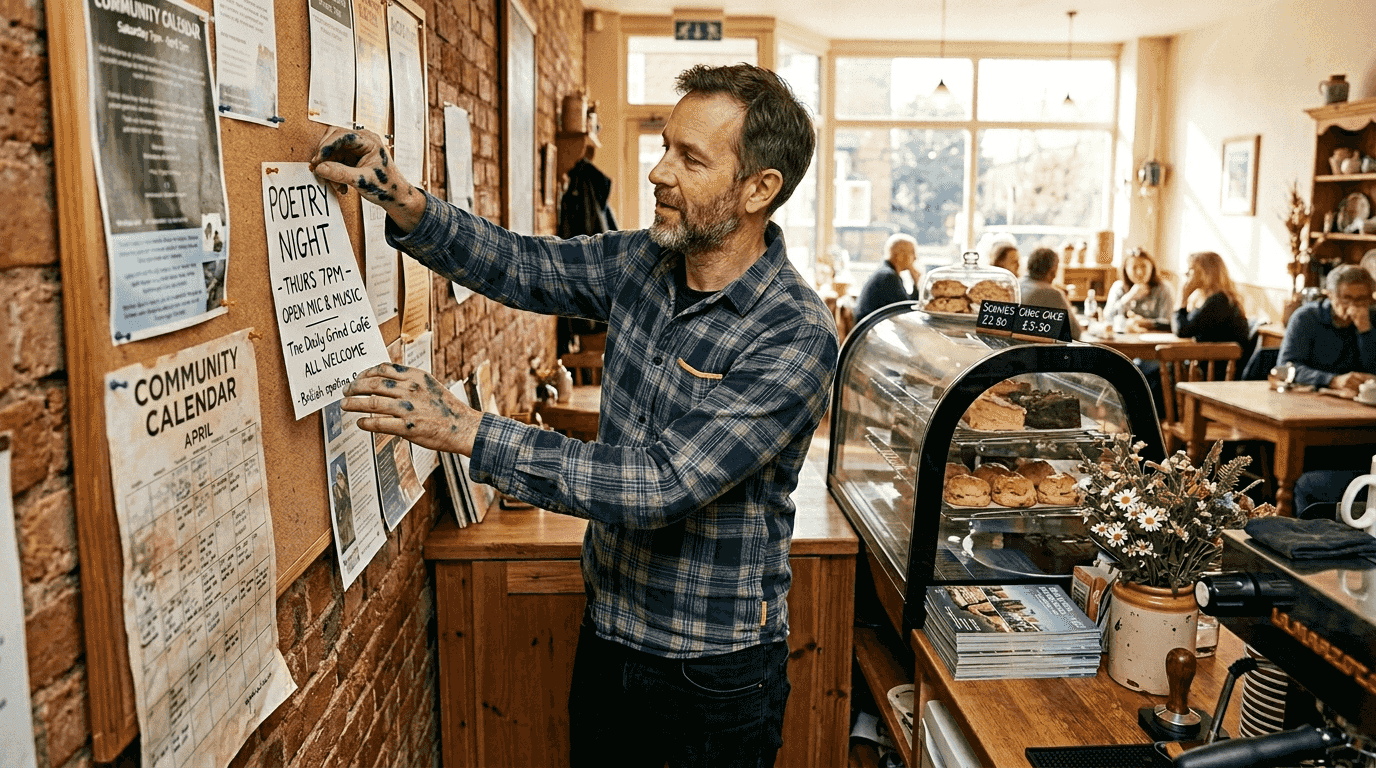
Partnership selection determines initiative success. Local businesses, artists, mental health organisations, and community groups bring expertise, audiences, and credibility you cannot generate alone. Approach potential partners with clear value propositions explaining mutual benefits. Mental health charities gain awareness and fundraising venues. Local artists receive exhibition space and sales opportunities. Businesses access your customer base for cross-promotion. Structure partnerships with defined roles, expectations, and success metrics from the outset.
Loyalty programmes should prioritise belonging over discounts. Traditional punch cards attract price-sensitive customers who lack emotional investment. Instead, create tiered membership offering exclusive event access, early product releases, or recognition as community supporters. Consider programmes where purchases fund mental health services, allowing customers to see their patronage creating tangible social impact. This transforms transactions into meaningful contributions aligned with their values.
Mental health collaborations require careful preparation:
- Research local mental health organisations and their service gaps your cafe could address
- Arrange volunteer training for staff in mental health awareness and crisis response basics
- Designate quiet spaces suitable for peer support meetings or one-on-one conversations
- Establish clear protocols for managing distressed customers and knowing when to escalate to professionals
- Secure appropriate insurance coverage for mental health-related activities on your premises
Pro tip: Start with one well-executed initiative rather than spreading resources across multiple activities. Master hosting monthly conversation evenings or partnering with one mental health charity before expanding your community engagement portfolio. Depth of impact matters more than breadth of activities.
Executing community engagement and mental health initiatives
Regular themed events nurture community bonds by giving customers reasons to visit beyond caffeine needs. Schedule consistent monthly or weekly gatherings so regulars can plan attendance. Book clubs, craft workshops, acoustic music nights, and local artist showcases work exceptionally well in cafe settings. Promote events through social media, in-store signage, and email lists at least two weeks ahead. Create welcoming atmospheres by arranging seating to encourage interaction and having staff actively introduce newcomers to regular attendees.
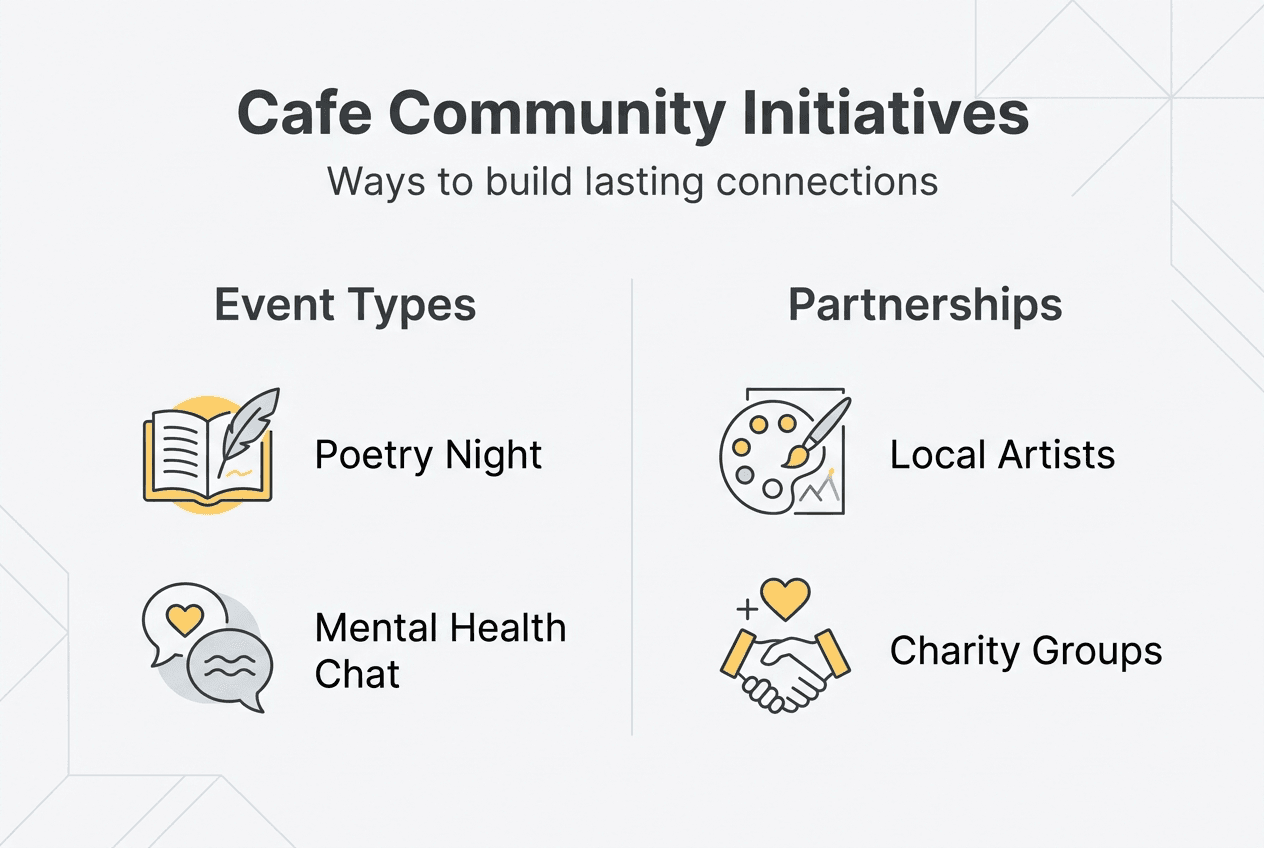
Joining the Chatty Cafe Scheme provides structured support for conversation-focused initiatives. The scheme's Chatter & Natter tables, featured in over 900 UK venues, designate specific spaces where customers can sit to signal openness to conversation. Implementation is straightforward: request free table signs from the organisation, choose a visible table location, train staff to explain the concept to curious customers, and promote your participation locally. The scheme reduces loneliness by creating permission structures for strangers to connect naturally over coffee.
Mental health peer support requires sustainable frameworks that protect both customers and your business. Partner with established mental health organisations who can provide volunteer training, ongoing supervision, and crisis protocols. Mental health cafes reduce admissions by 33% and improve patient skills through regular peer support sessions hosted in welcoming community spaces. Structure sessions with trained facilitators present, clear start and end times, and private or semi-private areas that maintain dignity whilst remaining safely supervised.
Follow these steps to launch peer support successfully:
- Contact local mental health trusts or charities to propose partnership and secure their expertise
- Complete mental health awareness training for yourself and key staff members
- Designate appropriate space with comfortable seating, natural light, and reasonable privacy
- Establish session schedules that don't conflict with peak trading hours
- Create referral pathways to professional services for participants needing additional support
- Develop house rules addressing confidentiality, respect, and behaviour expectations
- Arrange liability insurance covering mental health activities on your premises
Compare initiative types to choose what fits your cafe:
| Initiative Type | Best For | Pros | Cons | | --- | --- | --- | | Themed events | Building broad community | Attracts diverse participants, flexible format | Requires ongoing planning and promotion | | Chatty Cafe tables | Reducing isolation | Low cost, simple implementation | Success depends on customer awareness | | Mental health peer support | Deep social impact | Measurable outcomes, strong partnerships | Needs training, insurance, dedicated space | | Loyalty programmes | Retention | Encourages repeat visits | Can attract discount-seekers if poorly designed |
Pro tip: Combine initiatives for amplified impact. Host monthly mental health awareness events whilst maintaining weekly Chatty Cafe tables and a community-focused loyalty programme. Layered approaches create multiple entry points for different customer preferences and deepen overall engagement.
Monitoring success and common challenges to avoid
Tracking retention and event participation reveals which initiatives deliver genuine value. Monitor repeat visit frequency through your point of sale system, comparing customers who attend events versus those who don't. Calculate retention rates monthly by dividing returning customers by total customers from the previous period. Event success metrics include attendance numbers, participant feedback, and whether attendees become regular customers afterwards. Collect feedback through brief post-event surveys or casual conversations, asking what worked and what could improve.
Balance ambition with available resources to maintain quality and sustainability. Overpromising on event frequency or complexity leads to staff burnout and disappointing execution. Start with quarterly events, then increase frequency as you develop efficient systems and gauge demand. Mental health initiatives particularly require careful resource management since they involve vulnerable populations who deserve consistent, reliable support rather than sporadic efforts that disappear when enthusiasm wanes.
Avoid common pitfalls that undermine engagement efforts:
- Over-discounting attracts price-sensitive customers who lack loyalty and erode profit margins
- Neglecting safety protocols in mental health contexts creates liability risks and potential harm
- Hosting events without promotion wastes preparation effort on poorly attended gatherings
- Choosing partners whose values misalign with yours confuses your brand identity
- Failing to train staff properly leaves them unprepared to facilitate community interactions effectively
Small cafes excel with intimate events rather than attempting large-scale productions beyond their capacity. Focus on what you can execute brilliantly with existing resources. A perfectly hosted monthly book club with 12 engaged participants builds more loyalty than an ambitious festival that feels chaotic and understaffed.
Staff training in emotional intelligence and personal customer connections amplifies all engagement efforts. Teach team members to remember regular customers' names, usual orders, and personal details they've shared. These small acts of recognition make customers feel valued as individuals rather than transactions. Train staff to facilitate introductions between customers with shared interests, effectively becoming community connectors who strengthen the social fabric of your cafe.
"The most successful community cafes don't just serve coffee, they create spaces where customers feel genuinely seen, heard, and connected to something larger than themselves. This requires intentional effort but delivers loyalty that discounts never could."
Maintain safety in mental health contexts by establishing clear boundaries and escalation procedures. Staff should understand the difference between friendly support and professional counselling. Create simple protocols for recognising when someone needs professional help beyond peer support, with contact information for local crisis services readily available. Regular check-ins with partner organisations ensure your mental health initiatives remain appropriate, effective, and safely managed.
Support your cafe's community with Cup For Bro
Transforming your cafe into a genuine community hub becomes easier when your products themselves spark meaningful conversations. Cup For Bro offers specially curated coffee blends and merchandise designed to encourage dialogue whilst supporting men's mental health initiatives across the UK. Every purchase funds vital mental health programmes through partnerships with leading foundations, allowing your cafe to serve exceptional coffee whilst contributing to causes your customers care about.
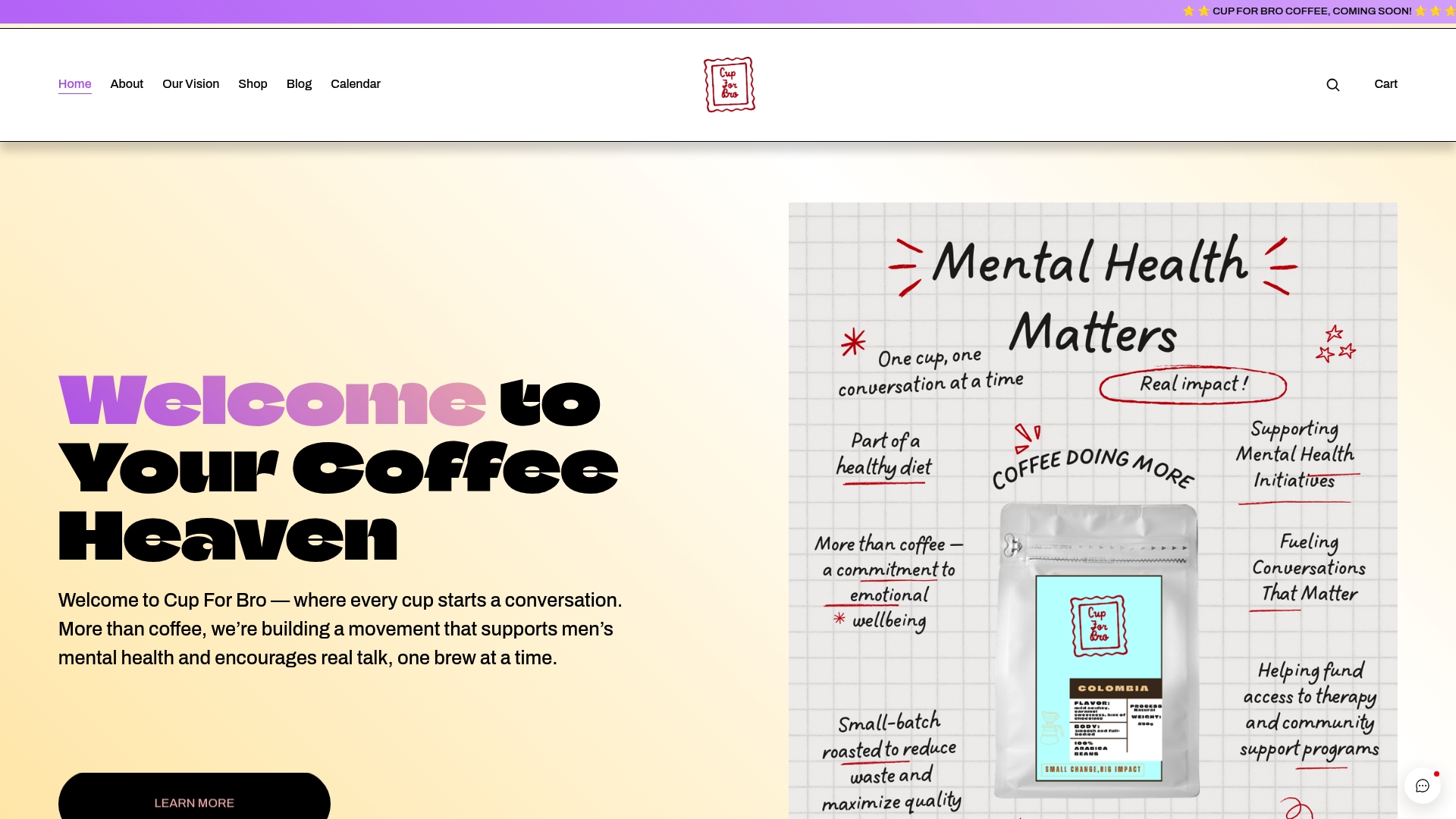
Browse our exclusive coffee range featuring blends perfect for cafes committed to quality and purpose. Our merchandise, including conversation-starting items like the Coffee Club Apron, helps create the welcoming atmosphere where customers feel comfortable connecting. Discover how Cup For Bro can support your community-building efforts whilst elevating your cafe's brand as a space that genuinely cares.
FAQ
How can I make my cafe a welcoming space for mental health support?
Provide comfortable, dedicated areas with appropriate privacy where conversations can occur without constant interruption. Train your staff in basic mental health awareness and empathetic listening so they respond appropriately to customers experiencing distress. Partner with established mental health organisations who can provide expertise, training, and ongoing support for peer programmes. Create clear house rules that maintain respectful, confidential environments whilst ensuring safety for all customers. Visit Cup For Bro's community resources for additional guidance on creating supportive cafe spaces.
What types of events best engage cafe customers?
Events encouraging conversation and belonging consistently outperform purely transactional activities. Themed discussion nights, local artist showcases, acoustic music sessions, and skill-sharing workshops create opportunities for customers to connect over shared interests. Book clubs and craft groups build regular attendance patterns since participants return for ongoing activities rather than one-off experiences. Choose events reflecting your customers' genuine interests rather than what seems trendy. Explore community event ideas tailored for cafes seeking meaningful engagement strategies.
How much budget should I dedicate to community engagement?
Effective community activities typically require allocating 3-5% of gross revenue for meaningful impact without straining operations. This covers event supplies, partner contributions, promotional materials, and staff time dedicated to initiatives. Start conservatively if resources are limited, perhaps with 2% initially, then increase allocation as you measure returns through improved retention and customer lifetime value. Track spending against retention improvements to ensure your investment delivers measurable business benefits alongside social impact.
How can I measure if community initiatives are successful?
Track repeat visit frequency comparing event attendees versus non-attendees through your point of sale data. Monitor monthly retention rates by calculating returning customers as a percentage of the previous period's total. Collect direct customer feedback through brief post-event surveys or casual conversations asking what resonated and what could improve. Measure event attendance trends over time to identify which activities generate sustained interest versus initial curiosity. Calculate customer lifetime value increases for engaged customers compared to transactional ones, revealing the financial impact of community investment.
Recommended
- One Cup, One Conversation: How Small Actions Spark Big Change — Cup For Bro .
- Our Vision | Start Conversations, Make Impact — Cup For Bro .
- Why Supporting Purpose-Driven Brands Matters More Than Ever — Cup For Bro .
- Mental Health, Coffee, and Community: How Small Daily Rituals Support Real Well-Being — Cup For Bro .