
TL;DR:
- Coffee donation programmes support mental health and boost community engagement for cafes.
- Successful setups require campaign registration, clear collection points, staff briefing, and transparent tracking.
- Ongoing communication and flexibility are key to sustaining long-term impact and customer trust.
Many UK café owners genuinely want to support mental health, yet turning that intention into a working donation programme feels surprisingly complicated. Which campaign do you join? How do you track the money? What do you tell your staff? These are real questions, and they stop good ideas from becoming meaningful action. This guide walks you through every stage of setting up a coffee donation programme for mental health, from understanding your options to verifying your impact. Whether you run a single espresso bar in Brighton or a small chain across London, there is a clear path forward, and it starts with one cup at a time.
Table of Contents
- Understanding coffee donations for mental health
- Preparing your café for a donation setup
- Step by step coffee donation programme setup
- Verifying impact and keeping momentum
- What most guides miss about coffee donations for mental health
- Connect with impact-driven coffee initiatives
- Frequently asked questions
Key Takeaways
| Point | Details |
|---|---|
| Clear setup process | Successful coffee donation campaigns start with defined steps and transparent tracking. |
| Engagement is vital | Involving staff and customers keeps the donation programme active and effective. |
| Leverage external support | Resources and campaign materials from organisations like Molly Rose Foundation simplify getting started. |
| Ongoing feedback | Assess and share programme outcomes regularly to maintain momentum and credibility. |
Understanding coffee donations for mental health
A coffee donation programme is exactly what it sounds like: a structured way for your café to channel proceeds, or a portion of them, towards mental health causes. But the mechanics vary more than most people realise, and choosing the right model matters enormously for your customers, your staff, and the charities you support.
There are three main models worth knowing. The first is direct donation, where a fixed amount from every sale goes straight to a mental health charity. The second is partnership sales, where you stock specific products, such as charity coffee blends, and a portion of the wholesale price funds programmes. The third is campaign participation, where you join an existing initiative, display materials, and collect donations in-store.
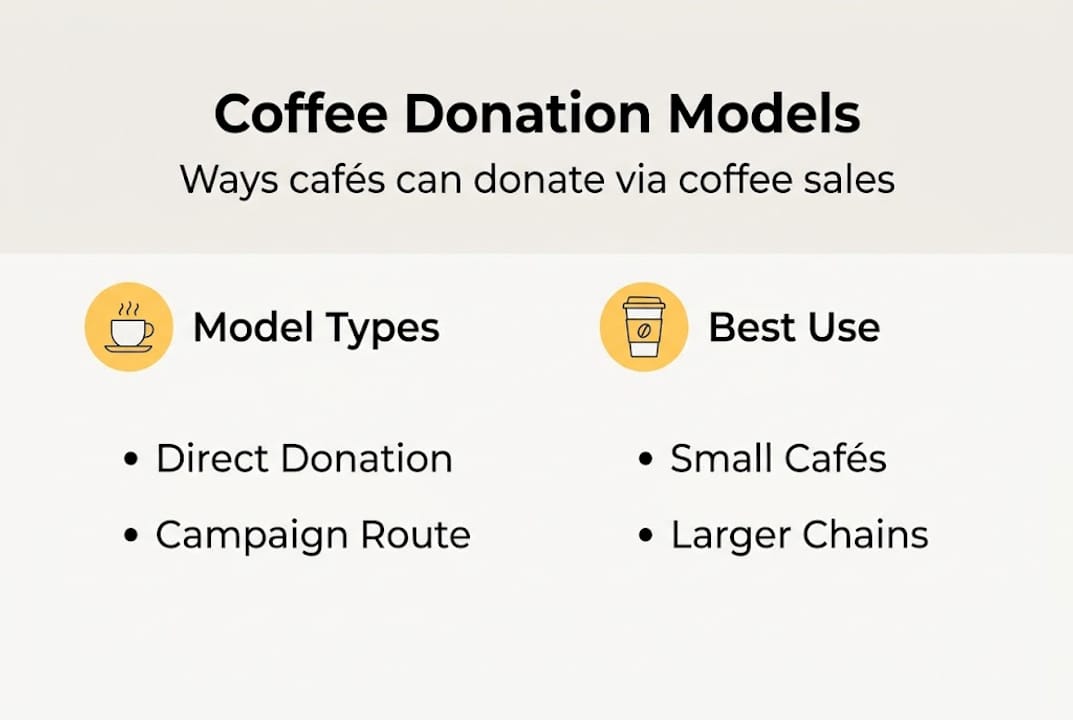
| Donation model | How it works | Best suited for |
|---|---|---|
| Direct donation | Fixed amount per sale donated | Cafés with strong POS systems |
| Partnership sales | Charity-linked product stocked | Cafés wanting product alignment |
| Campaign participation | Join existing campaigns, display materials | Any size café, low barrier to entry |
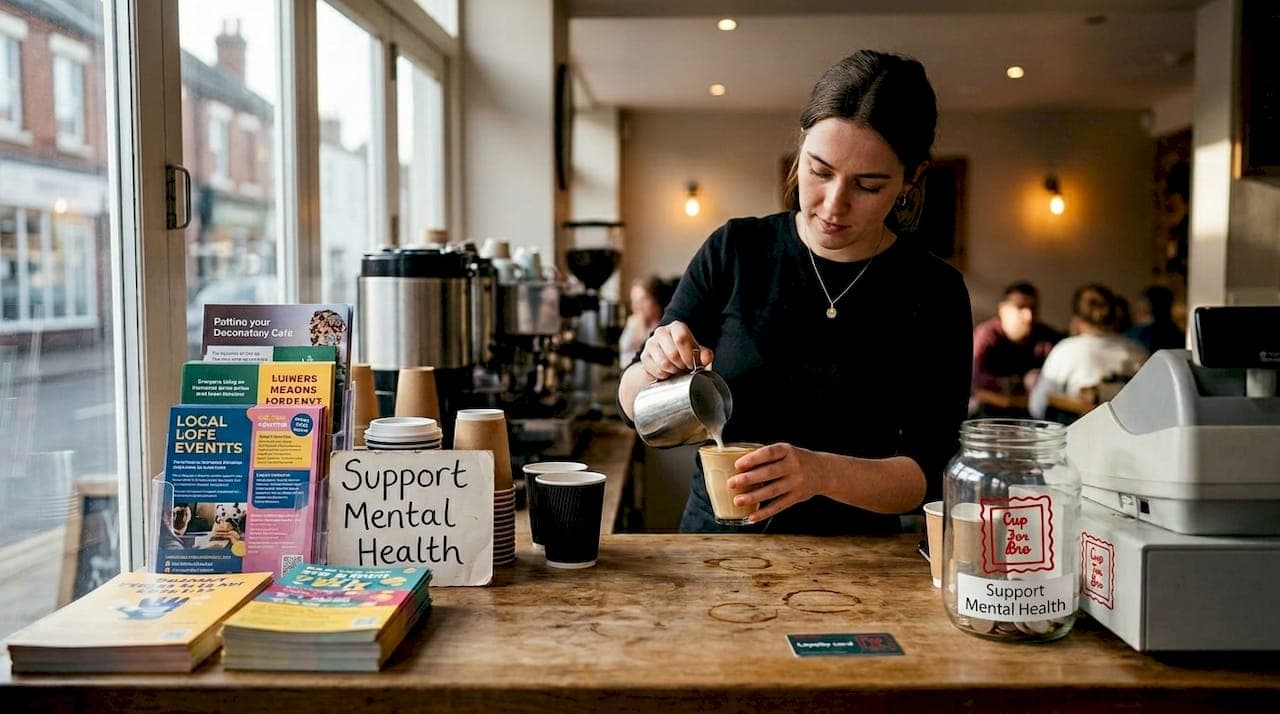
The campaign participation route is particularly accessible. Initiatives like Coffee for Molly offer free sign-up for cafés to display conversation starters and mental health campaign materials, meaning you can get started without significant upfront cost or complex logistics.
Why does this matter for your business? The benefits go well beyond goodwill. Customers are increasingly choosing where to spend their money based on values. A café that visibly supports mental health creates a sense of community, builds loyalty, and gives staff a shared sense of purpose. Running coffee with a cause is not just an ethical choice; it is a smart business decision.
Key benefits of running a coffee donation programme:
- Builds genuine trust with your local community
- Differentiates your café from competitors
- Motivates staff with a shared mission
- Creates organic social media content and PR opportunities
- Directly funds mental health services that many customers personally care about
Understanding the landscape first means you choose the right model for your café rather than defaulting to whatever is easiest in the short term.
Preparing your café for a donation setup
With the core idea clear, cafés need to map out what is required for a successful donation programme before a single cup is sold with intent behind it.
The practical requirements fall into three categories: physical tools, campaign registration, and staff preparation. Getting all three right before you launch prevents the most common early mistakes.
What you will need:
- A point-of-sale (POS) system capable of tracking donation totals or a manual tally sheet updated daily
- Physical collection jars or donation boxes placed at the counter
- Campaign materials such as cup sleeves, posters, and conversation starter cards
- A simple reporting template to log weekly donation figures
- A designated staff member to oversee the programme
For campaign registration, many organisations make this straightforward. Cafés can get involved by displaying cup sleeves and conversation starters for mental health advocacy, with materials provided free of charge. Check the campaign resources page for registration details and timelines.
| Preparation task | Timeline | Responsible |
|---|---|---|
| Register for campaign | 2 weeks before launch | Manager |
| Brief all staff | 1 week before launch | Manager or champion |
| Set up collection points | 3 days before launch | Donation champion |
| Display campaign materials | Launch day | All staff |
| Begin donation tracking | Launch day | Donation champion |
Staff briefing is where many cafés stumble. Your team needs to understand not just what the campaign is, but why it matters. A two-minute briefing before a shift is not enough. Spend time explaining the mental health cause, the impact of donations, and how customers might ask questions. A well-informed barista is your most powerful ambassador. For more on this, the barista contributions to wellbeing guide offers practical framing.
Transparency in tracking is non-negotiable. Customers who donate want to know their contribution matters. Use a visible tally board or a weekly social media update to show running totals. This builds credibility and encourages repeat giving.
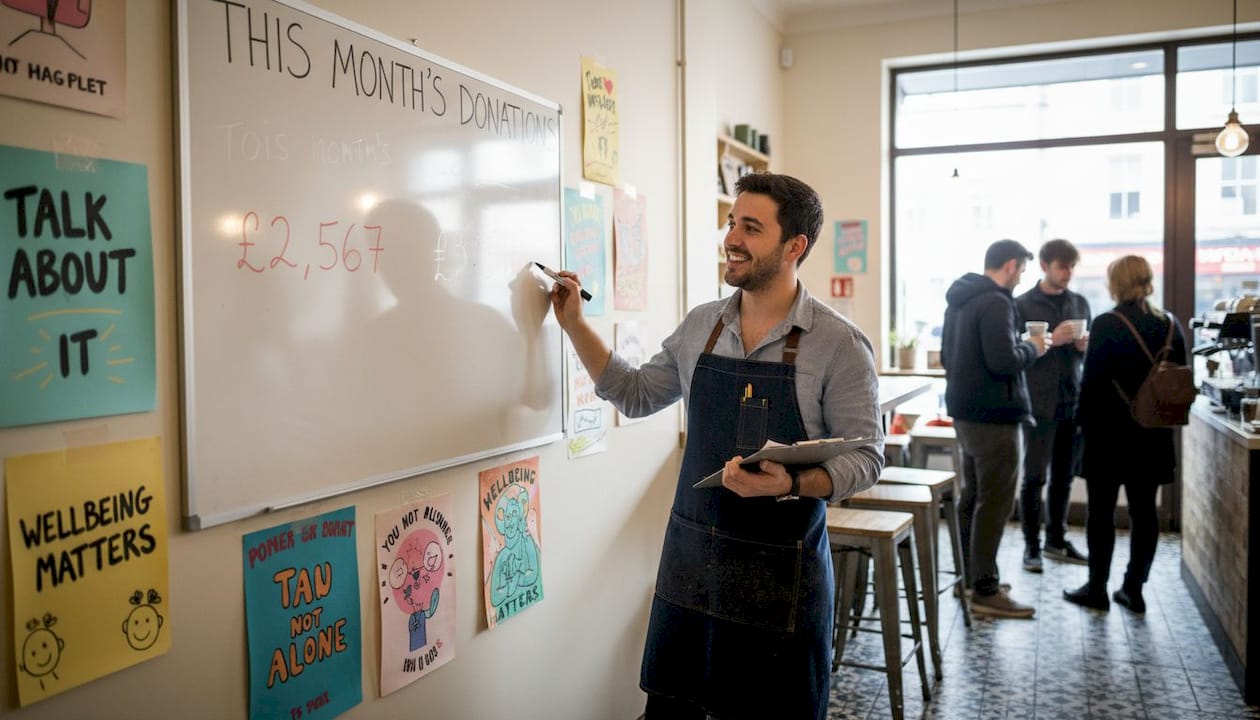
Pro Tip: Assign one member of staff as your donation champion. This person owns the programme day to day, keeps materials stocked, updates the tally, and keeps energy levels up. Without a named owner, campaigns quietly fade within weeks.
For a broader look at running charity coffee sales effectively, the charity coffee sales guide is worth reading before you finalise your setup.
Step by step coffee donation programme setup
Once requirements are met, it is time to put the donation programme into action. Follow these steps in order and you will avoid the most common pitfalls.
Step 1: Register for a mental health campaign Choose your campaign and complete the sign-up process. Campaign sign-up gives cafés conversation starter materials and support for donation efforts, so do not skip this step or try to run a campaign entirely independently from the start.
Step 2: Set up your collection points Place collection jars at every till point. Make them visible, labelled clearly, and emptied and counted at the same time each week. Consistency here matters for accurate reporting.
Step 3: Launch with promotional materials On launch day, display all cup sleeves, posters, and conversation starter cards. Brief your team one final time. Consider a small launch moment, perhaps a chalkboard announcement or a social media post, to signal to customers that something meaningful is happening.
Step 4: Record and report donations Log every collection weekly. Use a simple spreadsheet or your POS reporting function. Share totals with your campaign partner and, crucially, with your customers. For structured guidance on mental health coffee campaign steps, templates and reporting frameworks are available.
Step 5: Celebrate milestones and sustain momentum When you hit £50, £100, or £500 raised, make it visible. A small celebration, even just a handwritten note on the board, keeps staff motivated and customers invested.
"The most successful café campaigns are not the ones with the biggest budgets. They are the ones where every member of staff genuinely believes in what they are doing."
Troubleshooting common issues:
- Materials not being noticed: Move them to eye level at the counter and brief staff to mention the campaign naturally in conversation
- Donation totals inconsistent: Standardise collection times and assign one person to count
- Customer confusion about where money goes: Print a simple one-line explanation on the collection jar label
For cafés starting charity campaigns from scratch, and those exploring local fundraising approaches, additional resources can help you tailor the process to your specific community.
Verifying impact and keeping momentum
After setting up your programme, tracking progress and celebrating positive impact is what separates a short-lived effort from a lasting community initiative.
Measuring impact does not require sophisticated tools. Start with these core metrics:
- Total donations collected each week and month
- Number of customers who actively engaged with campaign materials
- Staff sentiment: do they feel proud of the programme?
- Social media reach from campaign-related posts
- Feedback received from your campaign partner organisation
Campaigns provide follow-up and feedback opportunities for cafés to highlight positive outcomes, which means you are not tracking this alone. Use that feedback to understand what worked and where to improve.
| Action | Frequency | Purpose |
|---|---|---|
| Count and log donations | Weekly | Accurate reporting |
| Update visible tally board | Weekly | Customer transparency |
| Share results on social media | Monthly | Community engagement |
| Review campaign materials | Monthly | Keep displays fresh |
| Celebrate milestones with staff | As achieved | Sustain motivation |
Keeping staff excited over months, not just weeks, is the real challenge. Rotate who updates the tally board. Share customer comments about the campaign in team briefings. Connect staff to the actual mental health outcomes their work is funding. When a barista knows that their café helped fund a counselling session for someone in their community, the campaign becomes personal.
Sharing your outcomes publicly also matters. In-shop posters showing cumulative totals, a monthly Instagram update, or a simple thank-you note to regular customers all reinforce that this is a genuine, ongoing commitment rather than a one-off gesture. For ideas on how to drive café donations over the long term, and to see real impact stories from cafés already doing this well, there is plenty of inspiration to draw from.
Growth comes naturally when transparency is consistent. Customers who trust you will bring friends. Staff who are proud will talk about it outside work. That word-of-mouth is more powerful than any poster.
What most guides miss about coffee donations for mental health
Most step-by-step guides treat the setup as the hard part. It is not. The hard part is what happens six weeks after launch, when the novelty has worn off, the collection jar is half-full, and your donation champion has taken annual leave.
The cultural shift required to sustain a meaningful donation programme is rarely discussed. Cafés in London and Brighton that have run successful campaigns over multiple years share one thing in common: they made the cause part of their identity, not just a seasonal activity. That requires honest, ongoing communication with staff and customers alike.
Transparency is not just a nice-to-have. It is the mechanism that keeps people engaged. When customers see exactly where their money goes, they give more and they return more often. When staff understand the real outcomes, they advocate naturally rather than mechanically.
The other overlooked factor is flexibility. Not every campaign format suits every café. A busy city-centre espresso bar operates very differently from a quiet neighbourhood coffee shop. Adapting the campaign to your environment, rather than following a rigid template, is what makes it feel authentic. Lessons from London café charity lessons show that the most impactful cafés customised their approach rather than copying others wholesale. That is the insight most guides skip entirely.
Connect with impact-driven coffee initiatives
For cafés ready to elevate their coffee donation programme further, Cup For Bro can help you maximise impact in a way that feels genuinely aligned with your values.
Cup For Bro partners with some of the UK's leading mental health foundations to supply coffee that funds vital support programmes with every bag sold. When your café shops exclusive coffee through Cup For Bro, you are not just sourcing quality beans; you are joining a movement that directly funds counselling, outreach, and crisis support. You can also start conversations about what we do and how your café can become part of the wider story. We support café owners with resources, guidance, and a community of like-minded businesses all using coffee as a force for genuine good.
Frequently asked questions
How do I sign up my café for a coffee donation mental health campaign?
Most campaigns, such as Coffee for Molly, offer free sign-up for cafés to receive materials like conversation starters and cup sleeves, making it straightforward to get started.
What materials do I need for a coffee donation setup?
You will need collection jars or a POS system capable of tracking donations, campaign materials such as posters and cup sleeves, and a simple method for logging weekly totals.
How can I make sure donations are tracked accurately?
Using a digital tracking system or dedicated collection points with consistent weekly counts ensures transparency and builds credibility with both customers and campaign partners.
How do I keep staff engaged with the campaign?
Regular briefings that connect staff to real outcomes, combined with celebrating milestones publicly, sustain motivation far more effectively than a one-off launch briefing.
What are the best ways to share our donation results with customers?
Share outcomes via in-shop tally boards, social media updates, and campaign feedback provided by organisations like the Molly Rose Foundation to keep your community informed and invested.