
TL;DR:
- Charity coffee blends donate a clear, specified portion of sales to mental health causes.
- They offer specialty-grade, flavorful coffees without compromising quality or taste.
- Buying these blends turns daily coffee rituals into ongoing support and conversation starters for mental health.
Every bag of coffee you buy could fund a counselling session, a crisis helpline, or a community mental health programme. That is not a marketing promise. It is the straightforward mechanics of charity coffee blends, a growing movement in the UK where your morning ritual becomes a direct act of support. These blends are not a gimmick layered on top of an ordinary product. They are specialty-grade coffees with transparent donation structures, named charity partners, and real accountability. This article breaks down how they work, what they taste like, and how you can make every cup count for mental health in the UK.
Table of Contents
- What makes a charity coffee blend unique?
- Quality and taste: charity doesn't mean compromise
- The impact: how your purchase supports mental health
- How to choose and maximise your charity coffee impact
- Why charity coffee blends are more than a trend
- Discover and support charity blends with Cup For Bro
- Frequently asked questions
Key Takeaways
| Point | Details |
|---|---|
| Transparent donation structure | Charity blends clearly outline how much of your purchase goes directly to mental health support. |
| Speciality-grade quality | Most charity coffee blends maintain high flavour and ethical sourcing standards, rivaling traditional specialty coffee. |
| Direct & lasting impact | Every bag purchased funds mental health initiatives, making your daily routine a force for positive change. |
| Smart selection matters | Consumers can maximise their impact by choosing clearly branded blends, subscribing, and verifying transparency. |
What makes a charity coffee blend unique?
A charity coffee blend is a coffee product where a defined portion of each sale goes directly to a named charitable cause. This is different from vague "we give back" messaging. The best charity blends spell out exactly how much is donated per bag, which organisation receives it, and what that money funds.
The donation mechanics vary. Some brands donate a fixed amount per bag, such as £2 per purchase. Others give a percentage of net profit, and some, like the "Can We Talk?" blend, donate 100% of net profit to mental health causes. As reported by Oxford United's campaign, donations vary per bag, from £0.25 to £4.50 net profit, with funds going directly to named charities. That range reflects the diversity of models across the UK market.
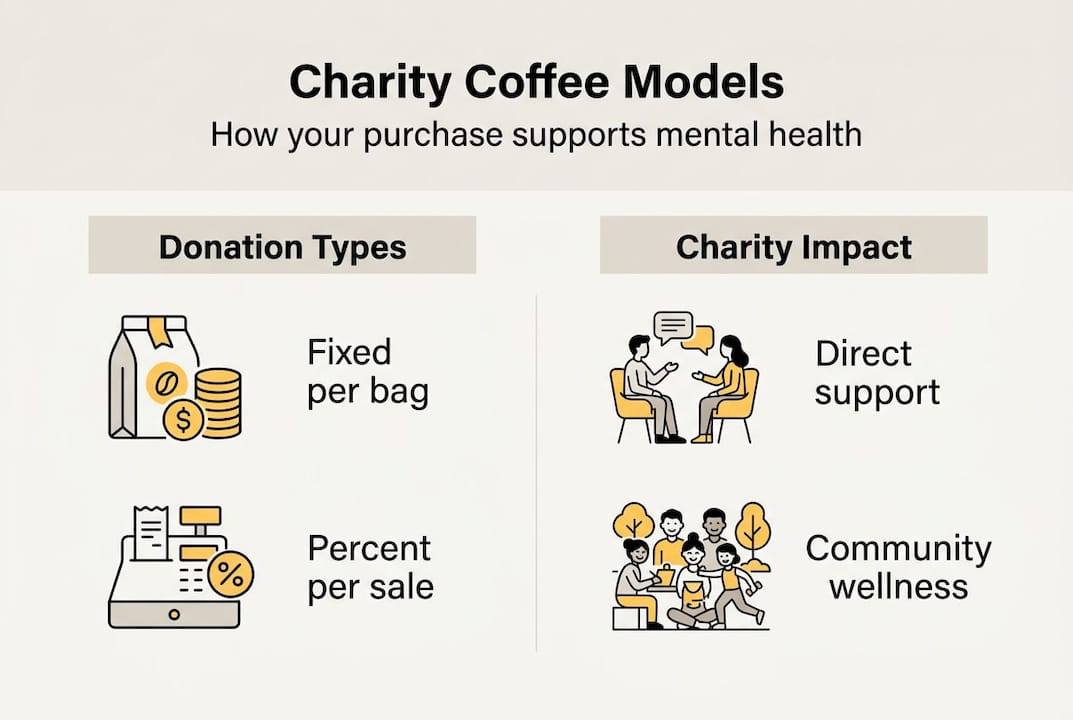
Here is a quick look at how different UK charity coffee models are structured:
| Brand or campaign | Donation model | Charity partner |
|---|---|---|
| Oxford United Clubhouse Blend | Fixed per bag | Mental health foundation |
| Can We Talk? Blend | 100% net profit | Named mental health charity |
| Scotty's Blend | £2 per bag | Scotty's Little Soldiers |
| Harry Kane x Starbucks | 25p per cup | Mental health charities across England |
What sets these blends apart is not just the donation. It is the intentionality. When you buy coffee with a cause, you are choosing a product built around a social mission from the ground up. The coffee is the vehicle, not an afterthought.
Key features that define a genuine charity blend:
- A named charity partner, not a vague fund
- A disclosed donation amount or percentage
- Traceable impact, such as reports or campaign updates
- Specialty-grade sourcing that does not cut corners on quality
"Charity coffee blends turn an everyday habit into a consistent act of giving. The cup you drink today could fund a conversation that saves a life tomorrow."
This model works because it removes the friction from charitable giving. You were going to buy coffee anyway. Now that purchase does something more.
Quality and taste: charity doesn't mean compromise
One of the most persistent myths about charity products is that you are paying a premium for a cause and accepting lower quality in return. With charity coffee blends, that simply is not true.
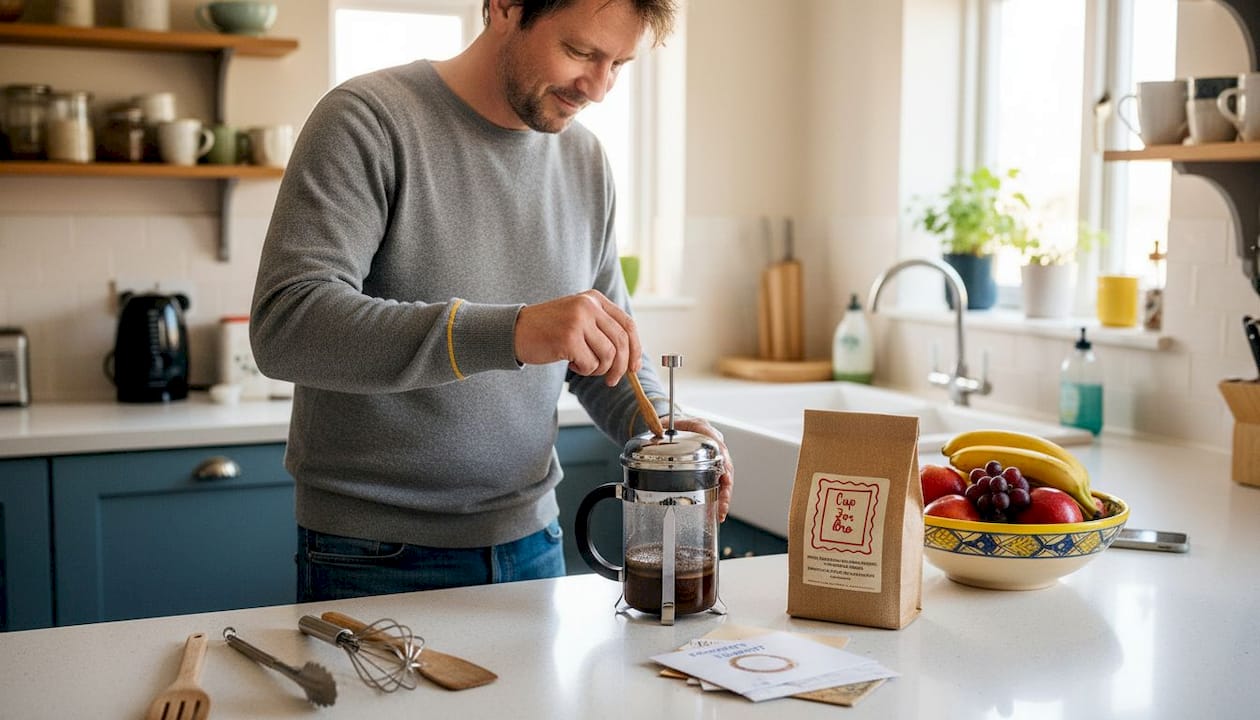
Many UK charity blends are sourced to specialty-grade standards, meaning they score 80 or above on the Specialty Coffee Association's 100-point scale. The Oxford United Clubhouse blend, for example, features chocolate and marshmallow tasting notes, while Scotty's blend uses an earthy Uganda Robusta single origin. These are considered and crafted flavour profiles, not generic supermarket filler.
Here is how charity blends compare to standard options:
| Feature | Charity blend | Standard supermarket blend |
|---|---|---|
| Sourcing | Specialty-grade, named origin | Often commodity-grade, blended |
| Tasting notes | Distinct, curated profiles | Generic, flat |
| Donation included | Yes, named charity | No |
| Price per 250g | £8 to £14 | £3 to £7 |
| Transparency | High, impact disclosed | Low |
The price difference is real, but the value gap is even larger. You are getting a better-tasting product and funding mental health support in the same transaction.
Charity blends also make outstanding gifts. A bag of specialty coffee with a clear social mission is a meaningful choice for birthdays, Father's Day, or Christmas. Subscriptions multiply this further. A monthly subscription to a charity blend means consistent, recurring donations throughout the year without any extra effort from you.
Pro Tip: If you are unsure where to start, look for blends that list their origin country and tasting notes clearly. Transparency about the coffee itself usually signals transparency about the charity model too.
Thinking about optimal coffee consumption alongside the quality of what you are drinking is a natural next step. The better the coffee, the more you will enjoy the ritual, and the more consistently you will support the cause.
The impact: how your purchase supports mental health
Understanding where the money goes is what separates genuine impact from feel-good marketing. In the UK, mental health funding is under enormous pressure. Waiting lists for NHS talking therapies stretch into months. Community support services rely heavily on charitable income. Every pound raised through a charity blend goes somewhere specific.
Many UK charity coffee campaigns align directly with mental health awareness campaigns that encourage people to pause and talk, particularly around men's mental health, suicide prevention, and crisis support. The coffee itself becomes a conversation starter.
Here is how a single purchase creates a chain of real-world impact:
- You buy a bag of charity blend coffee
- The brand transfers the agreed donation to the named charity
- The charity allocates funds to specific programmes, such as counselling, helplines, or community outreach
- Those programmes reach individuals who may not otherwise access support
- Awareness grows through the campaign, encouraging others to seek help or start conversations
This is not abstract. The coffee and mental health impact in the UK is measurable. Funds raised through coffee sales have supported suicide prevention campaigns, funded trained mental health first aiders in communities, and helped local cafes become safe spaces for open conversations.
Pro Tip: Look specifically for blends that support named charities rather than general "mental health funds." Named partners mean you can look up the charity's annual report and see exactly how donations are used.
"One bag of coffee will not solve a mental health crisis. But a thousand bags, bought consistently by people who care, absolutely can."
The cumulative effect is the point. Charity blends work because they turn individual purchasing decisions into collective, sustained funding. You are not making a one-off donation. You are building a habit that funds support every single month.
How to choose and maximise your charity coffee impact
Not every coffee brand that uses the word "charity" on its packaging is operating with full transparency. Knowing what to look for protects you as a consumer and ensures your money reaches the cause you care about.
Start with this checklist before you buy:
- Named charity partner: Is the charity clearly identified on the packaging and website?
- Disclosed donation amount: Does the brand state exactly how much per bag or what percentage goes to the charity?
- Verifiable impact: Does the brand publish impact reports, donation totals, or charity receipts?
- Specialty sourcing: Is the origin of the coffee listed? Transparency about sourcing usually reflects transparency about giving.
- Subscription option: Can you set up a recurring order to maximise cumulative donations?
As confirmed by Oxford United's campaign model, funds go directly to named charities, and gifting or subscriptions can significantly increase the overall impact. A single bag is a good start. A subscription is a commitment.
For a deeper look at how to evaluate brands, the charity coffee sales guide offers practical frameworks. If you are thinking about running your own campaign, the guide on how to start a charity coffee campaign is worth reading.
Pro Tip: Email the brand directly and ask for their most recent donation figures. Brands with genuine charity partnerships will answer this question without hesitation. Vague responses are a warning sign.
You can also check our impact vision to understand what a transparent, mission-led coffee brand looks like in practice. It sets a useful benchmark for evaluating others.
Why charity coffee blends are more than a trend
There is a common assumption that charity coffee blends are a niche fad, popular for a season and then forgotten. We think that view fundamentally misunderstands what these blends actually do.
Traditional mental health campaigns ask people to stop, donate, and move on. Charity coffee blends ask people to do something they were already going to do and attach meaning to it. That is a completely different psychological proposition. It removes the barrier of effort and replaces it with habit.
Coffee is one of the most consistent rituals in British life. Attaching a mental health mission to that ritual means the cause gets funded every single morning, not just during awareness weeks. The normalisation effect is just as important as the money raised. When men see mental health for men discussed openly in the context of something as everyday as coffee, it reduces stigma in a way that poster campaigns rarely achieve.
The community cafe wellness connection reinforces this. Cafes that stock charity blends become physical spaces where mental health is normalised, not hidden. That is a lasting cultural shift, not a trend.
Discover and support charity blends with Cup For Bro
At Cup For Bro, every bag of coffee we sell is part of a direct partnership with some of the UK's leading mental health foundations. This is not a side project. It is the entire point.
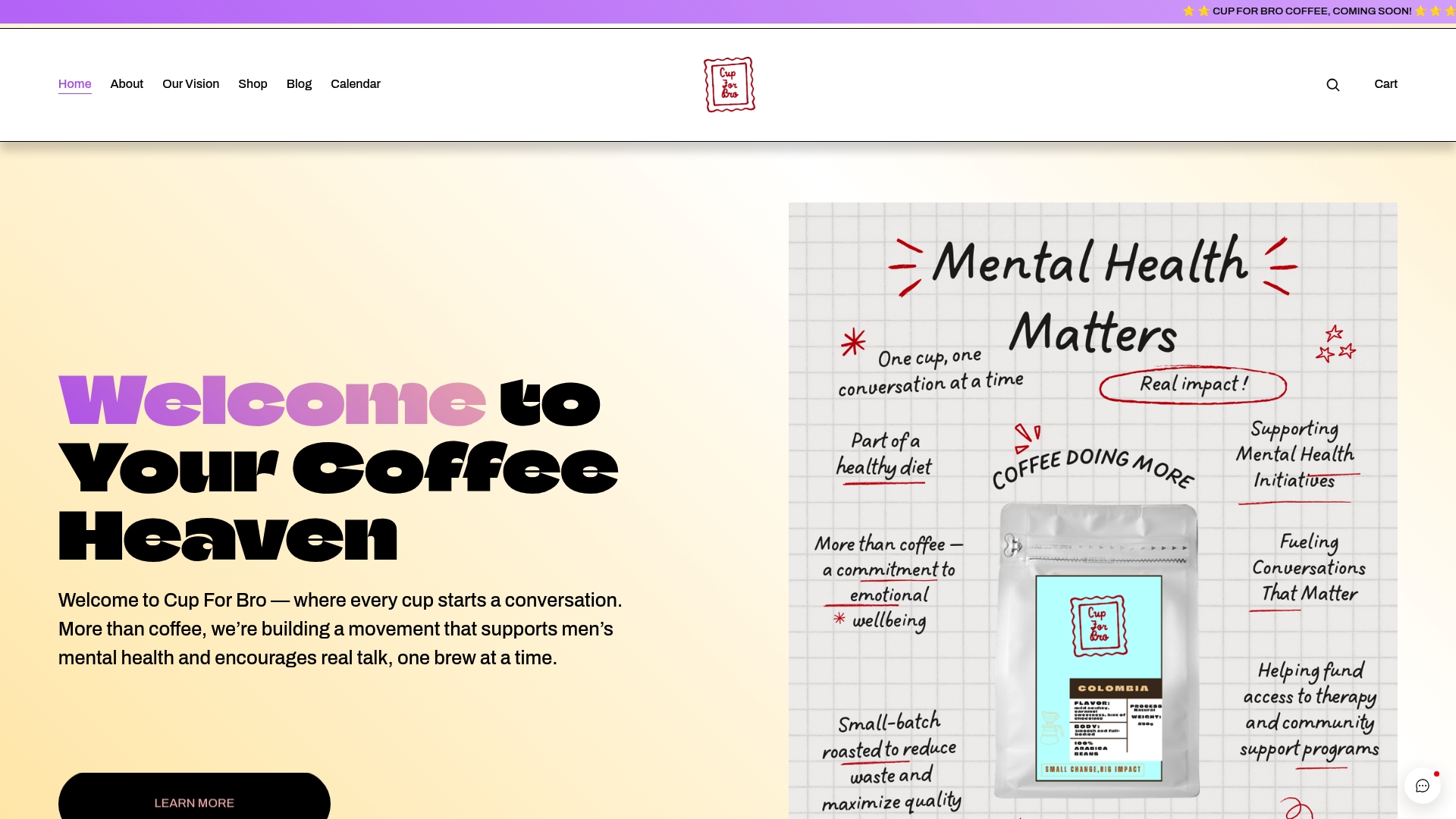
When you browse our charity blends, you will find specialty-grade coffees with clear donation structures, named charity partners, and real accountability. Whether you are buying for yourself, gifting to someone who deserves a meaningful present, or setting up a subscription to keep the support flowing, every purchase funds vital mental health services. Visit the Cup For Bro homepage to explore the full range and learn more about the foundations we work with. Your next cup can do more than wake you up.
Frequently asked questions
How much does purchasing a charity coffee blend contribute to mental health charities?
Most UK blends donate between £0.25 and £4.50 per bag directly to mental health charities, with some models offering 100% net profit on specialty products.
Do charity coffee blends taste as good as regular specialty blends?
Yes. UK charity blends are typically specialty-grade with distinct tasting notes, such as chocolate and marshmallow or earthy single origin profiles, matching or exceeding standard specialty options.
How can I be sure my purchase is supporting the intended charity?
Look for brands that name their charity partners and clearly disclose donation amounts or percentages on both packaging and their website.
Are there subscription options for charity coffee blends in the UK?
Yes. Many brands, including Cup For Bro, offer subscription models that increase the frequency of donations, making your cumulative impact significantly greater over time.