
TL;DR:
- Cafés provide informal, welcoming settings that help men open up about mental health gradually.
- Community-led café initiatives and pub events have successfully engaged large numbers of men through creative and social activities.
- Regular presence in these environments fosters trust and can serve as an effective upstream approach before formal therapy.
Many men in London want support but struggle to find a place where talking feels natural. The idea of booking a therapy session, sitting in a waiting room, or admitting vulnerability to a stranger can feel like too much of a step. Yet cafés, something already part of daily life, are quietly becoming one of the most effective entry points for men's mental health support. This article covers practical, evidence-backed café mental health tips, highlights standout London initiatives, and helps you find the setting that works best for you, whether that is a drop-in creative session, a pub pop-up, or simply a regular morning coffee with a mate.
Table of Contents
- How cafés help men build trust around mental health
- Best London café and pub initiatives supporting men's mental health
- Practical café tips for men to boost mental wellbeing
- Comparing café, pub, and other community settings for men's mental health
- Why informal café support may outperform traditional therapy for men
- Find your next step with café-led mental health support
- Frequently asked questions
Key Takeaways
| Point | Details |
|---|---|
| Cafés encourage open conversations | Informal settings help men talk about mental health in a comfortable, stigma-free way. |
| Community programmes drive change | London initiatives like Dragon Cafe and Brothers’ Arms prove cafés and pubs can boost men’s wellbeing. |
| Preventive support works best | Regular visits and peer-led activities help men build trust and resilience before a crisis develops. |
| Multiple spaces suit different needs | From cafés to pubs and barbers, men can choose the environment where they feel most comfortable opening up. |
How cafés help men build trust around mental health
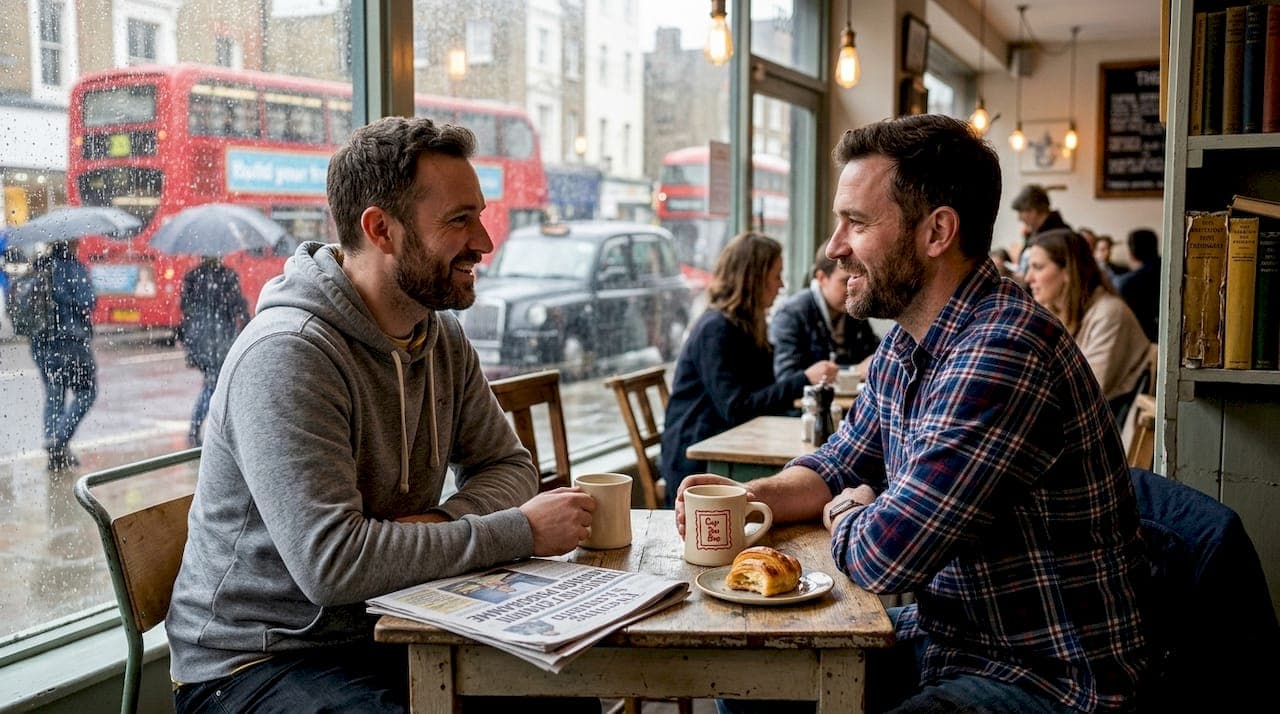
There is something about the hum of a coffee machine, a warm mug, and no clock ticking that makes it easier to breathe. Cafés remove the clinical feel that puts many men off formal support. There is no referral needed, no waiting list, and no one writing notes on a clipboard. That informality matters far more than most people realise.
Men, on the whole, open up gradually rather than all at once. Masculine norms around strength and self-reliance mean that vulnerability often feels like a risk. A café setting counteracts this by making conversation feel incidental rather than intentional. You are not there to "talk about your feelings." You are there for a flat white. And yet, over time, something shifts.
Peer-led café groups use informal settings to build trust gradually over repeat visits, with no pressure to speak and confidentiality kept central to how they operate. That is the key mechanic. Consistency over time, not a single breakthrough session, is what builds the psychological safety that allows honest conversation.
Trusted staff and peer facilitators also play a role. When the same friendly face greets you each week, familiarity reduces the social anxiety that keeps men silent. Community support in cafés works because it is woven into an existing social fabric rather than bolted on as a separate, stigma-laden service.
"Peer environments work upstream, building resilience before a crisis develops rather than responding once one has already arrived."
This upstream model is genuinely important. It means cafés are not just a softer version of therapy. They are doing something different entirely, reaching men who would never attend a formal group by meeting them where they already are.
Key reasons cafés work for men's mental health:
- No pressure to perform vulnerability from the outset
- Repeated, familiar contact builds trust without effort
- Peer facilitators share lived experience rather than clinical distance
- Creative activities lower the barrier to joining in
- Confidentiality is maintained without the formality of a clinical setting
Best London café and pub initiatives supporting men's mental health
London has a growing number of programmes that use café and pub spaces specifically to support men. Some have been running for years. Others are newer, pop-up style events that arrive in a neighbourhood and generate remarkable results.
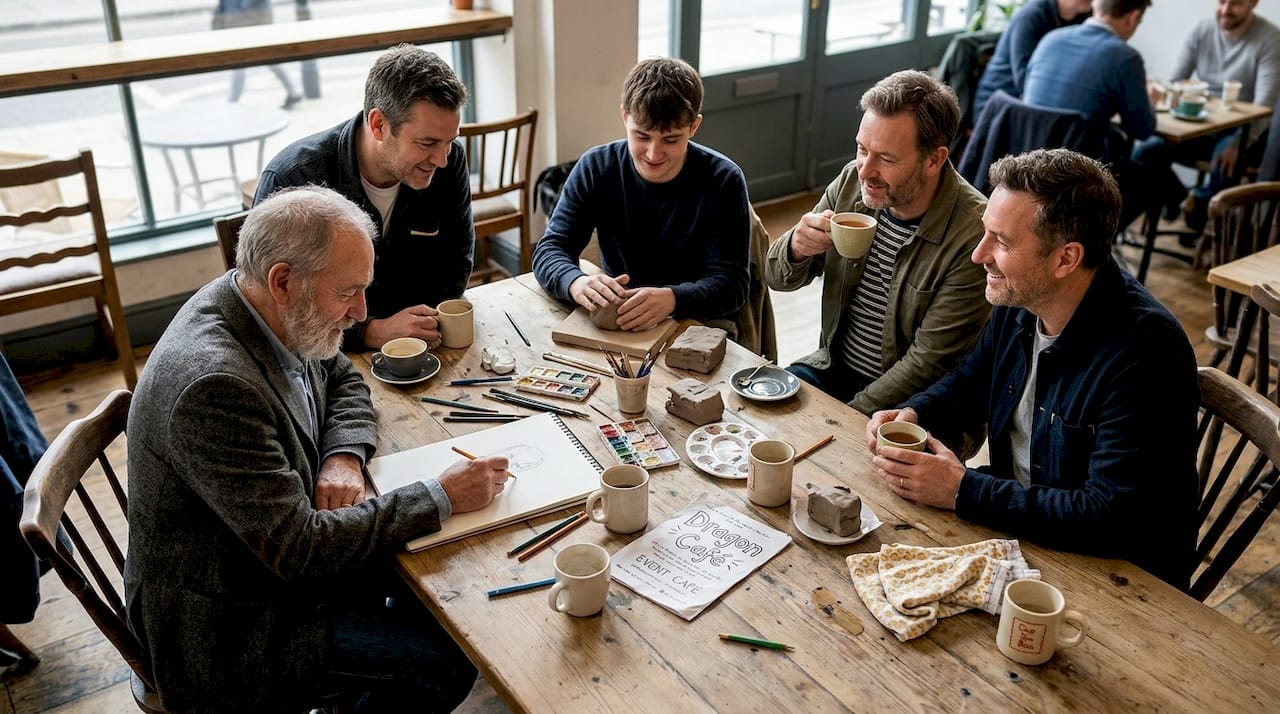
Dragon Cafe by Mental Fight Club is a weekly drop-in in Borough that uses creative activities including art, yoga, and singing to support mental health. It is open to everyone, which removes the self-consciousness of walking into a specifically labelled "men's mental health group." That subtlety matters. When the door is open for all, men are far more likely to walk through it.
Then there is the Brothers' Arms men's health pub pop-up in Crystal Palace, which drew over 250 men to a single event featuring health talks, checks, and peer-led conversations. That number is striking. It suggests that when you remove the clinical barrier and place support inside a familiar social setting, men show up in numbers that formal services rarely see.
| Initiative | Location | Format | Key feature |
|---|---|---|---|
| Dragon Cafe | Borough | Weekly drop-in | Creative activities: art, yoga, singing |
| Brothers' Arms pop-up | Crystal Palace | One-off event | Health talks, peer chat, 250+ attendees |
| Various barber projects | Across London | Ongoing informal | Conversation during haircuts |
What these initiatives share is a creative or social hook that is not labelled as therapy. Art, music, conversation over a pint — these are entry points that feel safe. Once inside, the peer-led structure does the rest.
For ideas on how to bring this energy to your local space, café engagement ideas and team building in cafés offer practical inspiration for community-minded café owners and event organisers alike.
Pro Tip: Check local listings and community boards regularly. Many of the best men's mental health café events are pop-ups or rotating sessions that do not advertise far in advance.
Practical café tips for men to boost mental wellbeing
Programmes and initiatives are brilliant, but you do not have to wait for an organised event to benefit. There are things you can do right now, in any café, that genuinely support your mental wellbeing.
Men disclose gradually in familiar environments, and simply being present in a regular spot begins to build that familiarity. The act of showing up consistently is doing more than you might think. Here is a practical approach:
- Choose the right café. Look for one with natural light, a relaxed atmosphere, and ideally one that hosts community events or wellness sessions. Noise level matters. A quieter corner table can feel very different from a busy counter seat.
- Give yourself permission to just be there. You do not need to talk, share, or join anything. Sitting with a coffee and being present is a valid starting point. Showing up is progress.
- Build a routine. Same café, same time, same day if possible. Consistency is what transforms a café from a random stop into a trusted space. Staff begin to recognise you, and that recognition carries its own quiet comfort.
- Notice what lifts your mood. Natural light, background music, friendly staff, art on the walls. These environmental factors genuinely influence how you feel. Pay attention to what works for you and seek more of it.
- Invite someone along. A mate, a colleague, anyone. Shared experience lowers the social barrier and gives you both permission to have a more honest conversation than you might manage elsewhere.
For deeper guidance on how to connect meaningfully in these spaces, engaging with café community is worth a look. You might also be surprised by the role that barista support for mental health can play — a trained, attentive barista can be more of a community anchor than most people realise.
Pro Tip: If you find a café running a low-pressure group activity such as a sketch session, board games evening, or open mic, try it once. You are not committing to anything. You are just trying something new.
Comparing café, pub, and other community settings for men's mental health
Not every setting works for every man. Understanding the strengths of each option helps you find what fits your personality, comfort level, and lifestyle.
| Setting | Social feel | Structured support | Alcohol involved | Best for |
|---|---|---|---|---|
| Café | Relaxed, creative | Often yes, peer-led | No | Gradual trust, creative engagement |
| Pub | High familiarity | Occasional pop-ups | Often yes | Conversation, peer connection |
| Barber | Intimate, one-to-one | Informal check-ins | No | Early conversations, signposting |
| Community centre | Neutral | Structured groups | No | Men open to organised settings |
42% of men discuss health matters with mates in pubs, compared to 36% by phone. That statistic reframes the pub not as a place of avoidance but as a legitimate space for health conversation. Pop-up events like Brothers' Arms channel that instinct deliberately.
Peer support ambassador projects have also demonstrated the power of community settings beyond formal services. One such project logged 1,818 conversations and 265 referrals in just seven months, with the pop-up pub event alone drawing over 250 men. These are not small numbers.
Key considerations when choosing your setting:
- Cafés suit men who want a gradual, low-pressure environment with creative or peer-led elements
- Pubs suit men who are already comfortable in social settings and want conversation to happen organically
- Barbers are ideal as a first check-in point, especially for men who would never attend a group
- Community centres work for men who are already open to more structured group support
For a fuller picture of ways cafés support men, the key takeaway is simple: pick the setting that feels the least daunting, and start there.
Why informal café support may outperform traditional therapy for men
Here is an uncomfortable truth that formal mental health services rarely say out loud: for many men, traditional therapy is not the answer, at least not as a starting point. It is not that therapy does not work. It is that men are unlikely to access it before things get serious, and by then the gap between need and help has grown enormous.
Informal café and peer-led settings do something therapy cannot. They reach men before crisis. A man who would never phone a helpline or book a counsellor appointment will happily meet a mate for coffee every Thursday. Over weeks and months, that coffee becomes something more. Conversations deepen. Trust builds. And when he eventually does need more formal support, he is far more likely to seek it because the stigma has already started to erode.
The peer-led model seen in London cafés is not a consolation prize for men who cannot access therapy. It is a genuinely different and often more effective upstream intervention. The goal for men's mental health strategy should be to normalise these everyday touchpoints, not funnel everyone towards clinical services as the only legitimate option.
Find your next step with café-led mental health support
If this article has resonated with you, the next step does not have to be complicated. Start with a coffee.
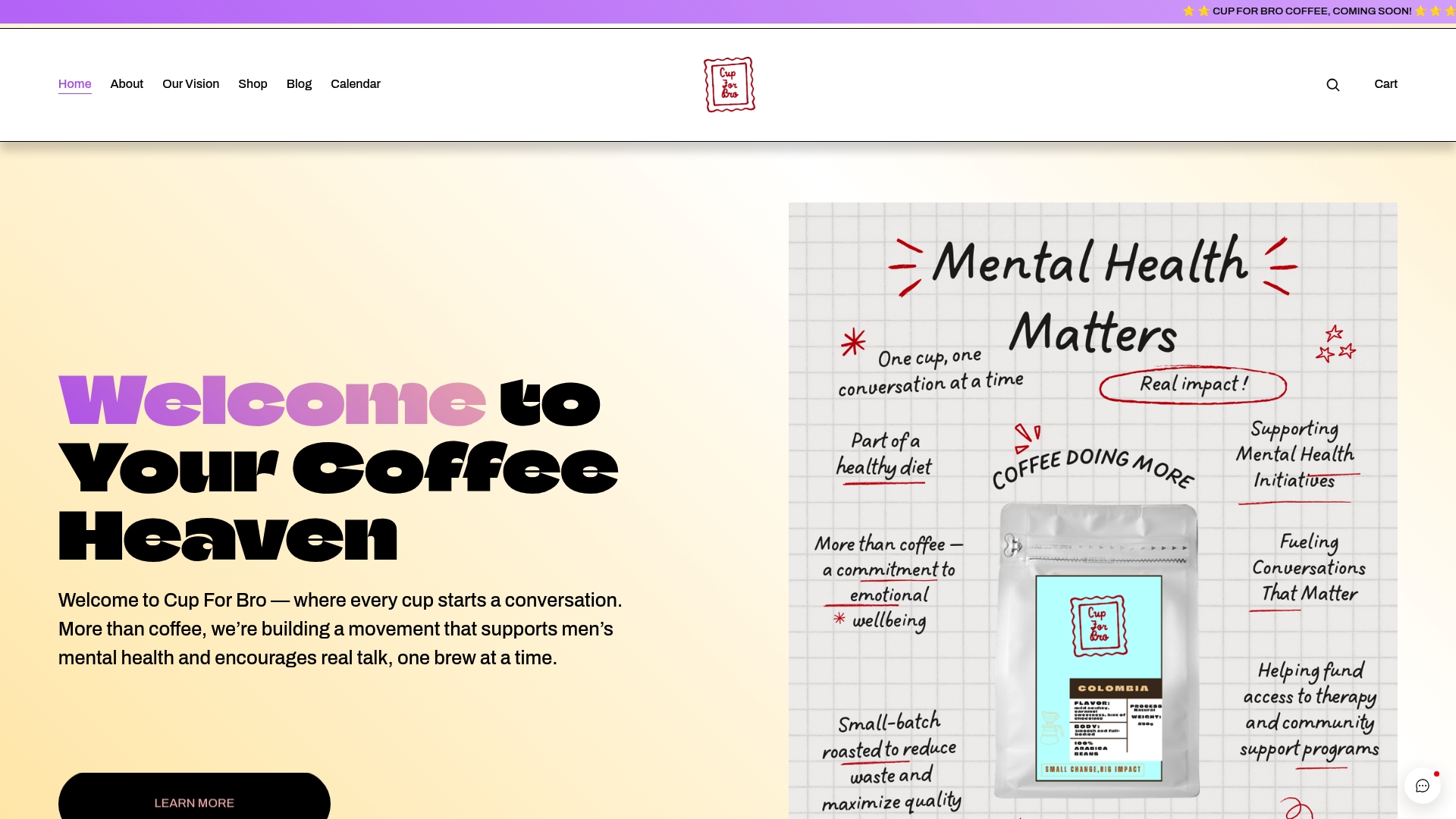
At Cup For Bro, we exist to support men's mental health through café culture, community, and the simple act of sharing a cup. In partnership with some of the UK's leading mental health foundations, every bag of coffee we sell helps fund vital support programmes for men who need them. Whether you want to discover our coffee collections for your home or workplace, or see our community vision and how your café can become part of a wider wellness movement, we are here for it. Because the best conversations often start with a brew.
Frequently asked questions
Which London cafés offer men's mental health groups?
Dragon Cafe in Borough is a leading example, running weekly creative sessions including art, yoga, and singing that are open to everyone, including men seeking informal support.
Why are cafés better than formal therapy for some men?
Cafés offer a relaxed, familiar setting where men open up gradually without the pressure or stigma attached to formal therapy, making the first step far easier to take.
Are pubs also good for discussing men's health?
Absolutely. 42% of men discuss health matters with mates in pubs, and pop-ups like Brothers' Arms show that with the right structure, pubs can be powerful spaces for open, honest conversation.
What if I don't want to talk straight away?
There is no pressure at all. No requirement to speak exists in peer-led café groups, and simply being present in a familiar space regularly is a meaningful first step in itself.