
TL;DR:
- Coffee culture in the UK historically fostered social debate and civic engagement. Modern cafes serve as third spaces that build community and support mental health. Moderate coffee consumption offers psychological benefits, but rising costs pose economic challenges for independent shops.
Brits drink 98 million cups daily, yet most of us rarely pause to ask why coffee has become so deeply woven into the fabric of British life. It is not simply about caffeine. The ritual, the café, the shared moment over a flat white — these things carry real psychological and social weight. This guide pulls back the curtain on what coffee culture actually means in the UK, why it matters for mental health, and how community-driven initiatives are turning every cup into something far more powerful than a morning pick-me-up.
Table of Contents
- The evolution of coffee culture in the UK
- Coffee's role in community and social connection
- Coffee rituals and their psychological benefits
- Coffee consumption, mental health, and the need for balance
- A fresh perspective: what most guides miss about coffee culture's real value
- Connect with coffee and community
- Frequently asked questions
Key Takeaways
| Point | Details |
|---|---|
| Historic significance | Coffee houses shaped British intellectual and social life from the 17th century to today. |
| Community connection | Cafés serve as modern third spaces, strengthening local ties and supporting wellbeing. |
| Mental health benefits | Moderate coffee intake and mindful rituals can lower stress and improve emotional resilience. |
| Balance is essential | Benefits peak at 2-3 cups daily, and economic realities may encourage new coffee habits. |
The evolution of coffee culture in the UK
To appreciate why coffee culture matters now, we need to understand where it all began. Britain's relationship with coffee stretches back further than most people realise, and its roots are surprisingly radical.
Coffee houses in the 17th century were not simply places to grab a hot drink. They were the internet of their day. Merchants, philosophers, politicians, and poets gathered to debate ideas, share news, and forge connections across social boundaries. As coffee culture in the UK originated in these vibrant hubs of intellectual and social exchange, they became engines of creativity and civic life. Lloyd's of London, one of the world's most famous insurance markets, literally started as a coffee house.
That communal spirit never really disappeared. It evolved. The tea room era of the 19th and early 20th centuries shifted British tastes temporarily, but coffee fought back. The espresso bars of the 1950s brought Italian-style café culture to British high streets, attracting a new generation of young people looking for a space that felt genuinely theirs.
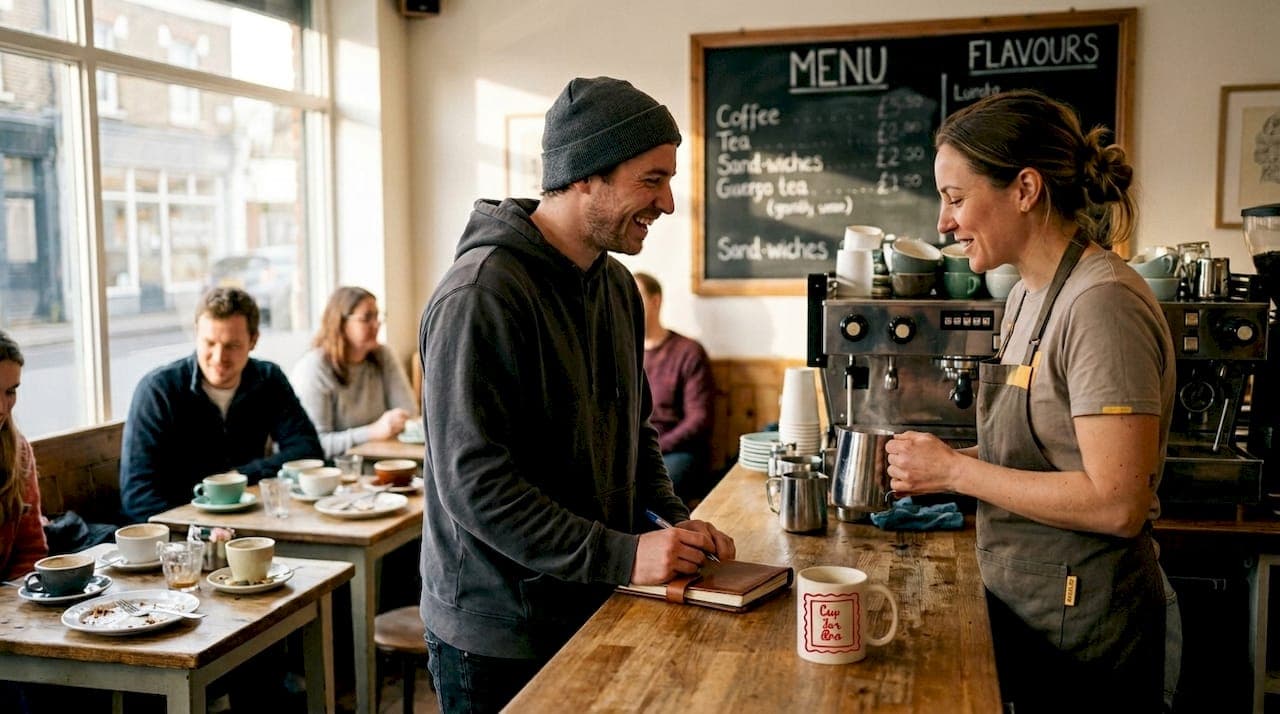
Today, the modern café has become what sociologists call a third space: somewhere that is neither home nor workplace, but a neutral ground where people can simply exist. London cafes and community initiatives show just how far this idea has travelled, with independent coffee shops actively designing their spaces around inclusion and wellbeing.
"The coffee house was the place where you could meet your equals, argue your ideas, and feel part of something larger than yourself." — Coffee: A Dark History, Antony Wild
| Era | Key role of coffee spaces |
|---|---|
| 17th century | Intellectual debate and civic exchange |
| 19th century | Social gathering and leisure |
| 1950s to 1980s | Youth culture and counter-culture |
| 2000s to present | Wellbeing, remote work, community |
The economic footprint is significant too. The UK coffee market is worth billions annually, and that growth reflects a cultural shift, not just a commercial one. People are not simply buying coffee. They are buying belonging.
Coffee's role in community and social connection
With history established, it is essential to look at how modern cafés have become the heart of UK communities.
A third space is defined as any environment outside the home and workplace where informal social interaction takes place. Local cafés fit this definition perfectly. They are accessible, warm, and free from the performance pressures of either domestic or professional life. You can stay for an hour or five minutes. Nobody is keeping score.
Coffee culture builds social bonds and provides third spaces for diverse interactions, enhancing creativity and community cohesion. This is not abstract theory. Walk into any independent café on a Tuesday morning and you will see it in action: a freelancer working alongside a retired teacher, a young mum catching up with a friend, a group of students arguing about something that matters to them.
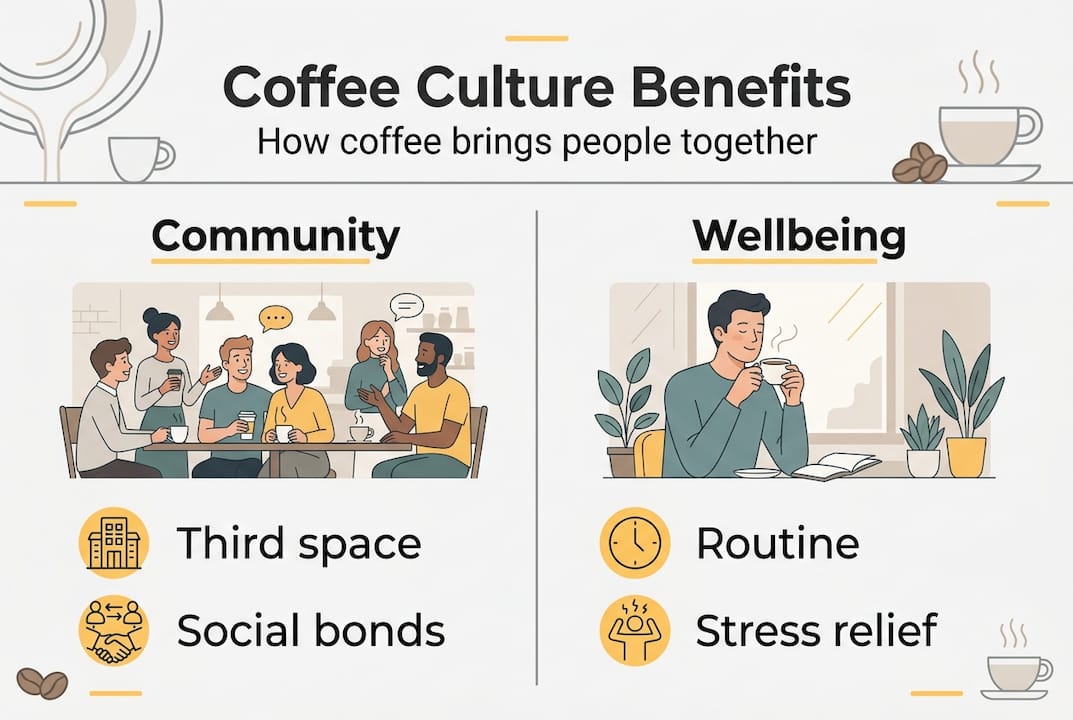
The cafes and community wellness connection is especially visible in initiatives that use coffee shops as venues for mental health events, peer support groups, and charity fundraisers. These are not gimmicks. They reflect a genuine understanding that shared physical space, combined with the ritual of a hot drink, lowers social barriers in ways that digital spaces simply cannot replicate.
When it comes to engaging with community initiatives, independent cafés consistently outperform chains. Here is a quick comparison:
| Feature | Independent cafés | Chain cafés |
|---|---|---|
| Community events | Frequent and locally driven | Occasional and centrally managed |
| Charity partnerships | Often local and grassroots | Usually national or corporate |
| Staff relationships | Personal and consistent | Higher turnover, less personal |
| Flexibility for initiatives | High | Low |
Some key ways coffee shops support community wellbeing:
- Hosting mental health awareness mornings and open conversations
- Partnering with local charities to raise funds through coffee sales
- Offering pay-it-forward schemes for those who cannot afford a drink
- Creating quiet hours for neurodiverse customers or those with anxiety
The coffee industry also supports over 210,000 jobs across the UK, making it a genuine pillar of local economies. That is 210,000 people whose daily work involves creating spaces where others feel welcome.
Coffee rituals and their psychological benefits
Beyond physical spaces, coffee culture also impacts us on a psychological level — here is how that plays out in day-to-day life.
Routine is one of the most underrated tools for mental health. When life feels chaotic, small rituals provide anchors. The act of making or ordering coffee, whether it is grinding beans at home or queuing at your favourite café, signals to your brain that something familiar and comforting is about to happen. That signal matters.
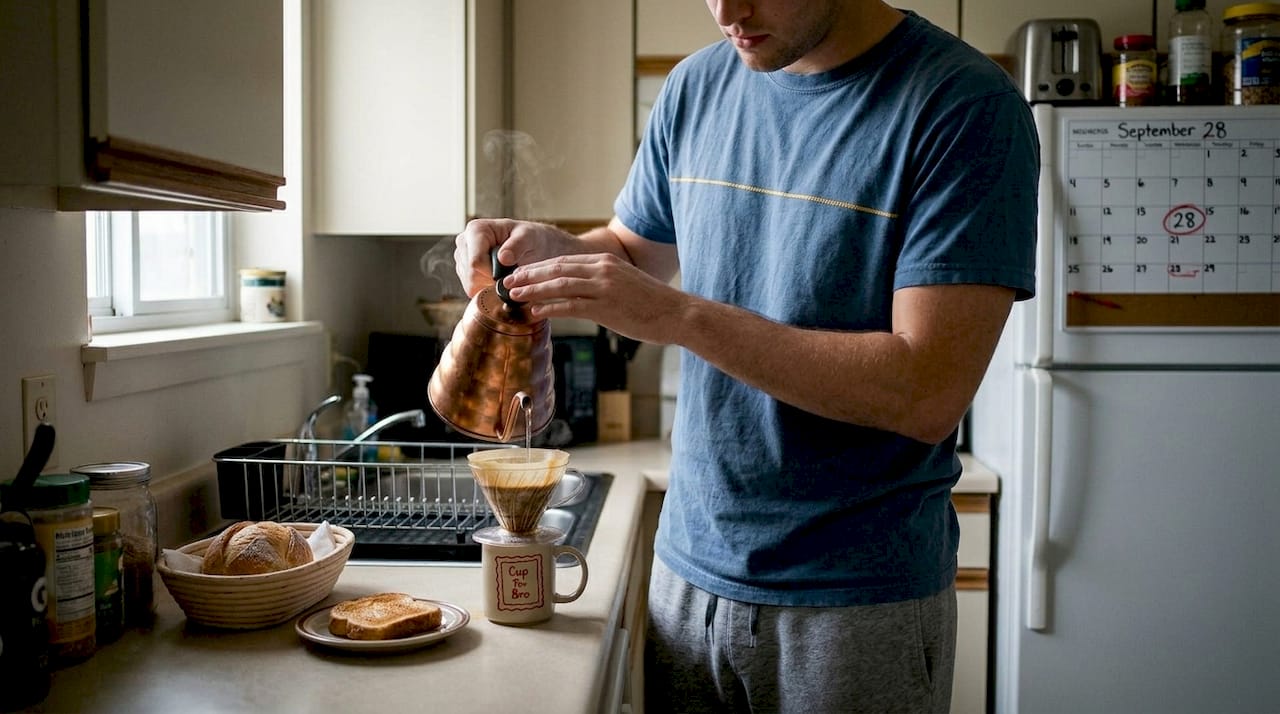
Coffee rituals provide psychological benefits including stress relief, a sense of control, and emotional comfort through routines and social identity. Research confirms what most of us already feel intuitively: the ritual is doing real work, not just the caffeine.
Coffee also plays a role in how we define ourselves. The beans you choose, the brew method you prefer, the café you consider yours — these choices form part of your identity. Understanding the link between mental health and daily coffee rituals helps explain why disrupting someone's coffee routine can feel genuinely unsettling, not just inconvenient.
Exploring how coffee affects wellbeing reveals that the social dimension of the ritual is often just as important as the drink itself. Sharing a coffee with someone you trust is a form of emotional investment.
Here are some practical ways to build more mindful coffee moments into your day:
- Brew your morning coffee without your phone nearby and notice the process
- Choose a café where the staff know your name at least once a week
- Use the time between ordering and receiving your drink to breathe and reset
- Treat a coffee catch-up with a friend as a genuine mental health check-in, not just a social obligation
"Ritual transforms the ordinary into the meaningful. A cup of coffee, made with intention, becomes a moment of self-care."
Pro Tip: Next time you feel overwhelmed, step away from your screen and make a coffee slowly and deliberately. Focus on the smell, the sound, the warmth. It takes three minutes and genuinely shifts your mental state.
Coffee consumption, mental health, and the need for balance
Understanding why coffee culture matters is not just about positives. Let us be honest about boundaries, balance, and modern challenges.
Moderate coffee consumption of 2 to 3 cups per day is linked to a lower risk of depression and anxiety, based on UK Biobank data covering hundreds of thousands of participants. That is a meaningful finding. But the relationship between coffee and mental health research follows what researchers call a J-shaped curve: benefits rise with moderate intake, then plateau or reverse at higher amounts.
| Daily cups | Associated effect |
|---|---|
| 1 to 2 | Mild positive association |
| 2 to 3 | Strongest benefit observed |
| 4 to 5 | Benefits plateau |
| 6 or more | Potential increase in anxiety symptoms |
The economic pressures on UK coffee culture are also real. Rising costs mean some independent cafés are struggling, and the era of the £5 flat white has prompted genuine questions about accessibility. If coffee culture is to remain a force for community and wellbeing, it needs to stay within reach of everyone, not just those who can afford premium pricing.
Here is how to find your personal balance:
- Track how many cups you drink over a typical week, honestly
- Notice how you feel after your second cup versus your fourth
- Identify whether you are drinking for enjoyment or out of habit or anxiety
- Experiment with swapping one daily coffee for a herbal alternative and observe any change
- If sleep is suffering, move your last coffee earlier in the afternoon
Pro Tip: Keep a simple notes app log for one week. Write down how many cups you had and how your mood and sleep felt. Patterns emerge quickly and the data is surprisingly motivating.
Supporting coffee and mental health causes means being honest about this balance, because genuine care for wellbeing goes beyond selling a feel-good narrative. The role that baristas support wellbeing plays in this is often overlooked, and the conversation around coffee and men's mental health is one that deserves far more attention than it currently receives.
A fresh perspective: what most guides miss about coffee culture's real value
Most articles about coffee culture focus on trends: specialty roasts, brewing techniques, the latest café aesthetic. That misses the point entirely.
The real value of coffee culture in 2026 is its quiet, persistent resistance to isolation. In a country where loneliness is now treated as a public health concern, the local café is doing something remarkable. It is holding space for people who have nowhere else to go. The baristas and wellbeing connection is a perfect example: these are often the first people to notice when a regular customer seems off, and that informal check-in can matter more than any formal service.
What is coming next in coffee culture is not a new brewing method. It is a deeper integration of mental health awareness into the fabric of café life. Community-led spaces, ethical sourcing, and purpose-driven coffee brands are reshaping what it means to enjoy a cup. The enthusiasts driving this shift are not just consumers. They are advocates. If you care about coffee, you are already part of a movement that has the potential to make a genuine difference to the communities around you. That is worth taking seriously.
Connect with coffee and community
Ready to put these insights into action? There is a real opportunity to turn your daily coffee ritual into something that genuinely gives back.
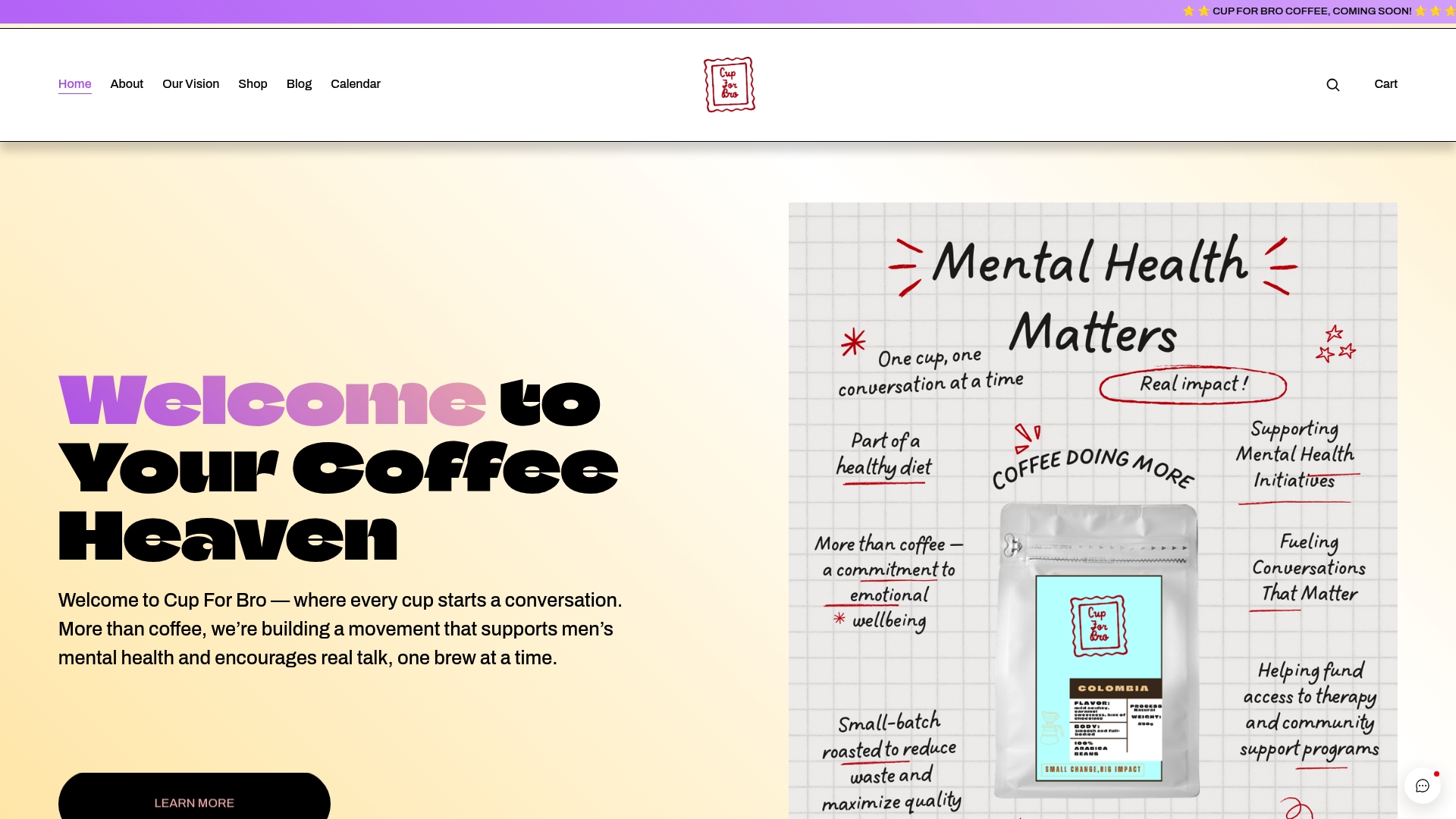
At Cup for Bro, every bag of coffee from our exclusive coffee selection funds vital mental health programmes through our partnerships with leading UK foundations. You get exceptional beans. Someone in need gets access to support they might not otherwise find. Explore our vision for community to understand how we are turning a daily habit into a force for change. Whether you are a home brewer or a business looking to align with a meaningful cause, this is your invitation to make your cup count.
Frequently asked questions
How does coffee culture improve mental health?
Coffee culture fosters social connection, routine, and mindfulness, which can reduce stress and lower risks of depression and anxiety. Moderate daily intake is also directly associated with reduced incidence of both conditions.
What is a coffee 'third space' and why is it important?
A coffee third space is a welcoming environment outside home and work where people connect and build community, vital for social wellbeing. Modern coffee shops fulfil this role across the UK, supporting cohesion and reducing isolation.
How much coffee is healthy to drink each day?
Moderate intake of about 2 to 3 cups a day is associated with the most benefit, while higher amounts may not offer extra advantages. The J-shaped association suggests benefits plateau and can reverse at excessive consumption levels.
Are there economic challenges facing coffee culture in 2026?
Yes, rising costs and market saturation mean some cafés face real difficulties, but community-focused spaces continue to thrive. Market pressures and rising prices are reshaping which businesses survive and which do not.