
TL;DR:
- Social impact coffee is legally structured to reinvest 65% of profits into community and mental health projects.
- Farmers receive 20-50% above fair trade prices, supporting sustainable farming and environmental health.
- Buying social impact coffee guarantees transparency, legal accountability, and genuine societal benefit.
Your morning cup does more than wake you up. For a growing number of UK coffee drinkers, each brew quietly funds farmer livelihoods, community mental health programmes, and cleaner roasting practices. Social impact coffee is not a marketing slogan. It is a legally structured model, often built around Community Interest Companies, that channels a significant portion of profits into measurable societal good. This guide breaks down exactly what social impact coffee means, how the sourcing works, and why your purchasing choice carries genuine weight from the farm all the way to a mental health support service near you.
Table of Contents
- What makes social impact coffee different?
- How sourcing supports farmers and the environment
- Channeling profits into UK community and mental health initiatives
- How you can support social impact coffee
- Why social impact coffee is more than a trend
- Take action: choose coffee with social impact
- Frequently asked questions
Key Takeaways
| Point | Details |
|---|---|
| Community-first coffee model | Social impact coffee uses UK CIC structure to reinvest most profits into meaningful causes. |
| Premiums for sustainability | Buying social impact coffee means farmers are paid 20-50% more than fair trade minimums. |
| Supports mental health locally | A majority of profits fund UK-based mental health projects, inclusive employment, and charities. |
| Cleaner roasting practices | Electric roasting powered by renewables lowers emissions compared to conventional coffee production. |
| Actionable consumer choice | Anyone can support the movement by choosing CIC-certified suppliers or encouraging workplaces to switch. |
What makes social impact coffee different?
Not all coffee labelled "ethical" is built the same way. The difference between a standard bag of beans and a true social impact coffee often comes down to legal accountability, not just good intentions.
Social Impact Coffee operates as a Community Interest Company, a legal structure in the UK that requires the business to prioritise community benefit over shareholder profit. This is not optional. It is written into the company's constitution and regulated by the CIC Regulator. That means even if the business grows significantly, the reinvestment obligation remains.
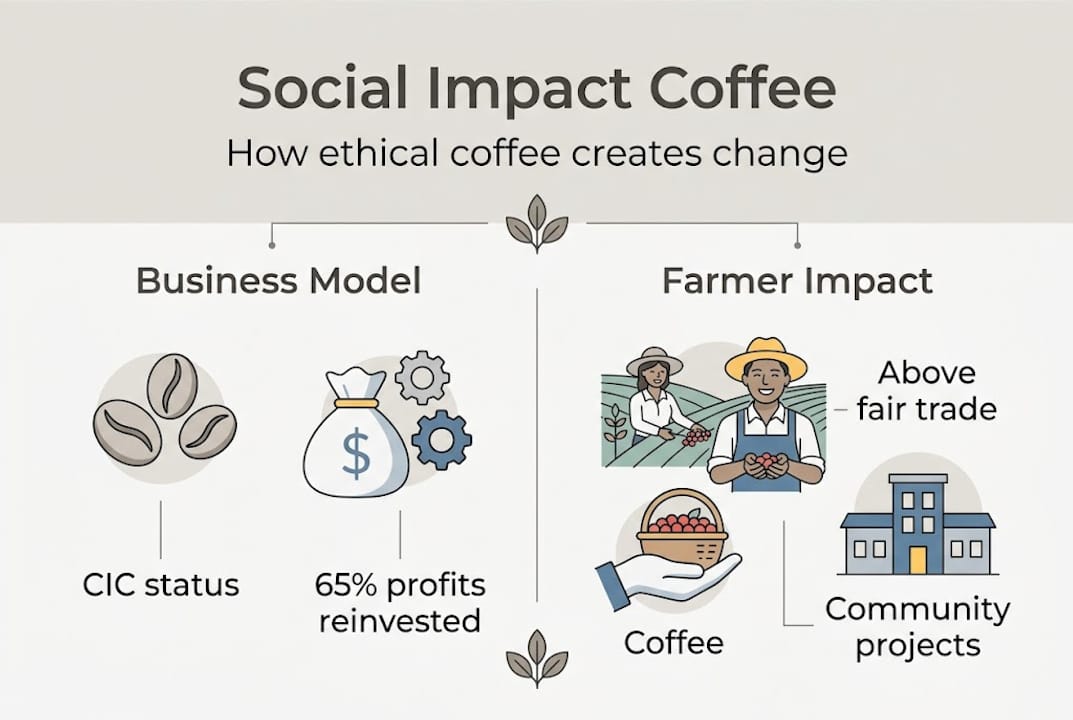
The sourcing model is equally distinctive. Rather than paying the minimum required by fair trade certification, Social Impact Coffee pays farmers 20-50% above fair trade base prices. That is a meaningful premium that directly improves grower income and encourages sustainable farming practices at origin.
Perhaps most striking is what happens to the profits once the coffee is sold. A full 65% of profits are reinvested into community projects and charities, often local to customers, covering areas like mental health awareness and inclusive employment. Compare that to a standard B Corp donation, which typically sits at around 1% of profits.
Here is how the three main models stack up:
| Feature | Standard coffee | Fair trade coffee | Social impact coffee |
|---|---|---|---|
| Farmer premium | None | Minimum set price | 20-50% above fair trade |
| Profit reinvestment | Shareholders | Minimal | 65% to community |
| Legal accountability | None | Certification body | CIC Regulator |
| Community focus | None | Origin communities | UK local causes |
| Mental health funding | None | Rare | Core mandate |
The key benefits of choosing social impact coffee include:
- Farmer income security through consistent premium payments
- Locally relevant charity support rather than distant or vague causes
- Legal transparency enforced by UK regulation
- Mental health programme funding built into every purchase
"Choosing ethical coffee choices is not about paying more for the same thing. It is about understanding that your money is doing two jobs at once."
This structural difference is what separates genuine social impact coffee from brands that simply use ethical language without the legal framework to back it up.
How sourcing supports farmers and the environment
The sustainability story in social impact coffee begins long before the beans reach your grinder. It starts at origin, where premium payments reshape what farming looks like for smallholder growers.
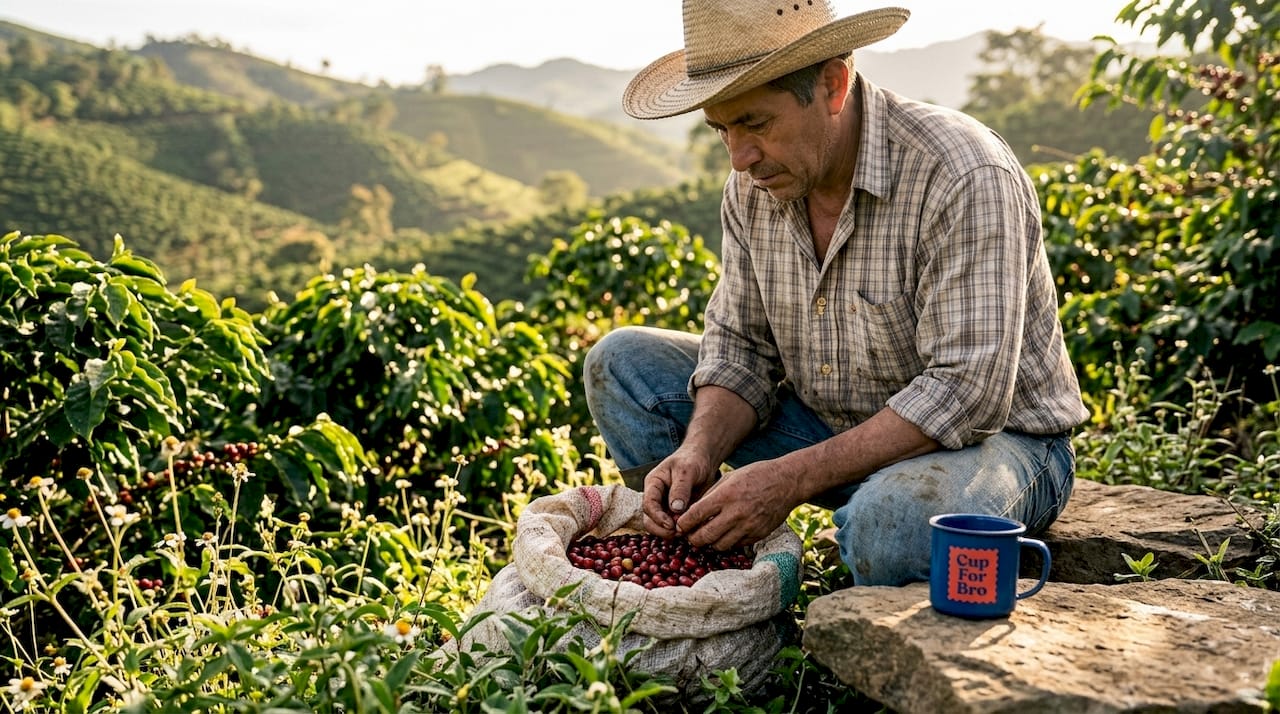
When farmers receive 20-50% above fair trade base prices, that additional income does not simply go into a pocket. It funds better soil management, reduced pesticide use, and longer-term investment in crop health. Farmers who are not scrambling to cover costs can afford to farm sustainably. That is the direct link between what you pay and what happens to the land.
Here is a comparison of the environmental footprint across sourcing models:
| Sourcing model | Farmer premium | Roasting energy | Carbon approach |
|---|---|---|---|
| Commodity coffee | None | Gas roasting | No offset |
| Fair trade | Minimum price | Mixed | Partial offset |
| Social impact coffee | 20-50% above fair trade | Electric, renewable | Actively minimised |
On the roasting side, Social Impact Coffee takes things further. It is roasted at The London Coffee Factory, London's first fully electric, clean-air roastery powered by renewables. Gas roasting is still the industry norm, and it carries a significant carbon cost. Switching to electric roasting powered by renewable energy is not a small step. It removes a major emissions source from the supply chain entirely.
Pro Tip: When evaluating any coffee brand's sustainability claims, ask two questions: how much extra do farmers actually receive, and what energy source powers the roastery? Those two answers reveal more than any certification badge.
The environmental benefits of this model include:
- Reduced roasting emissions through electric, renewable-powered equipment
- Healthier farming ecosystems supported by stable farmer income
- Lower incentive for land clearing when growers earn fairly
- Transparent supply chain that connects consumer to origin
For coffee lovers who care about making ethical choices, this end-to-end approach offers something commodity and basic fair trade models rarely deliver: a clear, verifiable line between your purchase and a positive environmental outcome.
Channeling profits into UK community and mental health initiatives
One of the most powerful aspects of the CIC model is that reinvestment is not discretionary. A Community Interest Company must, by law, demonstrate that it serves the community interest. Shareholder returns are capped, and the majority of value must flow back into social benefit. This is not a promise. It is a legal obligation.
For Social Impact Coffee, that obligation translates into 65% of profits going directly to community projects and charities, including mental health awareness campaigns and inclusive employment initiatives. The causes are often local to the customers buying the coffee, which means your purchase has a genuine chance of funding something in your own community.
Here is how the reinvestment model works in practice:
- Purchase made by consumer or business
- Revenue generated from coffee sales
- 65% of profits allocated to community projects
- Local charities and mental health programmes receive funding
- Impact reported back to partners and customers
Other brands in the UK space are moving in a similar direction. Jericho Coffee Traders and Paddy & Scott's both donate a percentage of sales to local mental health charities, though neither operates under the same legally binding reinvestment structure as a CIC.
Pro Tip: If you want your workplace coffee budget to support mental health causes, ask your facilities manager whether your current supplier has a verified reinvestment model. Most do not, and that conversation alone can spark real change.
Corporate partnerships amplify the model considerably. The ISS Unity Coffee partnership, for example, extends Social Impact Coffee's reach across 50+ London sites, meaning thousands of daily cups contribute to the same community funding pool. That scale matters.
"Understanding how coffee supports mental health changes how you think about every cup. It stops being a habit and starts being a habit with purpose."
For those curious about how London cafes support local causes, the social impact coffee model offers a replicable blueprint that goes well beyond a charity tin on the counter.
How you can support social impact coffee
Knowing the model is one thing. Acting on it is another. The good news is that supporting social impact coffee does not require a dramatic lifestyle change. It starts with a few deliberate choices.
Here is where to begin:
- Look for the CIC label when buying coffee online or in store. Community Interest Companies are registered in the UK and verifiable through Companies House.
- Ask your employer about switching workplace coffee to a social impact supplier. Businesses that partner with suppliers across 50+ sites show that corporate adoption is already happening at scale.
- Talk to your local café about their sourcing. Many independent owners are open to switching if a customer makes a compelling case.
- Run or join a campaign that uses coffee as a vehicle for mental health fundraising. Learning how to run mental health coffee campaigns is easier than most people think.
- Set up a coffee donation scheme at your workplace or community group. A structured approach to setting up coffee donations can turn a daily ritual into a consistent funding stream.
Pro Tip: Share the story behind your coffee on social media. A single post explaining why you chose a CIC coffee over a standard brand can introduce the concept to dozens of people who had never considered it before.
Advocacy matters as much as purchasing. The social impact coffee movement grows when more people understand what they are buying and why it matters. Every conversation you have about CIC models, farmer premiums, and mental health reinvestment adds to the momentum.
Why social impact coffee is more than a trend
Scepticism is healthy. The coffee industry has seen plenty of ethical labels come and go, and consumers are rightly cautious about claims that sound good but deliver little. Social impact coffee is different, and the reason is structural rather than aspirational.
CIC status is not a marketing badge. It is a legal framework enforced by a dedicated regulator. When a company commits 65% of profits to community reinvestment, that commitment survives leadership changes, investor pressure, and market downturns. It is baked into the company's legal identity.
While no single dataset yet captures the full cumulative impact of the model, the corporate partnership route is already scaling it rapidly. When a single deal brings social impact coffee into 50+ workplace sites, the daily volume of community-funded cups becomes substantial.
Transparency is the other differentiator. Vague ethical claims collapse under scrutiny. CIC reporting requirements mean that reinvestment figures are accountable and verifiable. That is a standard most coffee brands, however well-intentioned, cannot meet.
For us at Cup For Bro, this is precisely why we built our model around genuine accountability. Mental health funding should not depend on a brand's mood or quarterly results. Exploring charity coffee blends explained shows just how many ways coffee can carry a cause, but legal structure is what makes it stick long-term. The shift is real, it is growing, and it is built to last.
Take action: choose coffee with social impact
You have spent time understanding how social impact coffee works. Now comes the part where that understanding turns into something tangible.
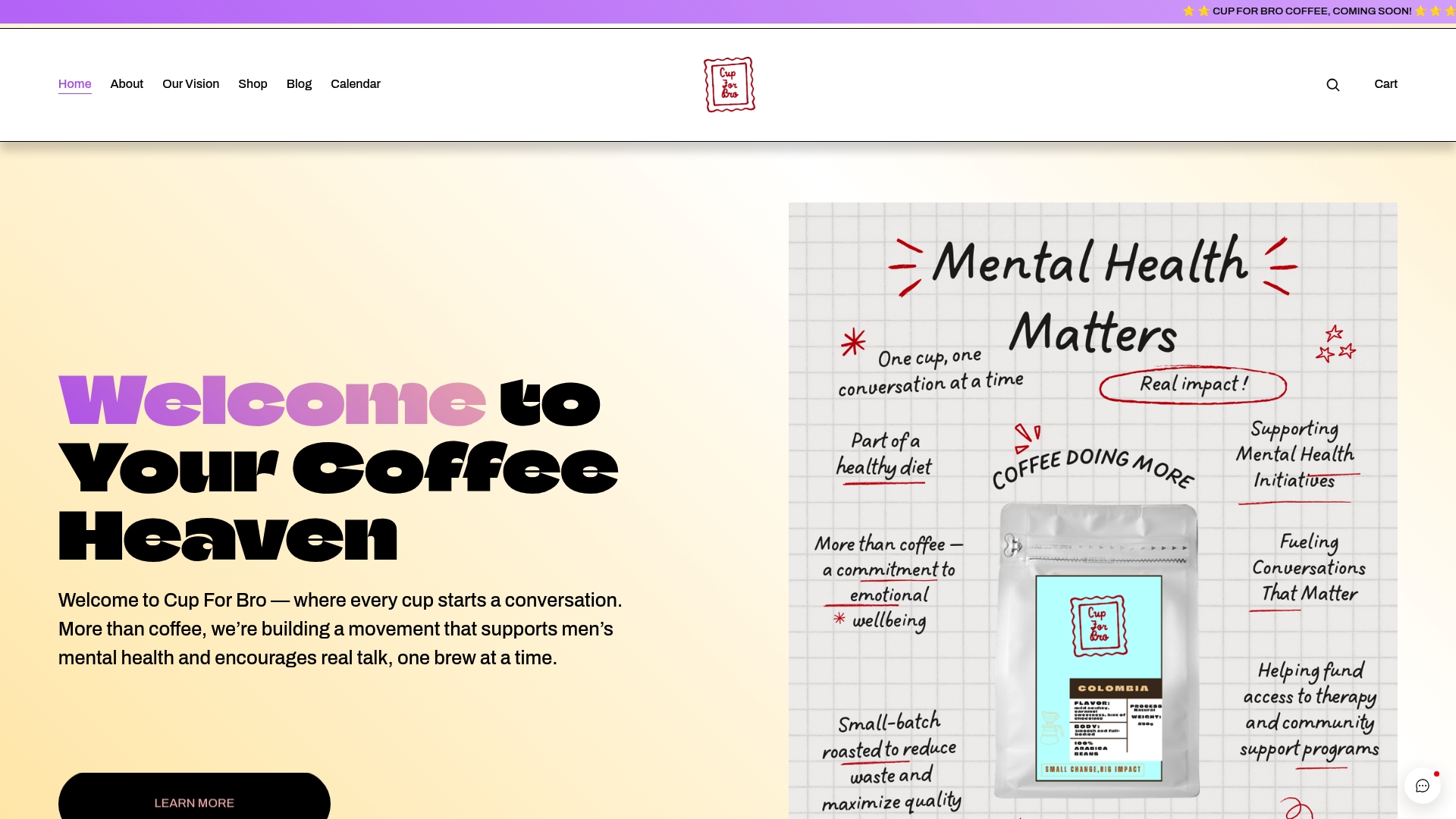
At Cup For Bro, every bag of coffee we sell contributes to men's mental health support across the UK, in partnership with some of the country's leading mental health foundations. We work with both individual consumers and businesses, because we believe the daily coffee ritual is one of the most underused tools for community good. Browse our shop for social impact coffee and find a blend that suits your taste and your values. Or take a few minutes to learn about our vision and understand why giving is simply the way we do business. Your next cup can mean more than you think.
Frequently asked questions
What is a Community Interest Company (CIC) in coffee?
A Community Interest Company is a UK legal structure that requires profits to be reinvested into community benefit rather than distributed primarily to shareholders. In coffee, it means the business is legally bound to fund social causes, not just encouraged to do so.
How does buying social impact coffee support mental health?
Your purchase contributes to a funding pool where 65% of profits go to community projects including mental health awareness campaigns and inclusive employment schemes. It is reinvestment by legal obligation, not voluntary donation.
Do social impact coffees cost more?
They can be slightly higher priced, largely because farmers receive 20-50% above fair trade base prices. For most buyers, the combination of specialty quality and verified community impact makes that difference worthwhile.
How can I tell a coffee is really a social impact product?
Look for the CIC registration, which is verifiable through Companies House, and check whether the brand publicly states its reinvestment percentage. A genuine social impact model will show you the numbers, not just the language.