
TL;DR:
- Social enterprise cafés prioritize community impact by reinvesting profits into local programs and support.
- They support vulnerable groups through training, employment pathways, and mental health initiatives.
- Measuring outcomes and maintaining strong governance are essential for long-term sustainability and credibility.
A café is rarely just a café. For millions of people across the UK, it is a lifeline, a first step back into work, or the one place in the week where someone genuinely asks how they are doing. Social enterprise cafés have quietly been rewriting what it means to run a hospitality business, and the results are remarkable. This guide is for café owners and managers who want to understand how the social enterprise model works in practice, what genuine impact looks like, and how to adopt it in a way that is both financially sound and deeply meaningful for your community.
Table of Contents
- What makes a café a social enterprise?
- Transforming lives through training and employment
- Delivering community and mental health support
- Challenges, risks, and the future of social enterprise cafés
- Our perspective: What most guides miss about social enterprise cafés
- Make your café part of the movement
- Frequently asked questions
Key Takeaways
| Point | Details |
|---|---|
| Transformative impact | Social enterprise cafes radically enhance local employment and mental health support. |
| Community partnerships | Deep collaborations with charities and health services unlock wider social value and funding. |
| Measurable outcomes | Regularly tracking and reporting impact builds credibility and attracts ethical customers and grants. |
| Governance balance | Devolving power to the community increases buy-in but requires careful management to ensure sustainability. |
| Actionable steps | Cafes can start small with conversation tables or training schemes and grow their social mission over time. |
What makes a café a social enterprise?
A social enterprise café is a trading business with a social purpose at its core. Unlike a standard café where profit flows to shareholders or owners, a social enterprise reinvests its surplus back into people and community programmes. The business still needs to make money to survive, but making money is the means, not the end.
In the UK, the most common legal structure for this model is the Community Interest Company (CIC). A CIC has a formal asset lock, meaning profits and assets cannot be distributed to private individuals. This structure signals to funders, partners, and customers that your mission is genuine. Other options include charitable incorporated organisations and co-operatives, each with different governance rules and funding implications.
What does this look like day to day? Social enterprise cafés typically run programmes that include:
- On-the-job training for people facing barriers to employment, such as prison leavers, people experiencing homelessness, or individuals recovering from mental health crises
- Work experience placements that lead to recognised qualifications and references
- Employment pathways that connect trainees with jobs inside and outside the café
- Community events that build belonging and reduce isolation
- Mental health initiatives in partnership with charities and NHS services
Organisations like Redemption Roasters have shown that this model is not idealistic; it is operational. Social enterprises in UK cafés employ training and employment programmes for disadvantaged groups, providing on-the-job skills and clear pathways into further employment. The café becomes a structured environment for growth, not just a place to serve flat whites.
Thinking about sustainability in cafés goes hand in hand with this model. Social enterprises tend to source ethically, reduce waste, and measure environmental impact alongside social outcomes.
Pro Tip: Register as a CIC before approaching grant funders. Many trusts and foundations will only consider applications from organisations with a formal social purpose structure, and the CIC label builds immediate credibility with customers and partners alike.
Transforming lives through training and employment
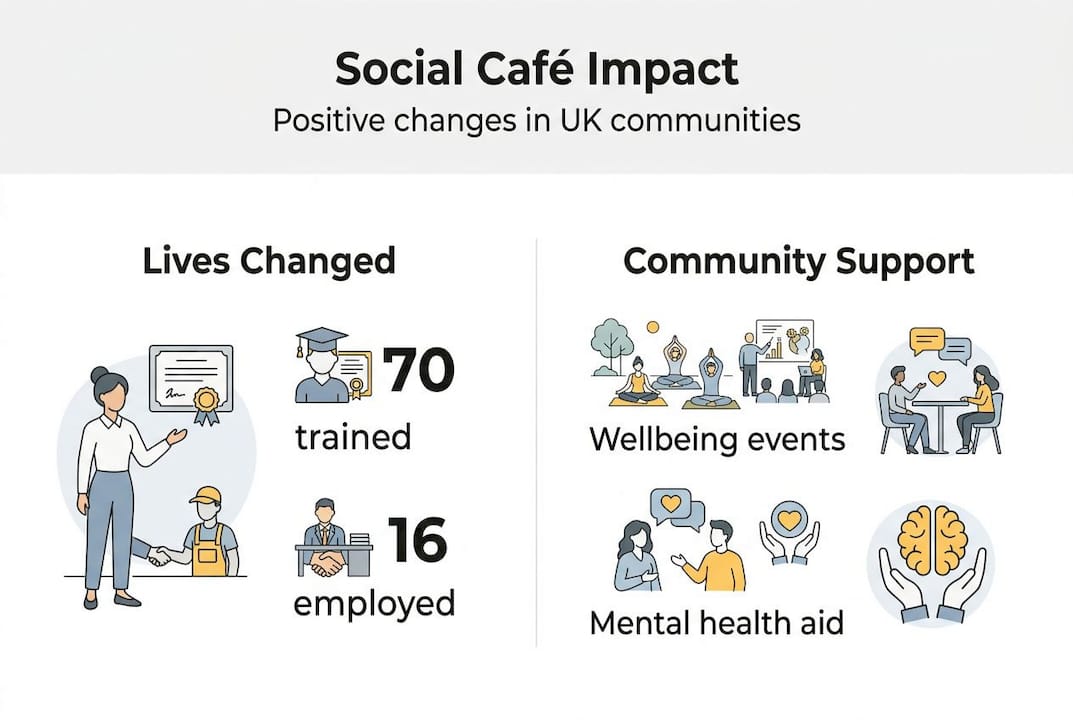
The numbers tell a story that is hard to ignore. Braw Tea trained 70 women in two years, placing 16 directly into employment and supporting 14 more into jobs elsewhere. Redemption Roasters operates with 29% of its workforce being prison leavers and records a 0% reoffending rate, compared to the national average of 42%. These are not small wins.
| Organisation | People supported | Key outcome |
|---|---|---|
| Braw Tea | 70 women trained | 16 employed directly, 14 placed elsewhere |
| Redemption Roasters | 29% workforce from prison | 0% reoffending vs 42% national average |
So how does a training and employment programme actually work inside a café? Here is a straightforward sequence that many successful social enterprise cafés follow:
- Recruitment through referral partners such as probation services, homeless charities, or mental health organisations
- Induction and skills training covering food safety, customer service, barista skills, and workplace confidence
- Supported placement on the café floor with mentoring from experienced staff
- Progress reviews to track development and identify further learning needs
- Transition support into permanent roles, either within the café or with partner employers
The groups that benefit most from this model include:
- Women escaping domestic abuse or long-term unemployment
- Individuals experiencing homelessness who need stable routine and income
- Prison leavers seeking a credible reference and a fresh start
- People managing mental health conditions who need a low-pressure re-entry into work
Engaging customers with these initiatives is also a powerful tool. When your regulars understand who made their coffee and why it matters, loyalty deepens in a way that no loyalty card scheme can replicate.
Pro Tip: Track every outcome. Job placements, training completions, qualifications gained, and even softer measures like confidence ratings all matter when applying for grants or reporting to commissioners. Impact data is your most valuable asset.
Delivering community and mental health support
Beyond employment, social enterprise cafés are becoming genuine centres for mental health and community wellbeing. The evidence is striking. The Chatty Café Scheme reached 750 venues, helping an estimated 30,000 people combat loneliness across the UK. Revival's mental health programme received a 10/10 satisfaction rating from participants. These are not anecdotal feel-good stories; they are measurable outcomes.
| Initiative | Approach | Measured outcome |
|---|---|---|
| Chatty Café Scheme | Designated conversation tables | 750 venues, 30,000 people reached |
| Revival | Trauma-informed care, peer support | 10/10 participant satisfaction |
| Coffee Afrik | Community-led, culturally sensitive support | Devolved governance model |
The specific activities that make these spaces work include:
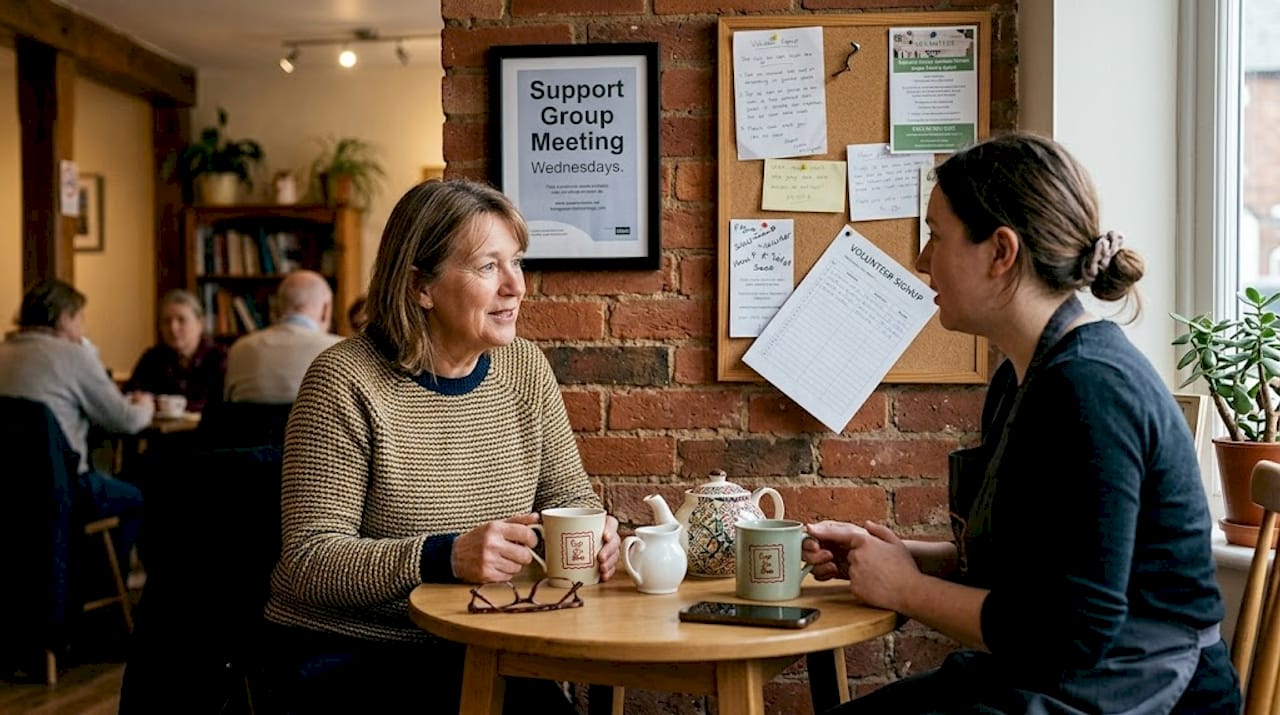
- Conversation tables where strangers are welcomed to sit and talk, removing the social pressure of initiating contact
- Creative activities such as art, writing, and music therapy that give people a shared focus and reduce anxiety
- Trauma-informed care training for staff, so that every interaction is handled with sensitivity and skill
- Drop-in sessions run in partnership with mental health charities, counsellors, or peer support workers
"The café is not just a place to get a hot drink. It is the first place some people have felt safe enough to ask for help." This sentiment, echoed by participants across multiple UK social enterprise programmes, captures why the physical space matters as much as the service.
Partnerships are the engine behind much of this work. Collaborating with NHS trusts, Mind, local charities, and community leaders gives social enterprise cafés access to funding, referrals, and professional expertise they could not develop alone. Understanding cafés and community wellness as a connected system, rather than separate services, is what separates the most impactful operations from the rest. You can also learn from how London cafés support mental health charities to see partnership models in action, and explore how baristas support community wellbeing through everyday interactions.
Challenges, risks, and the future of social enterprise cafés
Growth brings complexity. The very things that make social enterprise cafés powerful, community governance, local accountability, and mission-led decision-making, can also slow them down when scaling is needed.
Community-led governance devolves power to locals but can slow growth, and competition from profit-focused tenders threatens independent social cafés. When a local authority puts a community café contract out to tender, a large chain with slick operations and low overheads can undercut a social enterprise that carries the additional costs of training programmes and supported employment.
There is also the risk of mission drift. As financial pressure grows, the temptation to prioritise revenue over purpose is real. Governance structures must be strong enough to resist it.
"We have already lost too many community cafés to developers and corporate operators. Each closure is not just a business failure; it is the removal of a vital community resource."
To protect and grow your impact, focus on genuine differentiation:
- Publish annual social impact reports that quantify your outcomes in plain language
- Price your offer honestly and communicate why ethical sourcing and supported employment cost more
- Build a loyal community that understands and advocates for your mission
- Diversify income through catering, events, grants, and partnerships rather than relying solely on café sales
- Protect your governance by embedding your social purpose in your legal structure and articles of association
Organisations like Coffee Afrik show that a deeply local, culturally responsive approach is itself a competitive advantage. Chains cannot replicate genuine community roots. Connecting your community impact vision to every business decision keeps purpose and practice aligned.
Pro Tip: Publish your social impact report annually, even if it is just two pages. It builds trust with customers, strengthens grant applications, and holds your own team accountable to the mission.
Our perspective: What most guides miss about social enterprise cafés
Most overviews of social enterprise cafés focus on the inspiring stories, and those stories deserve to be told. But they often skip the harder truth: good intentions without rigorous measurement are not enough. The cafés that sustain real impact over years are the ones that treat accountability as a core business function, not a box-ticking exercise for funders.
Tracking outcomes is intensive work. It requires systems, staff time, and honest reporting even when the numbers are not flattering. The social enterprise label alone does not differentiate you from a chain. What differentiates you is a long track record of measurable, verifiable impact that no corporate operator can credibly claim.
We also think the conversation about mental health in cafés needs to go further. It is not enough to host a drop-in once a month. The most effective spaces weave mental health awareness into every aspect of operations, from how staff are trained to how the physical space is designed. Exploring ways to give back through your café is where purpose becomes practice.
Treat your social mission as a core business value, not an afterthought, and it will shape every decision you make.
Make your café part of the movement
If this guide has sparked something, that is exactly the point. The social enterprise model is not reserved for large organisations with dedicated impact teams. It starts with a decision to source ethically, to hire with purpose, and to measure what matters.
At Cup For Bro, we partner with some of the UK's leading mental health foundations to supply coffee that funds vital support programmes. When you shop ethical coffee through us, every bag sold contributes directly to men's mental health services. It is a straightforward way to align your purchasing with your values. Learn more about Cup For Bro and discover how a simple sourcing decision can become part of something much larger for your café and your community.
Frequently asked questions
What legal structure should a social enterprise café choose?
Most successful UK social enterprise cafés register as CICs to reinvest profits back into social programmes, as the asset lock provides legal protection for the mission and builds credibility with funders.
How can cafés measure the impact of their social enterprise activities?
Track metrics like numbers trained, job placements, environmental savings, and participant ratings. Braw Tea trained 70 women in two years and saved 869kg of CO2 through waste reduction, demonstrating that both social and environmental outcomes are measurable.
What partnerships help social enterprise cafés succeed?
Collaborations with NHS and charities expand funding and delivery capacity, enabling mental health and employment programmes that a single café could not sustain alone.
Are social enterprise cafés financially sustainable?
Yes. With diversified income, grant funding, and a clearly communicated social purpose, many UK cafés remain profitable. The Redemption Roasters model demonstrates that reinvested profits, grants, and a strong social USP can sustain long-term viability.
How do social enterprise cafés help with mental health?
They provide safe, welcoming spaces and run creative activities and conversation tables that foster connection, reduce loneliness, and support vulnerable groups in a non-clinical, accessible environment.