

TL;DR:
- Many men avoid traditional mental health services due to stigma and social pressure.
- Practical, action-based self-care tools and community activities are effective alternatives.
- Building consistent habits and starting small helps men improve mental health sustainably.
Many men in the UK want to feel better mentally but have no clear idea where to begin. Stigma, social pressure, and a lack of practical guidance make it easy to stay stuck. Only 52% of men would even visit their GP for mental health concerns, which tells you just how steep the barriers are. This guide cuts through the noise. You'll find real tools, honest advice, and a step-by-step routine built around what actually works for men in the UK, not what looks good on a poster.
Table of Contents
- Understanding the barriers and importance of self-care
- Essential tools and resources for self-care success
- Step-by-step guide to building your mental health self-care routine
- Troubleshooting common challenges and staying on track
- The uncomfortable truth about self-care for men
- Take your next steps with Cup For Bro
- Frequently asked questions
Key Takeaways
| Point | Details |
|---|---|
| Action beats talk | Practical, confidential strategies work better for most UK men than traditional talk-heavy approaches. |
| Start with small steps | Choosing just one easy-to-try self-care tool increases the chance of success. |
| Community matters | Community settings, like sports clubs and cafés, offer trusted entry points for ongoing mental health self-care. |
| Overcoming barriers | Understanding common obstacles helps men anticipate setbacks and persist with self-care. |
Understanding the barriers and importance of self-care
There's a reason so many men feel like mental health support wasn't designed for them. It often wasn't. The traditional model, sitting in a room and talking through feelings, doesn't appeal to a significant portion of men. That's not weakness; it's just a mismatch between format and preference.
The barriers are both societal and deeply personal. Many men grew up hearing that struggling in silence is a sign of strength. That belief doesn't vanish overnight. Add to it the fear of judgement from mates, colleagues, or family, and it's easy to see why men tend to push things down rather than address them.
Here's what the data tells us:
- Stigma is the number one reason men avoid seeking help
- Men are less likely than women to lean on friends or family for informal support, as shown in the Healthwatch England report
- GP visits are the most common route for men, but overall engagement with mental health services remains low
- Self-referral options like talking therapies are underused by men
"Reaching men requires meeting them where they already are, in workplaces, sports clubs, and community spaces, not waiting for them to walk through a clinic door."
The good news is that self-care doesn't require you to open up publicly. It's about building habits and using tools that fit your life. For many men, this practical, action-first approach is far more sustainable than traditional therapy routes.
The UK government now recognises this too. The men's health strategy emphasises a "no-wrong-door" approach, pushing outreach through workplaces, sports clubs, and community settings rather than relying solely on clinical services. That shift matters.
Self-care reduces your reliance on formal systems that are often stretched thin. It puts you in control. And crucially, it fits around the reality of your life, whether that's a demanding job, family responsibilities, or simply not wanting to sit in a waiting room. If you want to understand the broader self-care realities for UK men, there's a lot more to unpack beyond what mainstream advice covers. For those based in cities, exploring mental health support in London can surface some genuinely useful local options too.
Essential tools and resources for self-care success
Knowing you need to do something and knowing what to do are two very different things. Let's make it practical.
The UK has a surprisingly strong range of free, accessible tools for men who want to take their mental health seriously. The key is finding one that doesn't feel like a chore.
| Tool or resource | Format | How to access | Best for |
|---|---|---|---|
| Active 10 (NHS app) | Mobile app | NHS website or app stores | Men who want to build daily movement |
| Couch to 5K (NHS) | Guided running programme | NHS app or podcast | Beginners building fitness and routine |
| Shout 85258 | Text-based support | Text SHOUT to 85258 | Men who prefer not to speak out loud |
| CALM helpline | Phone and webchat | 0800 58 58 58 | Men in crisis or needing to talk |
| Workplace EAP | Confidential counselling | Via HR or employee portal | Men in employment seeking private support |
Free and confidential resources available to most men in the UK include:
- NHS Every Mind Matters platform with personalised mental health plans
- Mind charity online resources, forums, and local groups
- Movember community events and online peer support
- Andy's Man Club, free peer support groups running weekly across the UK
The UK men's health strategy actively promotes NHS-endorsed apps and workplace initiatives as front-line self-care tools, and the evidence backs this up. They're accessible, private, and designed for people who are just getting started.
One often-overlooked resource is the local café or community space. Research increasingly shows that cafés' role in mental wellness is far more significant than most people assume. Regular, low-pressure social connection in a familiar environment genuinely moves the needle for many men.
Pro Tip: Don't try to overhaul your whole lifestyle at once. Pick one tool from the list above and commit to it for two weeks before adding anything else. A ten-minute walk with the Active 10 app counts. Starting is the hardest part.
Step-by-step guide to building your mental health self-care routine
Having a list of resources is one thing. Turning them into a consistent routine is where most men get stuck. Here's how to actually do it.
Step 1: Identify what you want to address. Be honest with yourself. Is it low mood, poor sleep, stress, or a general sense of being overwhelmed? You don't need a diagnosis. Just name it.
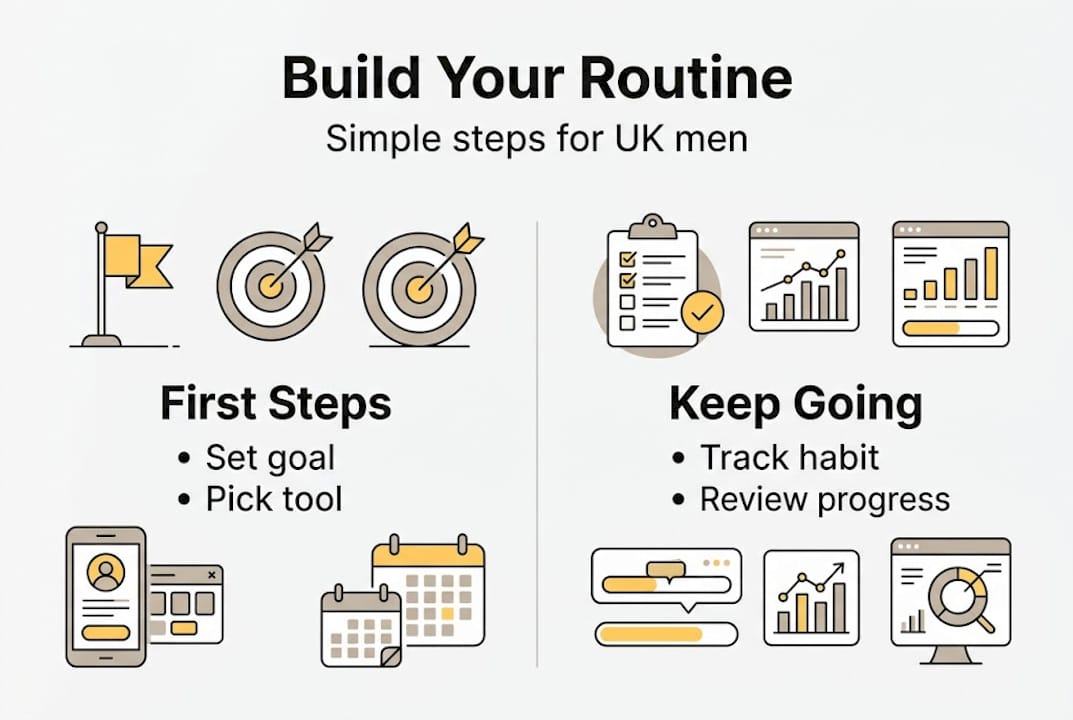
Step 2: Choose one activity from your toolkit. Use the table in the previous section. Match the tool to your need and your comfort level. If group settings feel too exposed right now, start with an app or a solo walk.
Step 3: Schedule it like a meeting. Block specific time in your week. Tuesday evening, 6pm, twenty-minute walk. Write it down or put it in your phone. Vague intentions don't survive contact with a busy week.
Step 4: Log your progress. It doesn't have to be elaborate. A note in your phone, a simple tick on a calendar. Tracking builds momentum and shows you the evidence that things are shifting.
Step 5: Review and adjust after two weeks. What's working? What isn't? Swap or adapt. Self-care isn't a fixed programme; it evolves with you.
To help you plan, here's a comparison of quick wins versus longer-term practices:
| Approach | Time investment | Impact timeline | Examples |
|---|---|---|---|
| Quick wins | Under 15 minutes daily | Days to weeks | Walking, breathing exercises, journalling |
| Longer-term practices | 30 mins+ or weekly | Weeks to months | Peer support groups, regular therapy, fitness routines |
The BALM study found that tailored, action-focused interventions cut depression and anxiety for men with results sustained months later. That's not an accident. It's because the approach matched how men actually think and behave.
For those looking for a community angle, cafés supporting mental health offer a surprisingly effective way to maintain routine without it feeling like a clinical commitment.
Pro Tip: If group settings aren't comfortable yet, start completely solo. Confidentiality matters. There's no rule that says self-care has to be visible to anyone else.
Troubleshooting common challenges and staying on track
Even the best-laid plans hit bumps. Here's what typically derails men and how to respond without scrapping everything.
Lack of motivation is probably the most common one. You start strong, then life gets busy and the routine slips. The fix isn't to try harder; it's to make the activity easier. Reduce the commitment temporarily. A five-minute walk still counts.
Feeling isolated can make self-care feel pointless. If you're doing everything solo and still struggling, that's a signal to add a social element. Even a loosely connected group activity can shift things significantly.
Slippery routines happen when self-care gets bumped by other priorities. The solution is pairing it with something already fixed in your day, like a morning coffee or a lunch break.
Quick fixes for common challenges:
- Lost motivation? Reduce the bar, not the goal
- Feeling isolated? Try support from community cafés or a local peer group
- Routine slipping? Anchor it to an existing daily habit
- Overwhelmed by options? Go back to one thing and simplify
- Can't find local events? Start with connecting with local events directories to find low-pressure activities near you
The BALM study confirmed that men who prefer practical, confidential, action-focused strategies maintain their results months later, not because they never slipped, but because the approach was sustainable enough to return to.
"Consistency beats perfection every time. Missing a day doesn't undo your progress. Getting back to it does."
Local fundraising in community cafés and neighbourhood events are also worth exploring. They create natural accountability without pressure, which is exactly what most men need to stay engaged.
The uncomfortable truth about self-care for men
Most advice aimed at men and mental health is written by people who've never had to think about whether opening up will cost them their reputation at work or with their mates. That disconnect is why so much of it misses.
The breakthrough isn't a new technique. It's recognising that action is the emotion processing for many men. A run, a coffee with a friend, building something with your hands. These aren't distractions from mental health work; they are the mental health work.
The men's health strategy acknowledges that many men still feel excluded by traditional services, with informal and community-based approaches seeing the most genuine engagement. That's not a consolation prize. That's the finding.
At Cup For Bro, we've seen it firsthand. The men who make lasting progress aren't the ones who followed the most impressive-sounding programme. They're the ones who found something doable and kept showing up. Small, consistent, and real. If you want to explore everyday mental health habits that actually fit into a normal life, that's where the real value sits.
Take your next steps with Cup For Bro
Building a sustainable mental health self-care routine takes time, but you don't have to figure it out alone. Cup For Bro exists to make that journey a little less isolating and a lot more purposeful.
Every bag of our coffee funds vital men's mental health programmes across the UK, so your morning brew becomes part of something bigger. Whether you're after a quality coffee ritual that anchors your day or you want to learn more about what we do and why, we'd love to have you as part of the community. Take one small step today, because that's exactly how it starts.
Frequently asked questions
What are the best first steps for men new to mental health self-care?
Start with one practical and confidential action, such as using an NHS-endorsed app or going for a daily walk, and build consistency before adding anything else.
Why do men often find it hard to talk about mental health?
Stigma and social expectations are the primary reasons, as confirmed in the Healthwatch England report, which is why confidential and action-based strategies tend to be far more effective for most men.
Which community activities support men's mental health?
Sports clubs, workplace employee assistance programmes, and cafés running mental health campaigns all offer informal, low-pressure spaces where men in the UK can find genuine support.
Are there confidential support options for men?
Yes. NHS apps, text-based helplines like Shout 85258, and self-directed support tools are all designed to be private, accessible, and available without needing a referral.