
TL;DR:
- Specialty coffee has higher antioxidant compounds like CGAs, supporting better mood and health.
- Drinking 2 to 3 cups daily in the morning optimizes mental wellbeing and minimizes risks.
- Mindful brewing and social rituals enhance coffee's positive effects on men's mental health.
Most men reach for coffee on autopilot. It's fuel, not ritual. But if you're treating every cup the same, you're missing something significant. Specialty coffee isn't just a step up in taste. It carries a meaningfully different chemical profile, one that science increasingly links to better mood, sharper thinking, and lower risk of serious illness. For men in the UK who take their wellbeing seriously, understanding this distinction could genuinely shift how you approach your morning routine. This article breaks down what the research actually says, where the risks lie, and how to build coffee into a self-care practice that works.
Table of Contents
- What makes specialty coffee different: More than just taste
- Unlocking health: The science-backed benefits for mind and body
- Risks, limits and how to avoid the common pitfalls
- Specialty coffee rituals: Social connection and alternative wellness for UK men
- Why the conventional take on coffee and men's wellness misses the mark
- Discover your next step with specialty coffee and wellness
- Frequently asked questions
Key Takeaways
| Point | Details |
|---|---|
| Specialty coffee advantages | Specialty coffee contains more beneficial compounds that support mind and body wellness when compared to regular brews. |
| Optimal intake matters | Limiting to 2–3 cups of light or medium roast specialty coffee daily yields the best wellness outcomes for UK men. |
| Rituals and connection | Combining specialty coffee with mindful routines or social meetups amplifies its benefits for mental health. |
| Avoiding common pitfalls | Overdoing caffeine or using unfiltered methods may increase risks, so stick to sensible habits and filtered brews. |
What makes specialty coffee different: More than just taste
Understanding what truly sets specialty coffee apart clarifies why it can play a distinctive role in a wellness routine.
Specialty coffee is defined by a grading system. Beans scoring 80 or above on a 100-point scale (set by the Specialty Coffee Association) qualify as specialty grade. That score reflects everything from growing altitude and soil conditions to harvesting precision and roasting technique. These aren't just markers of taste. They signal a fundamentally different product.
One of the most important differences is the concentration of chlorogenic acids, or CGAs. These are polyphenolic compounds found naturally in coffee, and they're responsible for much of coffee's antioxidant and neuroprotective potential. Higher CGA levels are found in specialty coffee due to better bean quality and lighter roasting profiles. Dark roasting degrades CGAs significantly, which is why your average supermarket blend falls short.
| Feature | Specialty coffee | Regular/commodity coffee |
|---|---|---|
| Bean quality | SCA grade 80+ | Ungraded or commodity grade |
| CGA concentration | High | Low to moderate |
| Roast profile | Light to medium | Often dark |
| Taste complexity | Nuanced, origin-specific | Flat, generic |
| Health potential | Higher | Lower |
When you're choosing beans, look for these markers:
- Single origin sourcing with traceable provenance
- Light or medium roast to preserve CGA content
- Recent roast date (ideally within 4 weeks)
- Transparent processing method (washed, natural, honey)
- SCA-certified or specialty graded labelling
For a deeper look at how coffee and wellbeing are connected, it's worth understanding the full picture before you brew your next cup. You can also discover more coffee insights across a range of topics that go well beyond the basics.
Unlocking health: The science-backed benefits for mind and body
Having seen what makes specialty coffee unique, let's explore what science reveals about its impact on your mental and physical health.
The evidence here is genuinely impressive. Large-scale cohort studies show that moderate coffee consumption of 3 to 5 cups per day is associated with reduced all-cause mortality, lower cardiovascular disease risk, reduced type 2 diabetes incidence, and slower cognitive decline. These aren't marginal effects. They represent meaningful differences across populations.
| Daily intake | Associated wellness outcomes |
|---|---|
| 1 cup | Mild antioxidant benefit, modest mood lift |
| 2 to 3 cups | Optimal mood support, reduced depression risk |
| 3 to 5 cups | Lowest all-cause mortality, CVD and diabetes protection |
| 5+ cups | Diminishing returns, increased anxiety and sleep disruption risk |
For mood specifically, the data is striking. Research using UK Biobank data found a J-shaped association between caffeine and mental health outcomes, meaning moderate intake reduces depression and anxiety risk, while very low or very high intake shows less benefit or potential harm.
"Moderate caffeine intake is associated with positive affect and a reduced risk of depression and anxiety, following a J-shaped curve where both very low and very high consumption show less favourable outcomes."
To get the most from your specialty coffee habit, follow these steps:
- Choose light or medium roast to maximise CGA content
- Aim for 2 to 3 cups daily for the best mental health balance
- Drink in the morning to align with your natural cortisol rhythm
- Stay hydrated alongside your coffee intake
- Pair with a grounding ritual such as journalling or a short walk
Pro Tip: Use your first cup as a deliberate mood anchor. Brew it slowly, drink it without your phone, and treat it as the opening act of your day rather than a reflex.
For a full breakdown of the mental benefits of coffee and how to find your optimal coffee intake, both are worth reading alongside this.
Risks, limits and how to avoid the common pitfalls
While the upsides are compelling, it's just as important to know where specialty coffee's limits lie and how to avoid the pitfalls.
Coffee is not without its risks, and pretending otherwise would do you a disservice. Consuming more than 400mg of caffeine daily, roughly four or more cups, significantly raises the risk of anxiety, jitteriness, and disrupted sleep. For men who are already managing stress or mental health challenges, this threshold matters.
There's also a lesser-known issue with unfiltered coffee. Cafestol, a compound found in unfiltered brews like French press or boiled coffee, raises LDL cholesterol over time. Switching to a paper filter removes most of it and is a simple fix.
Genetic variation also plays a role. Some men metabolise caffeine slowly due to variants in the CYP1A2 gene, making them more susceptible to negative effects even at moderate doses. If you find that two cups leaves you wired or anxious, that's useful data about your own biology.
Watch out for these signs that you may be overdoing it:
- Persistent anxiety or racing thoughts after your morning coffee
- Difficulty falling asleep even when you stop drinking early
- Heart palpitations or a noticeably elevated resting heart rate
- Dependency symptoms such as headaches when you skip a day
- Digestive discomfort or acid reflux after most cups
Pro Tip: Switch to a paper filter method like a V60 or Chemex if you're concerned about cholesterol. You'll also get a cleaner, brighter cup that showcases the flavour notes of good specialty beans.
For more on navigating UK coffee and mental health as a man in 2026, that resource covers the nuances in real depth.
Specialty coffee rituals: Social connection and alternative wellness for UK men
With safety and sensible use understood, you can focus on using specialty coffee to build positive social and personal rituals.

The act of brewing and drinking coffee mindfully changes its effect. When you slow down, pay attention to the process, and share the experience with others, you're adding a layer of wellness that no supplement can replicate. This is where specialty coffee becomes genuinely alternative wellness rather than just a better version of your morning habit.
In the UK, this is already happening in organised ways. Men's coffee meetups are proving to be powerful vehicles for mental wellness, creating low-pressure spaces where men can connect, talk, and support one another without the stigma that sometimes surrounds formal mental health settings.
"Menfulness, a UK men's wellbeing charity, has seen consistent growth in its coffee group model, with men reporting that the informal setting of a coffee meetup makes it far easier to open up and connect than a traditional support group."
Specialty coffee fits naturally into this because it gives people something to discuss, appreciate, and share. The ritual of preparation, the sensory experience of tasting, and the social act of gathering all contribute to wellbeing. Pairing specialty coffee with mindfulness or men's group activities creates a genuine synergy between the biochemical and the social.
Here are practical ways to build this into your life:
- Start a slow morning brew ritual using a pour-over or AeroPress
- Invite a mate for a weekly coffee instead of a pint
- Join or start a local men's coffee group focused on open conversation
- Use brewing time as a mindfulness practice, focusing on smell, sound, and temperature
- Explore specialty cafés that support men's mental health initiatives
For ideas on coffee and community wellbeing, or if you want to organise coffee wellness meetups yourself, there are practical guides available. You can also find cafés supporting men's mental health across the UK if you'd rather join something already running.
Why the conventional take on coffee and men's wellness misses the mark
Drawing all these insights together, it's clear that mainstream narratives do not capture the full picture.
Most conventional wellness advice about coffee still leans towards caution or reduction. Cut back. Quit caffeine. Try herbal tea instead. That framing treats coffee as a vice to be managed rather than a tool to be used well. It also completely ignores the social and ritual dimensions that make specialty coffee genuinely powerful for men's mental health.
The men who benefit most from specialty coffee aren't the ones who drink the most of it. They're the ones who drink it intentionally. They choose quality beans, brew with care, keep to a sensible amount, and use the ritual as an anchor for connection, focus, and self-care. That's a fundamentally different relationship with coffee than gulping an espresso between meetings.
For men exploring alternative wellness paths, this matters. Specialty coffee sits at the intersection of science, ritual, and community in a way that very little else does. The cognitive benefits for men are real, but they're amplified enormously when the habit is built with intention rather than habit alone.
The conventional take undersells this. We think it's time to change that.
Discover your next step with specialty coffee and wellness
If you're ready to experience specialty coffee's benefits first-hand, here's how you can get started.
At Cup For Bro, we believe that how you drink your coffee matters as much as what's in the cup. Every bag we sell is specialty grade, sourced with care, and roasted to preserve the compounds that actually support your wellbeing. More than that, every purchase funds mental health support programmes in partnership with some of the UK's leading foundations.
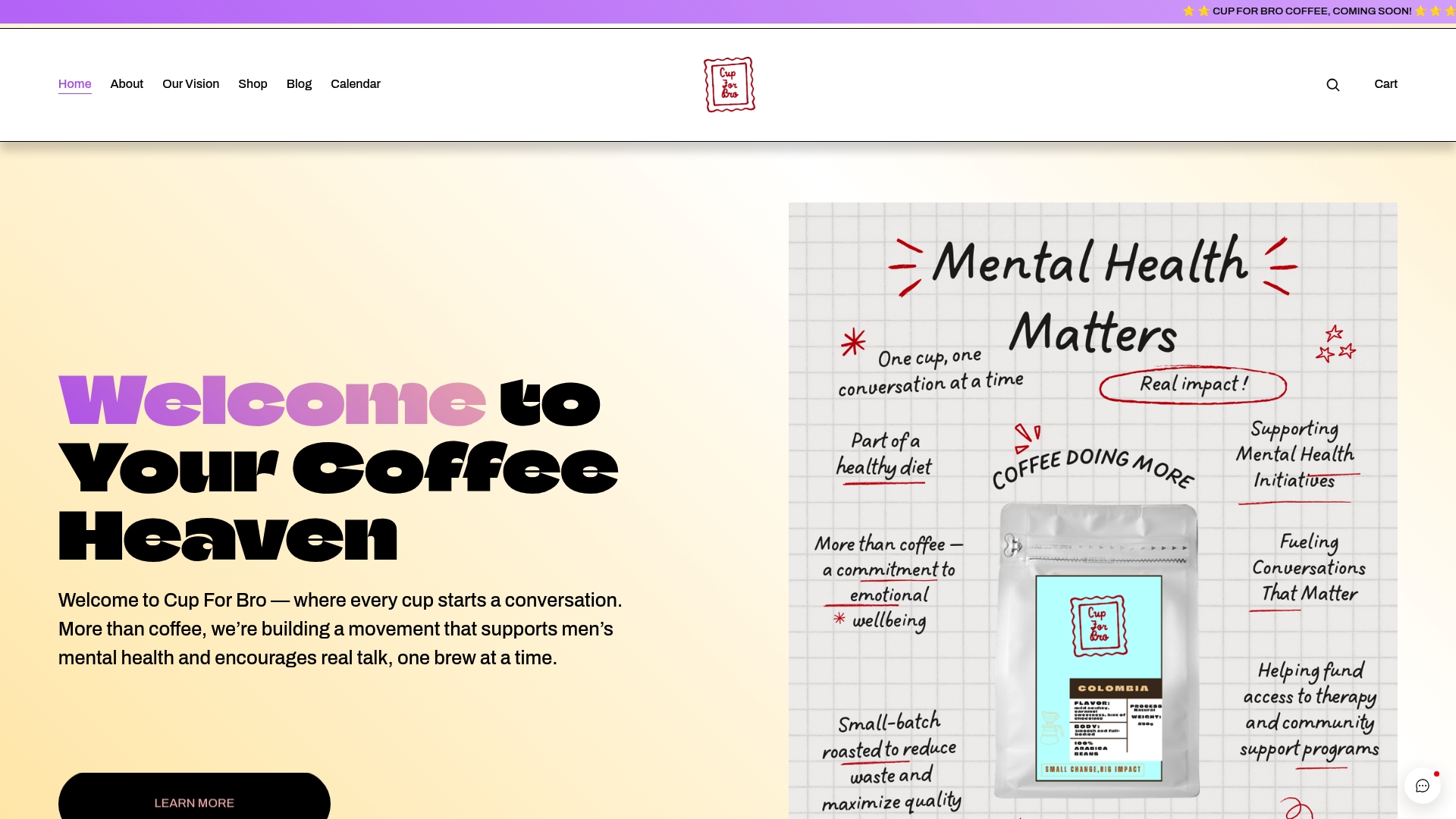
When you shop specialty coffee with us, you're not just upgrading your morning. You're contributing to something bigger. If you want to go further and connect with the community side of what we do, explore men's wellness initiatives and find out how Cup For Bro is building spaces where men can thrive, one cup at a time.
Frequently asked questions
How many cups of specialty coffee are safe and healthy per day?
Most evidence supports 2 to 3 cups per day as the sweet spot, offering the best balance of mood benefits and minimal risk of anxiety or sleep disruption.
Is specialty coffee actually better for mental wellness than regular coffee?
Yes. Specialty coffee contains higher CGAs due to quality sourcing and lighter roasting, making it more potent for both mental and metabolic health than standard commodity blends.
Can drinking specialty coffee in the evening harm my sleep or recovery?
Yes. High caffeine or late-day use can significantly disrupt sleep quality, so keep most of your intake to the morning hours for best recovery.
Does specialty coffee improve mood even if I don't join a group?
Absolutely. Coffee alone can lift positive mood, but social rituals and connection around the brew amplify those effects considerably, making community the multiplier.