

TL;DR:
- Moderate coffee consumption enhances men's memory, attention, reaction time, and mental fatigue resistance.
- Coffee's caffeine content supports mood regulation by lowering depression risk and boosting dopamine.
- Regular intake may protect against brain ageing by reducing neuroinflammation and cognitive decline.
Most men are fighting a quiet battle with mental fog, low mood, and the kind of emotional flatness that builds up over weeks without a clear cause. You might be eating well, sleeping reasonably, and still feeling like you're operating at 70%. What if one of the most effective tools for sharper thinking and better emotional balance was already sitting on your kitchen worktop? The science around coffee and men's mental health has moved well beyond "it wakes you up." Research now points to specific, measurable benefits for cognition, mood, and even long-term brain protection. This article breaks down what the evidence actually says.
Table of Contents
- Cognitive enhancement: boosting memory, alertness, and focus
- Regulating mood: coffee's influence on depression, anxiety, and emotional balance
- Reducing neuroinflammation: coffee as a protector against brain ageing
- Positive affect and social context: how coffee supports emotional wellbeing
- What most men miss about coffee's mental health benefits
- Explore the benefits and take action with Cup For Bro
- Frequently asked questions
Key Takeaways
| Point | Details |
|---|---|
| Caffeine boosts cognition | Coffee can sharpen memory, attention, and reaction time, especially during morning routines. |
| Supports mental wellbeing | Regular, moderate coffee intake is linked to lower risk of depression and anxiety in men. |
| Reduces neuroinflammation | Coffee helps protect brain health, lowering inflammatory markers associated with cognitive ageing. |
| Positive mood enhancement | Coffee increases positive feelings, especially in social and post-wake scenarios. |
Cognitive enhancement: boosting memory, alertness, and focus
Coffee does not just shake off morning grogginess. It actively improves how your brain performs on tasks that require sustained attention, quick reactions, and accurate recall. For men who need to be sharp at work, in the gym, or in high-pressure conversations, this matters.
The cognitive benefits of caffeine are well documented. Higher coffee intake is linked to lower odds of low cognitive scores in adults, based on large-scale NHANES data. Separately, caffeine acutely improves attention and reaction time, with effects measurable within 30 to 60 minutes of consumption.
Here is what coffee specifically supports in the brain:
- Working memory: Your ability to hold and manipulate information in real time
- Sustained attention: Staying locked in during long meetings or complex problem-solving
- Reaction time: Faster processing of sensory information, critical in both sport and decision-making
- Mental fatigue resistance: Delaying the drop-off in performance during prolonged tasks
The dose-response relationship is worth understanding. Moderate intake, roughly 200 to 400mg of caffeine per day, produces the clearest cognitive gains. Going well above this does not sharpen you further. It tends to increase jitteriness and can actually impair fine motor control and concentration.
Timing is also a real factor. The cognitive lift from caffeine is most pronounced when you consume it after waking, when adenosine (the chemical that makes you feel sleepy) has already begun to accumulate. Drinking coffee immediately on waking, before adenosine builds, blunts some of the benefit. Waiting 60 to 90 minutes after getting up gives the caffeine more to work against. Understanding optimal coffee consumption can make a real difference to how much you get from each cup.
Pro Tip: Schedule your first coffee 60 to 90 minutes after waking, then align your second cup with your most mentally demanding task of the day. This is how you use caffeine as a precision tool, not just a habit.
For a broader look at how coffee and mental wellbeing connect, the evidence goes further than most people realise.
Regulating mood: coffee's influence on depression, anxiety, and emotional balance
Cognition and mood are not separate systems. When your emotional baseline is low, your thinking suffers. When your thinking is foggy, your mood follows. Coffee has a measurable impact on both, and the mechanisms are specific.
Caffeine works partly by blocking adenosine receptors in the brain. Adenosine is inhibitory. When caffeine blocks it, dopamine and other stimulatory neurotransmitters flow more freely. This is not just a temporary energy boost. Caffeine's antagonism of adenosine receptors reduces depression risk and increases dopamine availability, which directly supports motivation, pleasure, and emotional resilience.
Here is how moderate coffee intake supports mood regulation:
- Reduces risk of depression: Regular moderate intake is associated with a meaningfully lower likelihood of depressive episodes
- Increases dopamine signalling: Supports the brain's reward and motivation pathways
- Lowers perceived fatigue: Fatigue and low mood are closely linked; reducing one helps the other
- Supports emotional regulation: Better alertness means better capacity to manage stress responses
Critically, coffee intake is inversely associated with depression risk, and this effect is more pronounced in men. That is not a minor footnote. It suggests that men may have a specific neurological responsiveness to caffeine's mood-supporting effects that women do not share to the same degree.
The caveat is real, though. High doses, above 600mg of caffeine daily, can tip the balance toward increased anxiety and elevated stress hormones. The benefit is in the moderate range. This is why personalisation matters. Some men feel optimal at two cups a day. Others do well with four. Your personal threshold is worth paying attention to.
"The goal is not to drink as much coffee as possible. It is to find the dose where your mood, focus, and energy are all working together."
For more on coffee and men's mental health, and the unique men's wellness factors that shape how lifestyle choices affect us differently, there is a growing body of evidence worth exploring.
Reducing neuroinflammation: coffee as a protector against brain ageing
This is where coffee's benefits get genuinely surprising. Most men think about coffee in terms of today: sharper this morning, better mood this afternoon. But there is a longer game being played.

Chronic neuroinflammation is one of the key drivers of cognitive decline, dementia-related processes, and mood disorders. It is low-grade, largely invisible, and accumulates over years. Coffee appears to actively reduce it.
Higher coffee intake is linked to lower inflammatory markers, and researchers suggest this reduction in neuroinflammation may be one of the primary mechanisms behind coffee's cognitive benefits. This is not just about feeling sharper now. It is about protecting the architecture of your brain over decades.
| Inflammatory marker | With regular coffee intake | Without regular coffee intake |
|---|---|---|
| IL-6 (interleukin-6) | Reduced levels | Elevated levels |
| CRP (C-reactive protein) | Lower circulating levels | Higher baseline |
| TNF-alpha | Modestly reduced | Higher in sedentary adults |
| Neuroinflammatory activity | Attenuated | Progressively elevated with age |
The male-specific angle here is compelling. Rodent studies show that caffeine reduces anxiety, depressive behaviours, and neuroinflammation, with the effect being especially pronounced in adult males. While animal studies do not translate directly to human outcomes, they point toward a biological mechanism that may explain why men seem to benefit more from coffee's mood and brain-protective effects.
Key protective benefits of steady, moderate coffee intake:
- Reduced chronic brain inflammation over time
- Lower risk of age-related cognitive decline
- Potential protection against early dementia-related processes
- Improved resilience of neural pathways under stress
Using a mental health checklist to track how your habits are affecting your wellbeing, alongside following optimal coffee tips, gives you a practical framework for making this work in real life.
Pro Tip: Consistency matters more than quantity here. Two to three cups daily, every day, appears to offer better neuroprotective outcomes than irregular high-dose consumption.
Positive affect and social context: how coffee supports emotional wellbeing
Beyond the neuroscience, there is something worth acknowledging about how coffee fits into the texture of daily life. The ritual matters. The social setting matters. And the data backs this up.
Caffeine intake is associated with increased positive affect, particularly after waking, and this effect is moderated by tiredness levels and social context. In plain terms: coffee makes you feel better, and it works best when you are tired and when you are around other people.
| Scenario | Positive affect score (pre-coffee) | Positive affect score (post-coffee) |
|---|---|---|
| Morning, well-rested | Moderate | Moderate to high |
| Morning, tired | Low | High |
| Social setting, afternoon | Moderate | High |
| Solo, low energy, mid-afternoon | Low | Moderate to high |
This has real implications for how men use coffee day to day:
- Morning routine: The first cup is not just about waking up. It is a mood-setting act that influences your emotional tone for hours
- Coffee breaks at work: Stepping away for a coffee is not laziness. It is a legitimate mood reset, especially in high-pressure environments
- Social meet-ups: Meeting a mate for a coffee is not trivial. The combination of caffeine and social connection produces a measurable lift in positive affect
- Post-exercise coffee: After physical effort, when fatigue is high, caffeine's mood-boosting effect is at its strongest
For men who find it hard to talk openly about how they are feeling, the social ritual of coffee can create low-pressure spaces for genuine connection. This is something we at Cup For Bro think about a lot. Exploring coffee and social wellbeing and charity coffee initiatives shows how a simple cup can carry real social weight.
What most men miss about coffee's mental health benefits
Most men treat coffee as a crutch rather than a tool. They drink it reactively, when they are already exhausted, in amounts that vary wildly day to day, with no thought for timing or context. That approach wastes most of the benefit.
The research is clear: moderate, consistent, well-timed coffee intake produces the strongest cognitive and emotional outcomes. Not the most coffee. Not the strongest coffee. The right coffee, at the right time, in the right amount.
Personalisation is the part most men skip. Your optimal dose is not the same as your colleague's. Your best timing depends on your sleep patterns, your work demands, and your sensitivity to caffeine. Paying attention to how you actually feel after different amounts and timings is not overthinking it. It is using a genuinely powerful wellness tool properly.
We also think men underestimate the cumulative, long-term value here. The neuroprotective effects of regular moderate intake build over years. The coffee mental health impact is not just about today's focus. It is about who you are mentally at 50, 60, and beyond. Start treating your daily cup with the same intentionality you would bring to any other health habit.
Explore the benefits and take action with Cup For Bro
If the evidence in this article has shifted how you think about your daily coffee, the next step is making sure what is in your cup is actually worth drinking.
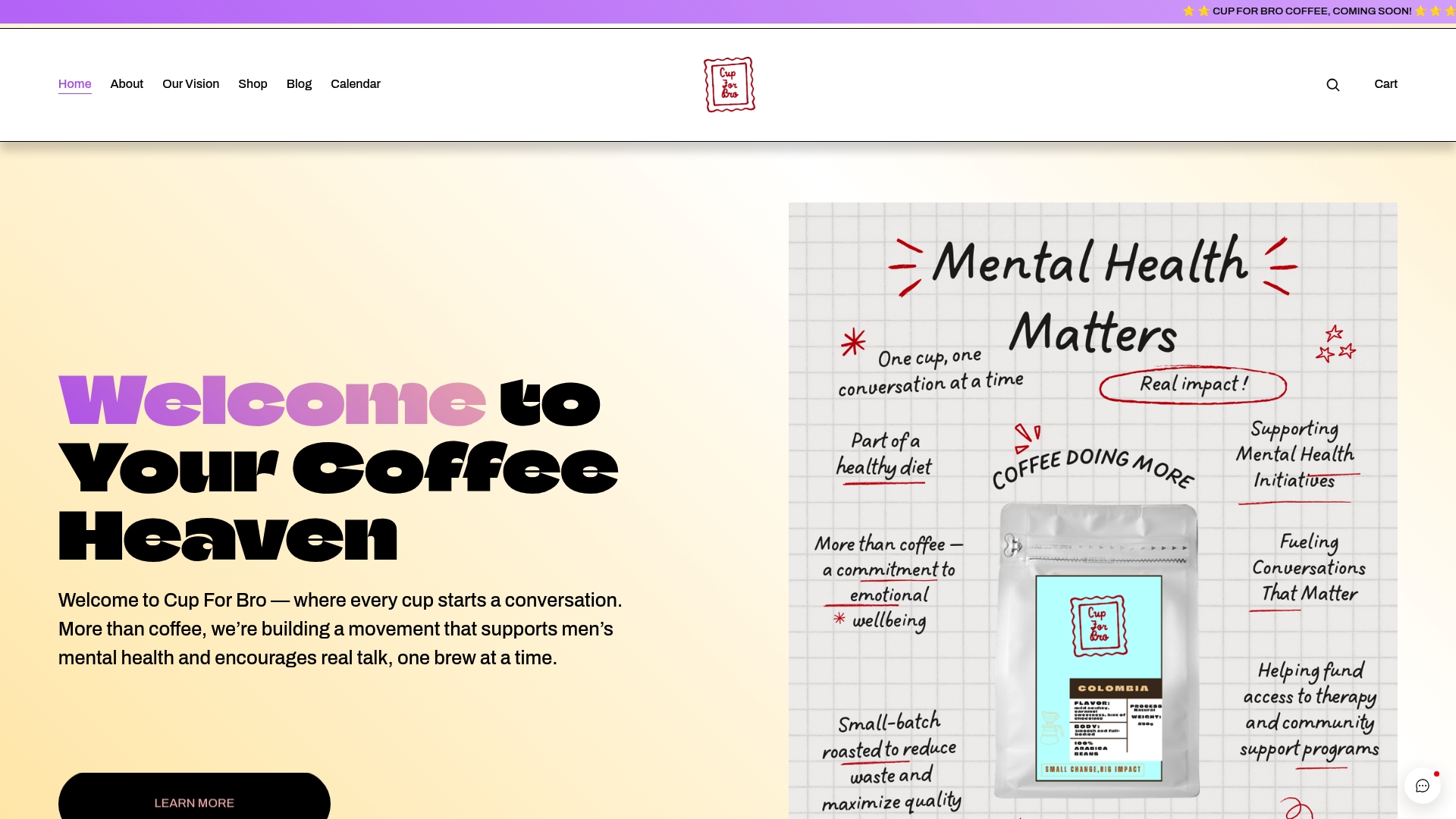
At Cup For Bro, we sell quality coffee beans to individuals and businesses, with every purchase directly funding mental health support programmes run by some of the UK's leading foundations. When you shop coffee for wellbeing, you are not just investing in your own cognitive and emotional health. You are helping fund the services that support men who are struggling. Find out more about the Cup For Bro mission and how your daily habit can do more than you think.
Frequently asked questions
How much coffee should men drink daily for mental health?
Moderate coffee intake of around 2 to 4 cups daily offers the strongest cognitive and mood benefits. Higher intake reduces risk of low cognitive scores, while excessive doses increase anxiety and stress, so staying within the moderate range is key.
Does coffee help prevent depression in men?
Studies suggest moderate coffee consumption is linked with lower depression risk in men, likely due to caffeine's effect on dopamine and adenosine pathways. Coffee intake is inversely associated with depression risk, with a stronger effect seen in men than women.
Does coffee improve memory and alertness?
Yes. Caffeine improves attention and reaction time acutely, and works best when consumed after waking. Positive affect is strongest in the morning post-wake period, suggesting this is the optimal window for both mood and cognitive benefits.
Is coffee good for brain ageing?
Regular coffee intake can reduce neuroinflammation, which is one of the primary drivers of cognitive decline. Higher coffee intake is linked to lower inflammatory markers, and caffeine mitigates neuroinflammation in adult male rodents, pointing to a neuroprotective mechanism that may apply to men.