
TL;DR:
- Mindfulness reduces depressive symptoms and builds resilience in men.
- Tailored programs and community support make mindfulness more accessible and effective.
- Various formats like apps, group sessions, and sports integrate mindfulness into men's lives.
Mindfulness has a reputation problem. For many men in the UK, it conjures images of incense sticks and retreat weekends, things that feel a long way from real life. But that picture is changing fast. New research confirms that mindfulness reduces depressive symptoms with moderate effect sizes, and community-driven programmes across the country are putting that evidence to work. This article cuts through the noise to show how mindfulness actually functions, which UK programmes are delivering real results, and how you can find an approach that fits your life, not someone else's idea of what looking after yourself should look like.
Table of Contents
- Why mindfulness matters for men's mental health
- How mindfulness works: Key mechanisms and benefits
- Mindfulness in real life: Success stories from UK support programmes
- Finding the right fit: Tailoring mindfulness to your needs
- A new mindset for men: Beyond the stereotypes
- Explore more ways to support men's mental health
- Frequently asked questions
Key Takeaways
| Point | Details |
|---|---|
| Mindfulness reduces depression | Evidence shows men experience moderate reductions in depressive symptoms through mindfulness-based interventions. |
| Accessible UK programmes | Community groups and NHS-led initiatives make mindfulness easy to access for men across the UK. |
| Tailored approaches matter | Choosing a mindfulness approach suited to your background and needs is key for lasting benefit. |
| Community amplifies results | Group-based or activity-linked formats help men stay consistent and break down barriers. |
Why mindfulness matters for men's mental health
Men in the UK face a particular set of pressures when it comes to mental health. Stigma is real. The cultural expectation to stay stoic, to push through, to keep quiet about struggle, runs deep. These barriers mean men are less likely to seek help early, and more likely to reach crisis point before anything changes. That is a serious problem, and it is one that special considerations for men in the UK have started to address through tailored approaches.
Mindfulness sits in an interesting position here. It does not require you to talk about your feelings in a group circle or admit weakness. At its core, mindfulness is simply the practice of paying attention to the present moment without judging what you find there. That sounds straightforward, but the effects run deep.
"Mindfulness-based interventions reduce depressive symptoms in men with moderate effect, offering a credible, evidence-backed route to better mental health."
What does that mean in practice? Mindfulness interrupts the mental loops that keep men stuck. Rumination, that habit of replaying problems over and over, is one of the biggest drivers of depression. Mindfulness trains the brain to notice when it is caught in a loop and gently step back. Over time, that builds genuine resilience rather than just suppression.
The key benefits that research consistently points to include:
- Reduced depressive feelings and low mood
- Lower self-criticism and harsh internal dialogue
- Decreased anxiety and physical tension
- Greater emotional awareness without being overwhelmed
- Improved ability to respond rather than react under pressure
For men navigating work stress, relationship strain, or the aftermath of difficult life events, these are not small wins. And if you are based in a city, resources like mental health support in London can help you find local programmes that build on these principles.
How mindfulness works: Key mechanisms and benefits
Understanding why mindfulness works makes it easier to trust the process, especially for men who prefer practical explanations over abstract promises. The science is clear. Mindfulness promotes present-moment awareness and reduces rumination through a process called cognitive defusion, which means learning to observe your thoughts rather than being pulled along by them.
Think of it this way. When a stressful thought appears, most people fuse with it. They become the thought. Mindfulness creates a small but powerful gap between you and the thought, so you can see it for what it is: just a thought, not a fact.
Here is a summary of the core mechanisms and what they produce:
| Mechanism | What it does | Outcome for men |
|---|---|---|
| Present-moment focus | Interrupts rumination cycles | Lower depression scores |
| Cognitive defusion | Separates self from negative thoughts | Reduced self-criticism |
| Non-judgemental awareness | Softens emotional reactivity | Better stress management |
| Body scan practices | Reconnects mind and physical sensation | Improved sleep and tension relief |
If you want to build a consistent mindfulness habit, starting with structure helps. Here is a simple sequence to try:
- Set aside five minutes each morning before checking your phone.
- Sit comfortably and focus on your breath, just noticing each inhale and exhale.
- When your mind wanders (and it will), simply notice that it has wandered and return your focus.
- Gradually extend the time as it becomes more natural.
- Pair it with something you already do, like your morning coffee, to anchor the habit.
Pro Tip: Pairing mindfulness with a daily ritual, such as a quiet cup of coffee, dramatically improves consistency. The connection between coffee and mental wellbeing is more than just comfort. It is about creating intentional space in your day.
The cumulative effect of these small, daily practices is significant. Men who practise regularly report feeling less reactive at work, more present with family, and more capable of handling setbacks without spiralling.
Mindfulness in real life: Success stories from UK support programmes
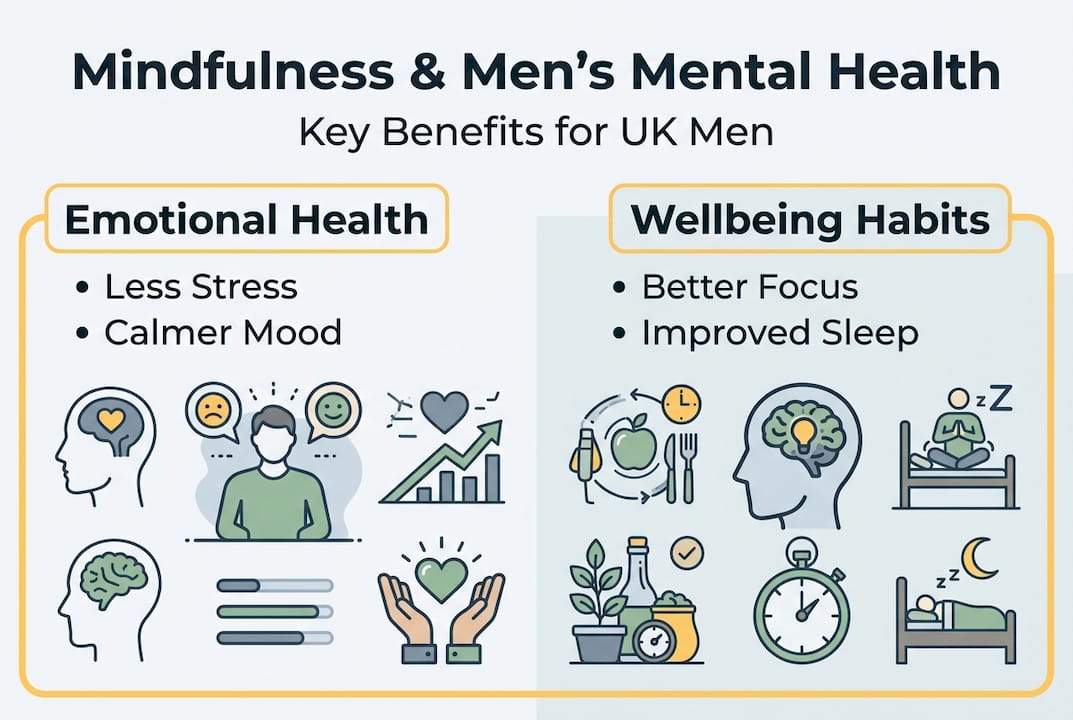
Evidence in a research paper is one thing. Seeing it work in real communities is another. Across the UK, a growing number of programmes are proving that mindfulness, delivered in the right format, genuinely helps men.
The NHS has integrated mindfulness-based cognitive therapy (MBCT) into its services for men where standard treatments have not produced results. MBCT as a further-line treatment in NHS settings lowers depression and is cost-effective, making it a credible option when other approaches fall short. That is a significant endorsement from a system that does not back things lightly.
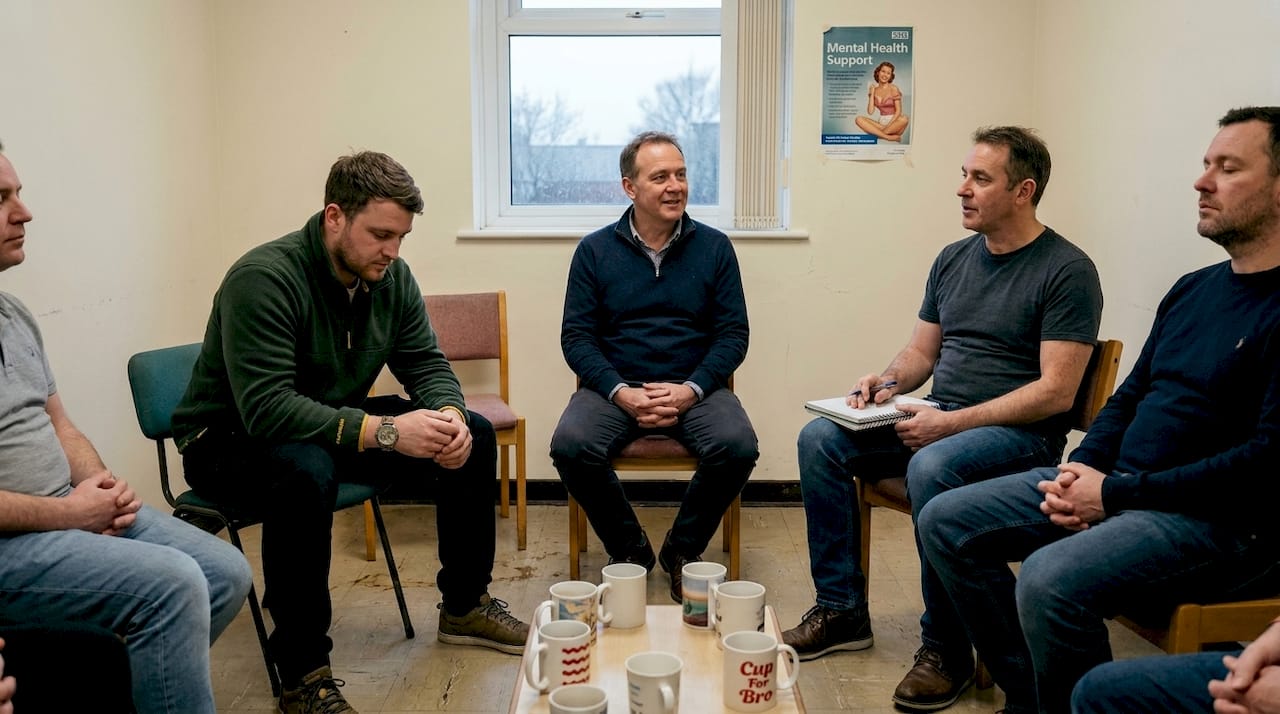
Then there is the community angle. The Moreton Men Sports Group in Suffolk blends yoga, sport, and social connection into a format that feels nothing like a traditional therapy session. Men show up for the football and the banter, and they stay because the combination of movement, mindfulness, and community eases the pressure they carry. Groups like this are also helping to ease NHS strain by providing early, accessible support.
Digital options are expanding too. Apps, online MBCT courses, and specialist programmes like Compassionate Mind Training for Gay Men (CMT-GM) mean that geography and personal circumstances no longer have to be barriers.
| Format | Best for | Key benefit |
|---|---|---|
| In-person group | Social connection and accountability | Shared experience reduces isolation |
| Digital or app-based | Flexibility and privacy | Low barrier to entry |
| Hybrid programme | Men with varied schedules | Combines structure with convenience |
- NHS mindfulness groups: available through GP referral
- Community sports groups: informal, social, and movement-based
- Digital programmes: self-paced, private, and accessible anywhere
- Specialist programmes: tailored for specific identities or needs
Spaces like community cafes for mental health are also emerging as informal hubs where men can connect without the clinical feel of a waiting room.
Finding the right fit: Tailoring mindfulness to your needs
One of the most common mistakes men make when trying mindfulness is assuming there is one correct way to do it. There is not. The format that works for a 22-year-old elite footballer is unlikely to be the same one that works for a 45-year-old dealing with work burnout.
Research backs this up. Tailored approaches for gay men or athletes show that men benefit most when the programme addresses their specific context and focuses on non-reactivity rather than generic relaxation. Similarly, mindfulness moderates threat and negative emotion in male elite footballers, suggesting that performance-focused framing can make mindfulness far more accessible for men who resist the wellness label.
Here is how to approach finding your fit:
- Start with your barrier. Is it time, privacy, scepticism, or identity? Pick a format that removes that barrier first.
- Try before committing. Most apps offer free trials. NHS groups can be explored through a GP conversation.
- Consider your social preference. Some men thrive in group settings; others need the privacy of a solo practice before they are ready to share.
- Track what changes. Keep a simple note of your mood or stress level each week. Patterns become visible quickly.
- Give it four weeks. Mindfulness is a skill. The first week rarely feels like anything is happening. Week four often tells a different story.
Pro Tip: If traditional meditation feels too abstract, start with mindful movement. A walk where you focus entirely on your surroundings, or a workout where you pay attention to each rep, counts. The principle is the same. For men interested in pairing this with everyday habits, exploring optimal coffee for wellbeing is a practical starting point.
Cultural and identity factors matter too. Men from communities where mental health is rarely discussed openly may find peer-led or sport-integrated programmes far more accessible than clinical settings. The goal is not to fit into a programme. It is to find one that fits you.
A new mindset for men: Beyond the stereotypes
Here is something worth saying plainly. Toughness is not the problem. The problem is a narrow definition of what toughness looks like. Choosing to learn a new skill that makes you more resilient, more present, and more capable of handling pressure is not soft. It is strategic.
The men we see engaging with mindfulness and community-driven programmes are not abandoning strength. They are adding to it. They are the ones who show up consistently, who handle setbacks without losing themselves, and who build the kind of mental fitness that lasts.
The evidence is clear, the programmes exist, and the community is growing. Cafés supporting men are part of that wider movement, creating spaces where connection and support happen naturally. You do not have to overhaul your life. You just have to be willing to try something new and see what sticks.
Explore more ways to support men's mental health
If this article has sparked something, the next step does not have to be complicated. Start small, stay curious, and remember that every man's route to better mental health looks a little different.
At Cup for Bro, we believe that looking after yourself and supporting others can happen in the same moment. Every bag of coffee from our coffee range for wellbeing funds vital mental health programmes across the UK. It is a small act with a real impact. Explore our resources, find your community, and take the next step with the Cup for Bro community behind you.
Frequently asked questions
What is the most effective mindfulness technique for men?
Mindfulness-based interventions such as MBCT and group meditation are shown to reduce depressive symptoms in men across a range of settings. The most effective technique is ultimately the one you will actually practise consistently.
Are there UK-based groups where men can practise mindfulness?
Yes. The Moreton Men Sports Group in Suffolk integrates yoga and sports for mental health, and NHS mindfulness groups are available through GP referral across the country.
How does mindfulness help men struggling with emotional control?
Mindfulness moderates threat appraisal and negative emotions in male elite footballers, and the same principles apply in everyday high-pressure situations. It builds the gap between feeling something and reacting to it.
Are there specific mindfulness approaches for gay men?
CMT-GM significantly reduces psychological distress, self-criticism, and fear of compassion in gay men, making it a highly relevant and tailored option for those who have found generic programmes less effective.