
TL;DR:
- Men's mental wellbeing support includes informal peer groups, community activities, and social prescribing.
- These approaches lower stigma and encourage men to seek help through social connection rather than clinical settings.
- Combining informal groups with NHS services offers the most effective support for men's mental health.
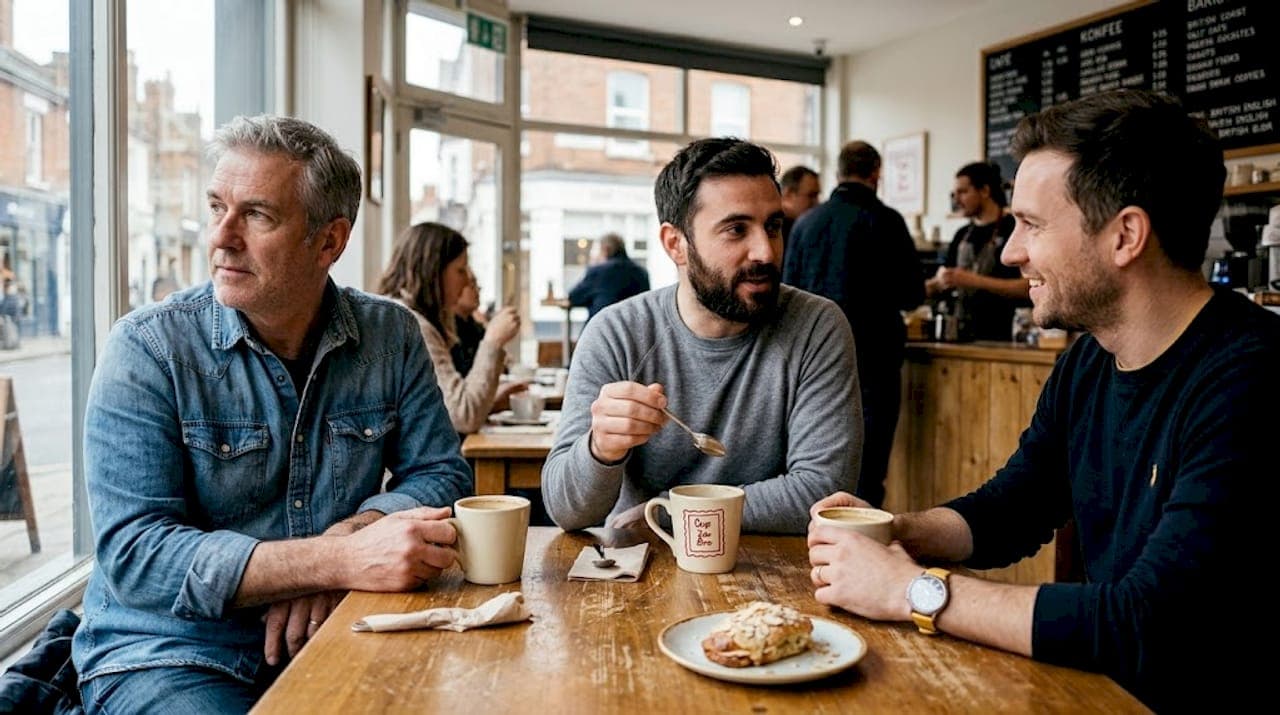
Mental wellbeing support for men in the UK looks nothing like most people expect. Forget the image of a GP referral or a therapist's couch — a growing number of men are finding their footing through coffee catch-ups, peer groups, and community initiatives that barely mention the words "mental health" at all. Men's wellbeing groups are growing in part because they use "health by stealth", wrapping genuine support inside everyday activities like woodworking and coffee meetups. This guide cuts through the noise and gives you a clear picture of your options, from NHS pathways to a simple cup with a stranger who gets it.
Table of Contents
- What does mental wellbeing support mean?
- How informal groups and coffee meetups support men's wellbeing
- Formal vs. informal: Comparing NHS services and community support
- How to access mental wellbeing support and get involved
- Our take: Why coffee can be a lifeline for men
- Take your next step: Connect, support, or shop
- Frequently asked questions
Key Takeaways
| Point | Details |
|---|---|
| Support is diverse | Mental wellbeing support includes both clinical care and everyday social activities such as coffee meetups. |
| Peer groups help men | Informal, activity-based groups are especially effective for UK men who may avoid formal help. |
| Clinical and community balance | The best outcomes often come from combining NHS support with peer-led or coffee-centred groups. |
| Access is improving | Government strategy and grassroots initiatives are making it easier to find and join mental wellbeing support. |
| Get involved locally | Anyone can join, start, or support men’s mental wellbeing groups in their area, often beginning with something as simple as a coffee. |
What does mental wellbeing support mean?
Most men hear "mental wellbeing support" and picture one of two things: a therapist's office or a crisis helpline. Neither image is wrong, but both are incomplete. Wellbeing support actually spans a wide range of emotional, social, and practical resources, and understanding that range is the first step to using it.
At one end, you have clinical pathways. These include NHS mental health services, private counselling, cognitive behavioural therapy (CBT), and psychiatric care. These routes are essential for serious or acute conditions. At the other end, you have community-based approaches: peer groups, sports clubs, Men's Sheds, and yes, coffee meetups. Between these two sits a growing middle ground known as social prescribing.
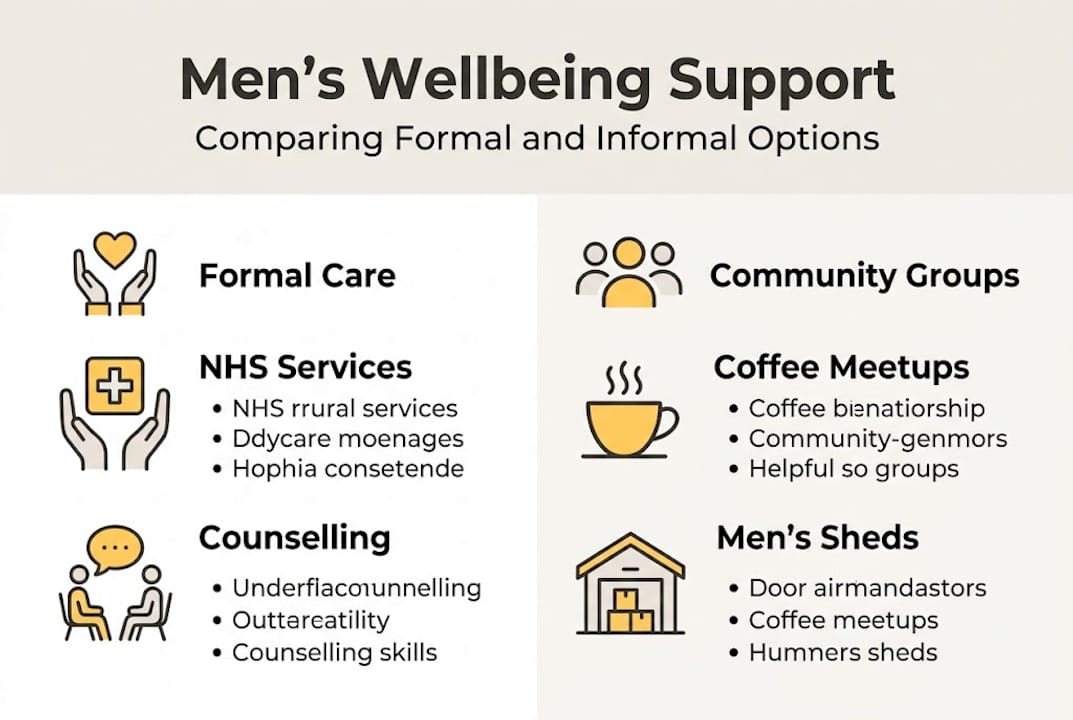
Social prescribing is when a GP or link worker refers you not to a pill or a specialist, but to a community activity. That might be a cooking class, a local running group, or a weekly coffee morning. It sounds simple, almost too simple. But the evidence is clear: social prescribing improves wellbeing, with studies showing a 3.31-point increase in SWEMWBS scores (a standard measure of mental wellbeing) among participants. That is a meaningful shift in real quality of life.
The key outcomes researchers and practitioners track include:
- Happiness: subjective sense of feeling good day to day
- Life satisfaction: a broader sense that life is going in the right direction
- Connectedness: feeling part of something and not isolated
- Reduced anxiety: less persistent worry or dread
For men in the UK, there are special considerations for men that shape how wellbeing support lands. Stigma, cultural expectations around stoicism, and a reluctance to label struggles all mean that the "entry point" matters enormously. A clinical appointment can feel like crossing a huge threshold. A coffee with a few blokes who've been through similar things? That threshold is much lower, which is exactly why it works.
The takeaway: mental wellbeing support is not one thing. It is a spectrum, and you do not have to start at the clinical end to get real benefit.
How informal groups and coffee meetups support men's wellbeing
If you have ever opened up properly to someone over a coffee, you already understand why these groups work. There is something about an informal setting, no agenda, no clinical notes, no clock ticking, that makes it easier to say the thing you have been carrying around for months.
Peer-led groups are particularly effective for men because they strip away the power dynamic present in formal therapy. When the person across the table has been through something similar, the conversation feels safe. Stigma dissolves when everyone in the room quietly understands what it is like.
The concept of "health by stealth" describes exactly this. Groups do not advertise themselves as mental health services. They advertise as coffee mornings, woodworking clubs, or walking groups. Men show up for the activity and stay for the connection. It is deceptively effective.
A strong example is Menfulness, which started as an informal dad coffee catch-up and grew into a registered charity offering social activities and counselling for hundreds of men. No clinical language. No referral forms. Just coffee, conversation, and over time, real change.
| Group type | Format | Who benefits most |
|---|---|---|
| Coffee meetups | Informal, drop-in | Dads, working men, isolated individuals |
| Men's Sheds | Activity-based | Older, retired, or widowed men |
| Walking groups | Outdoor, peer-led | Men reluctant to sit and talk |
| Sports and fitness clubs | Structured activity | Younger men, competitive individuals |
Who benefits most? Research points clearly to dads navigating new parenthood, older or recently retired men who have lost workplace social structure, and men going through significant life transitions like divorce or bereavement. These groups give them somewhere to belong.
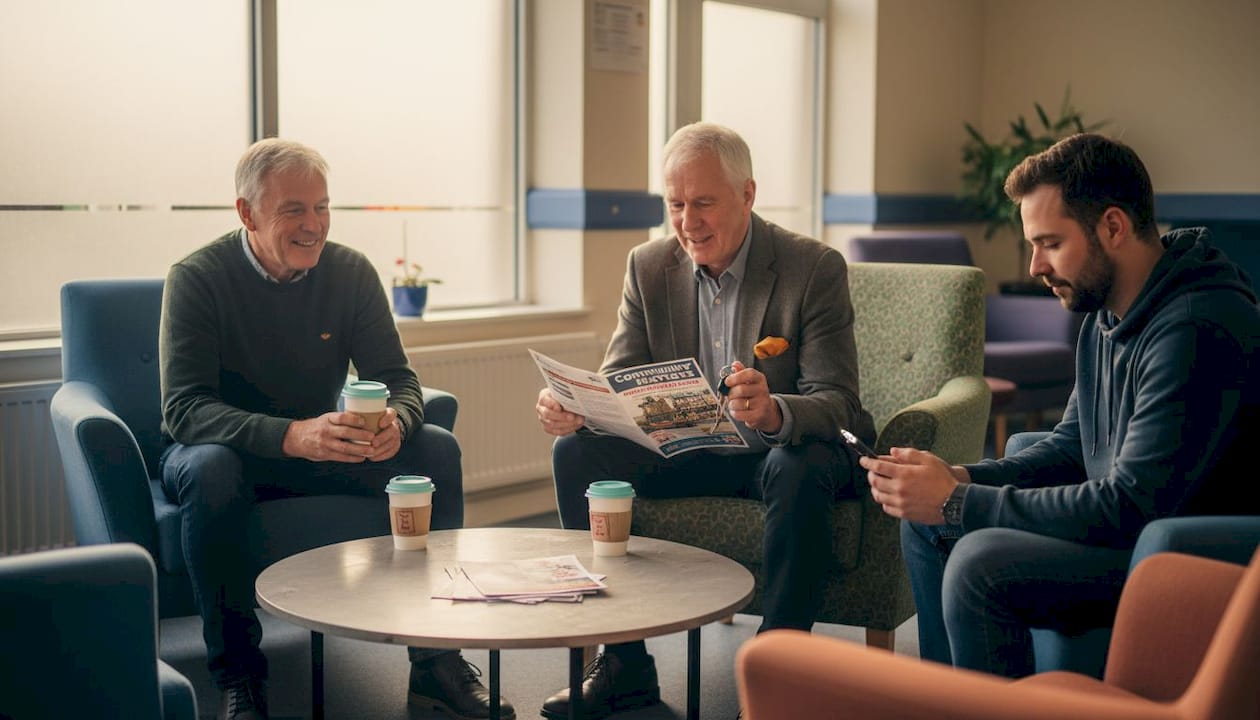
Pro Tip: If you are not ready to seek formal support, look up whether your local area has a Men's Shed or a coffee morning through a charity like Menfulness. You do not have to frame it as a mental health step. Go for the coffee.
For cafés that are already playing a role in this space, there is a growing body of insight around cafés supporting men's mental health, and a useful coffee shop mental health checklist to help venues create genuinely welcoming environments.
Formal vs. informal: Comparing NHS services and community support
Both formal NHS services and informal community groups have genuine value. Understanding the difference helps you choose the right support at the right time, or better still, combine both.
"Informal groups complement NHS services, offering something preventive and male-friendly that clinical settings often cannot." The two work best together, not in competition.
Here is a direct comparison:
| Feature | NHS mental health services | Community and coffee groups |
|---|---|---|
| Accessibility | Requires referral, often long waits | Drop-in, low barrier, often free |
| Format | Clinical, structured, one-to-one | Social, peer-led, group-based |
| Best for | Severe conditions, crisis care | Early intervention, prevention, isolation |
| Stigma factor | Higher for many men | Lower, often no mental health label |
| Continuity | Consistent, recorded, monitored | Variable, dependent on organisers |
As men's wellbeing groups fill gaps in the formal system, the picture becomes clearer. Clinical services handle the acute end; community groups manage the vast, often invisible middle ground where men are struggling but not yet in crisis.
A typical journey combining both might look like this:
- Notice you are not feeling yourself, sleeping badly, withdrawing from people
- Start attending a local coffee morning or peer group (low commitment, low pressure)
- Build enough trust and language to name what you are experiencing
- Visit your GP or self-refer to an NHS talking therapy service
- Continue attending the community group alongside formal support
For men in specific locations, there are tailored resources, such as support for men in London, which can signpost you to both clinical and community options near you.
The key message is that choosing between formal and informal support is a false dilemma. Use both. Start where the barrier is lowest.
How to access mental wellbeing support and get involved
Knowing support exists is one thing. Knowing how to actually access it, or help others do so, is something more useful.
Here is where to start if you are looking for peer and coffee groups:
- Search your local council website for social prescribing link workers
- Check charities like Mind, Movember, and Menfulness for regional groups
- Look for Men's Shed locations via the UK Men's Sheds Association
- Text SHOUT to 85258 for immediate, free, confidential text-based support
- Ask your GP specifically about social prescribing referrals
The UK government's men's health strategic vision published in 2025 commits £3 million to expanding community-based programmes, alongside investment in suicide prevention and workplace support. That is a significant signal that community-led approaches are being taken seriously at the highest level.
Pro Tip: If you want to start your own informal group, keep it simple. A regular time, a consistent venue, and a welcoming face are all you need. The Menfulness story began with just a few dads and a coffee shop.
Cafés and the wider coffee sector have a real role here too. Venues that partner with mental health initiatives, host meetups, or simply train staff to spot struggling customers can become genuine community assets. The connection between cafés and mental wellness is only growing stronger.
And for those curious about the science behind your morning brew, there is solid reading on optimal coffee intake for mental wellbeing, because yes, it turns out coffee is doing more than waking you up.
Our take: Why coffee can be a lifeline for men
Here is something most mental health conversations skip over. The hardest part for most men is not getting better. It is starting. Walking into a GP surgery and saying "I am not coping" feels enormous. Turning up to a coffee morning does not.
We have seen this firsthand at Cup For Bro. The men who benefit most from community support are often those who would never in a million years have booked a therapy appointment. They came for the coffee, stayed for the conversation, and quietly built something that held them together during genuinely hard times.
Coffee is not a cure. But it is a container. It gives the meeting a reason to exist that is not "talking about feelings". And inside that container, real things happen. Trust builds. Men say things out loud for the first time. Connections form that sometimes last years.
If you want to see more of this kind of thinking, our full blog is where we share honest perspectives on what actually moves the needle for men's mental health in the UK.
Take your next step: Connect, support, or shop
If this article has shown you anything, it is that supporting men's mental wellbeing does not have to be complicated or clinical. Sometimes it starts with a great cup of coffee shared with the right people.
At Cup For Bro, every bag of coffee sold funds mental health programmes and the charities working on the front lines of male wellbeing. When you shop specialty coffee with us, you are not just buying beans. You are backing a movement. Whether you want to get involved as an individual, a business, or a café, take a look at our mission and community impact and find out how your next cup can count for something bigger.
Frequently asked questions
What are practical examples of mental wellbeing support for men in the UK?
Coffee meetups, peer-led groups, Men's Sheds, and text services like SHOUT offer informal, accessible support alongside NHS resources. Initiatives like Menfulness show how coffee-based models can grow into full charities reaching hundreds of men.
Do community coffee groups replace the NHS for mental health?
No. Coffee groups and peer meetups complement NHS services and work best for early or preventive support. Informal groups fill gaps in the system but are not a substitute for clinical or crisis care.
How does social prescribing work for men's mental wellbeing?
A GP or link worker refers you to a community activity rather than a clinical intervention. The evidence shows social prescribing improves wellbeing meaningfully, measured through improvements in happiness and life satisfaction scores.
Are there dedicated support groups for older or retired men?
Yes. Men's Sheds, coffee clubs, and targeted charities serve older, retired, or widowed men who have lost social structure after major life changes. Older men benefit significantly from these groups, gaining new connections and a renewed sense of belonging.