

Keeping your focus sharp and your mood steady through a packed London workday is genuinely hard. Deadlines stack up, meetings run long, and by mid-morning your concentration is already fraying. Coffee, consumed mindfully, offers measurable support for both performance and mental wellbeing. Moderate coffee consumption improves mental acuity and alertness, making it one of the most accessible productivity tools available to office employees. This article walks through the evidence on how coffee boosts alertness, lifts mood, and supports mental health, alongside clear guidance on dosing, risks, and how to tailor your intake for the best results.
Table of Contents
- How coffee boosts workplace alertness and attention
- Mood and mental health: Coffee's uplifting effects for employees
- The science behind optimal coffee dosing for performance
- Risks, cautions, and tailoring coffee intake at work
- Our experience: Why mindful coffee consumption matters most
- Discover coffees curated for workplace wellbeing
- Frequently asked questions
Key Takeaways
| Point | Details |
|---|---|
| Boosts alertness | Moderate coffee consumption increases attention and reaction time for better workplace focus. |
| Supports mental health | Coffee lifts mood and lowers depression risk, nurturing positive office culture. |
| Optimal dosage matters | 100-200mg caffeine per day provides most benefits without side effects. |
| Mindful intake is key | Personalise coffee habits to avoid risks like anxiety or disrupted sleep. |
| Decaf also helpful | Decaf carries mental health benefits thanks to rich polyphenols, making it suitable for many employees. |
How coffee boosts workplace alertness and attention
When you sit down at your desk after a commute, your brain is still fighting off sleep inertia, that groggy resistance to full wakefulness. Coffee cuts through it faster than almost anything else. Understanding why helps you use it more strategically.
Caffeine works by blocking adenosine receptors, preventing the build-up of the chemical signal that makes you feel drowsy. The result is sharper attention, quicker reaction times, and a greater capacity to sustain focus on demanding tasks. The effect is not subtle. Research shows caffeine produces an effect size of g=0.27 to 0.28 for both accuracy and reaction time, which is a meaningful, real-world improvement in cognitive performance.

The mental health benefits extend beyond simple wakefulness. The European Food Safety Authority confirms that as little as 75mg, roughly one standard cup, is enough to increase attention and alertness. That is a low bar to clear for a noticeable cognitive lift.
Here is what the evidence suggests about getting the most from your morning cup:
- Timing matters: The first cup works hardest when consumed 30 to 60 minutes after waking, once cortisol levels begin to dip
- Dose range: 75mg to 200mg per session covers the sweet spot for most employees
- Strongest window: Effects on attention peak within the first two hours and are most pronounced in the morning
- Consistency: Regular, moderate intake builds a reliable performance baseline without heavy tolerance build-up
- Task type: Complex, accuracy-dependent tasks benefit most from caffeine's effect on sustained attention
For optimal coffee habits that genuinely support performance, the type of coffee matters too.
Pro Tip: Black coffee or low-sugar options maximise cognitive gains. Added sugar causes a blood glucose spike and crash that can undermine the very alertness you are trying to build.
Mood and mental health: Coffee's uplifting effects for employees
Alertness is only half the story. How you feel at work shapes how well you collaborate, handle pressure, and show up for your team. Coffee has a measurable positive effect on mood that is often overlooked in productivity conversations.
Research shows caffeine intake is associated with increased positive affect, with a mood improvement of β=0.14, strongest within the first 2.5 hours after consumption. In practical terms, that morning cup is not just waking you up. It is actively lifting your emotional baseline during the hours when most critical work happens.
The longer-term picture is equally compelling. Coffee reduces the risk of depression and cognitive decline, with habitual drinkers showing a 25% lower risk of Alzheimer's disease. For employees navigating high-pressure London workplaces, that protective effect is worth taking seriously.
"Coffee can be part of a healthy approach to mental wellness in the workplace, supporting both mood and long-term cognitive resilience."
For men especially, where coffee for mental health conversations are still underexplored, this connection between daily ritual and emotional wellbeing is significant. Even decaf carries benefits, as polyphenols in coffee support mood independently of caffeine.
Here is how improved mood from coffee translates into tangible workplace gains:
- Better collaboration: Employees in a positive mood communicate more openly and constructively
- Reduced conflict: Lower irritability means fewer friction points in team settings
- Greater resilience: A lifted baseline mood helps staff handle setbacks without spiralling
- Higher morale: Small, consistent mood boosts accumulate into a more positive office culture
- Improved creativity: Positive affect is linked to broader, more flexible thinking
Building daily rituals for wellbeing around coffee is not about dependency. It is about using a well-evidenced tool thoughtfully.
The science behind optimal coffee dosing for performance
Knowing coffee helps is one thing. Knowing exactly how much to drink, and when, is where most employees go wrong. Too little and you miss the benefit. Too much and you introduce anxiety and diminishing returns.
| Daily dose | Primary effect | Potential side effects |
|---|---|---|
| 75mg (1 cup) | Improved attention and alertness | Minimal for most people |
| 100 to 200mg (1 to 2 cups) | Peak cognitive benefit and mood lift | Mild restlessness in sensitive individuals |
| 200 to 400mg (2 to 4 cups) | Improved reaction time, accuracy begins to plateau | Increased heart rate, anxiety risk |
| Above 400mg | Diminishing cognitive returns | Jitteriness, sleep disruption, anxiety |
Research confirms that 100 to 200mg optimises cognitive benefits, while doses at or above 200mg improve reaction time but accuracy begins to decline. The sweet spot is narrower than most people assume.
For office workers specifically, moderate caffeine improves attention, particularly in those who are fatigued. If you had a poor night's sleep, your morning coffee is doing even more heavy lifting than usual.
Here is a practical dosing guide for the working day:
- 7:30 to 9:00am: First cup (75 to 100mg) after the initial cortisol peak to maximise alertness
- 10:30 to 11:30am: Second cup (75 to 100mg) to sustain focus through the pre-lunch dip
- Early afternoon (before 1:00pm): Optional third cup if needed, keeping total intake below 300mg
- After 2:00pm: Switch to decaf or herbal alternatives to protect sleep quality
- Evening: No caffeine. Full stop.
You can find more alertness tips and practical guidance on our blog, alongside a mental health checklist designed specifically for men navigating workplace pressures.
Pro Tip: Caffeine has a half-life of five to seven hours. A 3:00pm coffee means half its caffeine is still active at 9:00pm, directly undermining the sleep quality that drives tomorrow's productivity.
Risks, cautions, and tailoring coffee intake at work
Coffee is not a one-size-fits-all solution. Individual biology, lifestyle, and health status all shape how your body responds to caffeine. Understanding the risks helps you personalise your intake rather than follow generic advice.
High doses of caffeine can cause anxiety, jitteriness, and significant sleep disruption. Genetics play a real role here. Variations in the CYP1A2 gene determine whether you metabolise caffeine quickly or slowly, which directly affects how much is too much for you personally.
| Intake level | Effects | Recommendation |
|---|---|---|
| Up to 200mg/day | Positive cognitive and mood effects | Suitable for most employees |
| 200 to 400mg/day | Mixed: some benefit, increasing risk | Monitor for anxiety or sleep issues |
| Above 400mg/day | Anxiety, withdrawal, sleep disruption | Reduce intake gradually |
Key risk factors to be aware of:
- Anxiety sensitivity: Those prone to anxiety may feel worse at doses others tolerate easily
- Withdrawal: Regular drinkers who stop abruptly experience headaches and fatigue for one to two days
- Sleep disruption: Even moderate afternoon intake can reduce sleep quality meaningfully
- Genetics: Slow metabolisers (CYP1A2 variants) experience prolonged effects and higher anxiety risk
- Pregnancy: Recommended limit drops to 200mg per day during pregnancy
For those who cannot or choose not to drink caffeinated coffee, benefits persist in decaf due to polyphenols, plant compounds that support mood and reduce inflammation independently of caffeine. Black or low-sugar coffee, whether caffeinated or not, maximises these benefits by avoiding the blood sugar interference of sweetened drinks.
The broader conversation around baristas and wellbeing and initiatives like charity coffee campaigns show that coffee culture, when done thoughtfully, can actively support mental health communities. Even London cafes are increasingly embedding wellbeing into their offering.
Our experience: Why mindful coffee consumption matters most
Here is something the research does not always say clearly enough: drinking more coffee is rarely the answer. We see this pattern repeatedly. Employees hear that coffee improves productivity, so they push their intake up, and then wonder why they feel wired, anxious, and exhausted by Thursday.
The science is nuanced. Slow metabolisers experience prolonged effects and heightened anxiety, while habitual drinkers develop partial tolerance that blunts the benefits. Neither group benefits from simply drinking more.
What actually works is treating coffee as a tool you calibrate, not a tap you leave running. The employees we see thriving are those who track how they feel, adjust their timing, and respect their own biology. That might mean two cups before noon and nothing after. It might mean switching to decaf after lunch. It might mean optimal coffee habits that look quite different from the colleague sitting next to you.
Mindful consumption is not about restriction. It is about getting the most from every cup while protecting the sleep and mental equilibrium that make sustained performance possible.
Discover coffees curated for workplace wellbeing
If you want to put these principles into practice, the quality of your coffee matters as much as the quantity. At Cup for Bro, we source and curate an exclusive coffee range designed with health-conscious office drinkers in mind, from single-origin beans with clean flavour profiles to options suited for those watching their caffeine intake.
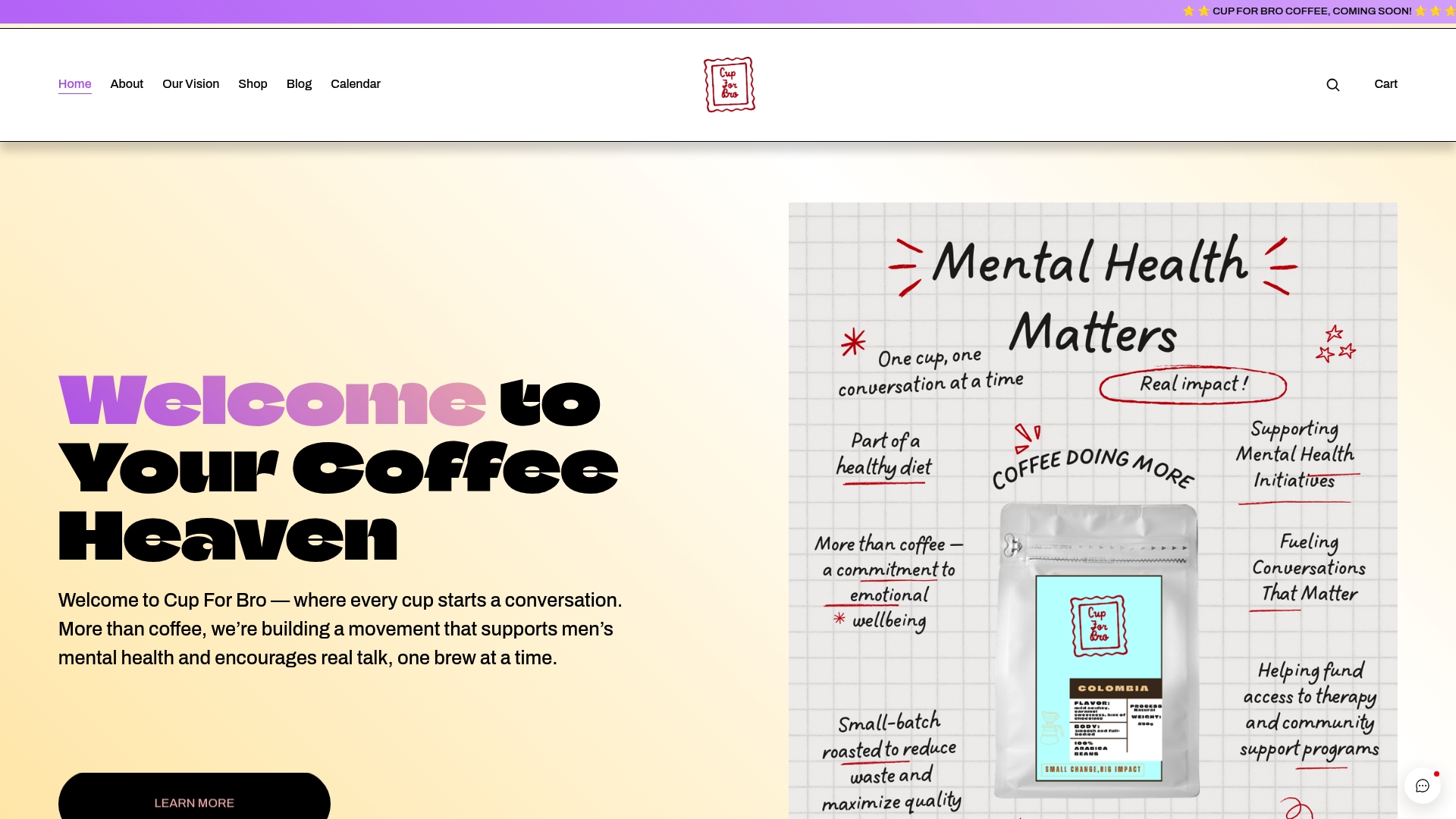
Every purchase directly funds men's mental health support programmes through our partnerships with the UK's leading mental health foundations. So your morning cup does more than sharpen your focus. It helps start conversations that genuinely change lives. Explore our range and find the coffee that works for your workplace, your wellbeing, and something bigger than both.
Frequently asked questions
What is the ideal amount of coffee for productivity at work?
One to two cups, providing 100 to 200mg of caffeine, optimises focus and mood with benefits strongest in the morning hours.
Can coffee improve office team morale and wellbeing?
Yes, moderate coffee intake lifts mood and supports a positive workplace culture. Research shows it reduces depression risk and supports long-term cognitive health.
Are there any risks to drinking coffee at work?
High doses cause anxiety, sleep disruption, and withdrawal symptoms, so personalising your intake and avoiding late-day caffeine is essential.
Does decaf coffee offer the same benefits as regular?
Decaf provides mood and anti-inflammatory benefits through polyphenols in coffee, though the direct cognitive boost from caffeine is absent.